


Mid-sized companies are stuck in a category for which most ATS are not designed.
Either you get sold an enterprise system that costs $80K a year, requires a six-week implementation, and gives you features you will never use. Or you stay on the lightweight tool that worked for 50 people and now has your team running three spreadsheets on the side to make up for what the tool cannot do.
There is a name for this, the messy middle, and most teams in it know they need to switch, but cannot find a clean answer for what to switch to. This article helps you find one.
Why Mid-Market Is Its Own Category: The Messy Middle Problem
Most ATS comparison guides treat the market as two tiers: startups and enterprise. However, mid-market companies fall between the two and inherit the worst of both.
In startups, hiring is often founder-led, and the major concern is adding structure to the hiring process. In the enterprise stage, hiring becomes a big team function, and the goal is to govern compliance across regions.
For mid-market companies, the primary goal is to scale hiring without adding recruiters and consolidating disconnected recruiting tools into a single platform.
Operationally, every department has developed its own hiring rhythm. Engineering teams require coding assessments and technical panels, while Customer Success may emphasize communication skills and scenario-based interviews. A one-size-fits-all recruiting workflow quickly breaks down here.
Budget is where this tension becomes most visible. As one industry researcher put it, “mid-market companies have Enterprise problems but SMB budgets. They cannot afford to spend $50K on Greenhouse, plus $20K on Gem, plus $10K on ModernLoop." As a result, every technology investment must demonstrate clear ROI and ideally replace multiple disconnected tools.
By this stage, companies aren't buying their first ATS, but they’re looking to replace the one they've already outgrown.
Hiring managers are looking for an ATS that meets their current multi-department hiring needs and will scale with them over the next 2–5 years without introducing unnecessary complexity.
The Five Problems That Force Mid-Market Teams to Switch
Problem 1: The Franken-stack has gotten expensive and fragile.
By the time a team hits 300 employees, they typically have an ATS, a sourcing tool, a scheduling tool plus a notetaker. Four tools, four logins, four vendors, four invoices, and integrations that break whenever any of them push an update.
As a result, recruiters spend as much time switching between systems as they do engaging candidates, while finance teams start questioning whether every subscription is still justified.
This is why consolidation and reducing operational complexity become a priority for mid-sized companies.
Problem 2: Leadership no longer trusts your hiring data
This is the most common breaking point at mid-market scale.
As companies grow, executives begin asking more sophisticated questions: Where are candidates dropping off? What is our time-to-hire by department? How is our DEI pipeline moving?
The problem isn't that the ATS lacks reports. It's that different reports produce different numbers, forcing recruiters to spend hours reconciling spreadsheets instead of acting on insights.
One mid-market team had to dedicate a full headcount just to run manual calculations in Google Sheets because the ATS could not produce the numbers leadership asked for.
As one customer recalled, "We were wasting lots of time challenging the numbers and going back and forth trying to understand why a certain number didn't make sense."
Problem 3: One workflow does not fit every department.
At 50 people, a single hiring workflow works because every role is mission-critical.
At 500 people, engineering hires through structured panels with technical assessments, sales hires through speed-to-offer competitions, and customer success hires through team-based interviews.
As organizations grow, hiring becomes more specialized. Engineering may require coding assessments and technical panels, Sales prioritizes speed and role plays, while executive hiring follows a completely different approval process.
Most legacy ATS systems force every department into the same hiring template. Instead of supporting different recruiting strategies, the software becomes something teams have to work around.
Problem 4: Hiring managers have given up on the ATS.
At mid-market companies, hiring manager adoption is the variable that determines whether the ATS works.
When the tool is clunky, hiring managers stop logging feedback, stop updating candidate status, and start asking the recruiter to send them resumes by email.
At that point, the ATS stops acting as the source of truth and becomes little more than a record-keeping tool.
Problem 5: The team is writing internal documentation to explain the tool.
When the recruiter has to write a guide explaining how to use the tool, two things have happened: the UX has failed, and the cost of onboarding new team members has become a tax.
This is the clearest signal that an ATS has hit its ceiling.
An ATS should simplify recruiting operations, not require recruiters to teach people how to use it.
What Mid-Market Teams Actually Need from an ATS: Five Criteria That Matter
1. Consolidation, not addition.
The biggest shift at mid-market is moving away from point solutions towards an all-in-one recruiting platform.
Point solutions do solve individual hiring problems, but together they create a fragmented recruiting stack that requires constant switching between systems, duplicate data entry, and multiple integrations.
At this stage, recruiters need:
- Structured onboarding
- Automated workflows
- In-built sourcing
- Detailed metrics insights
- Collaboration between departments and senior leadership
The right ATS offers an ecosystem that centralizes hiring information and simplifies workflows from a single system.
2. Reporting that produces decisions, not data.
The bar at mid-market is not "does the tool have reports" but whether the reports produce numbers that leadership trusts at first glance.
Recruiting leaders should be able to identify bottlenecks by department, compare recruiter performance, evaluate sourcing channels, and monitor hiring velocity without exporting spreadsheets or manually combining reports.
They should also get configurable dashboards, custom funnels by department, and drill-down reporting by recruiter, department, source, and role type as a baseline.
As one recruiting leader put it, "A lot of data doesn't mean a lot of meaningful insights. I love that the system is built in a way where we can make decisions without sacrificing custom workflows or data integrity."
3. Departmental workflow flexibility
The tool must support different hiring workflows for different departments without requiring custom development.
Engineering pipelines, sales pipelines, executive search pipelines, and high-volume customer support pipelines should all go live in the same system with their own stages, scorecards, and automation rules.
4. Hiring manager UX that does not require training
At mid-market, recruiters may spend all day inside the ATS, but hiring managers should not be required to attend a training session. The system should be intuitive enough so that occasional users, such as a senior engineer, can easily submit interview feedback without help.
5. Native AI that reduces recruiter manual work
At 500 employees, manual screening, manual outreach, and manual reporting are no longer sustainable. The team needs AI built into the core workflows, such as candidate scoring, automated outreach, intelligent scheduling, and conversational analytics.
The distinction matters: native AI built into the workflow is different from an "AI feature" bolted on as a checkbox.
Native AI automates recruiting tasks within existing workflows, while checkbox AI offers standalone features that rarely change how recruiters actually work. Mid-market teams need the former.
Top 5 ATS tools for Mid-Market: Tool-by-tool honest assessment for mid-market
1. Greenhouse
Best for: Mid-market and enterprise teams with dedicated TA ops headcount to configure and maintain it.
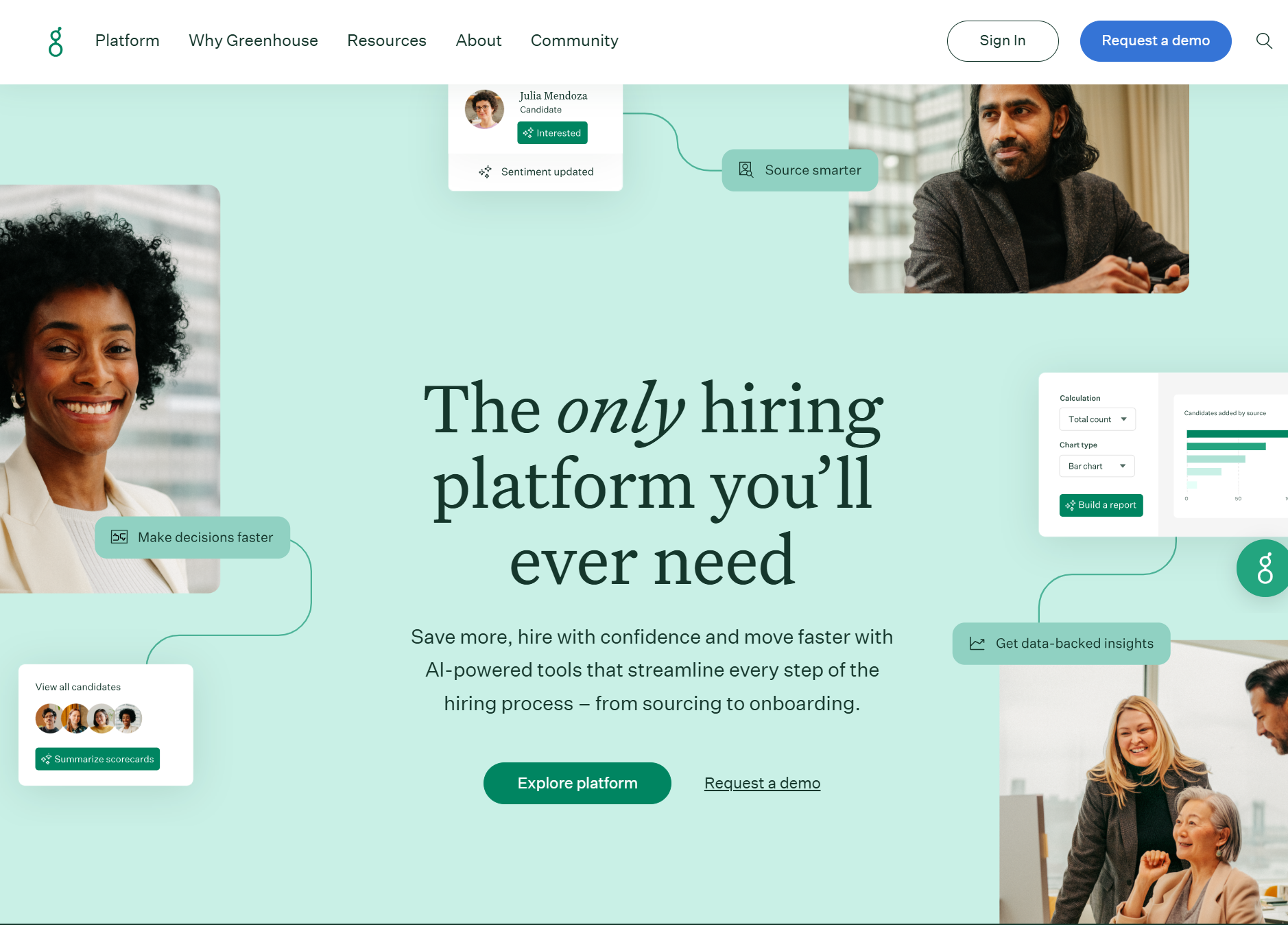
Greenhouse is one of the most established ATS platforms for structured hiring. Its all-in-one platform offers advanced workflows, though they come with a learning curve.
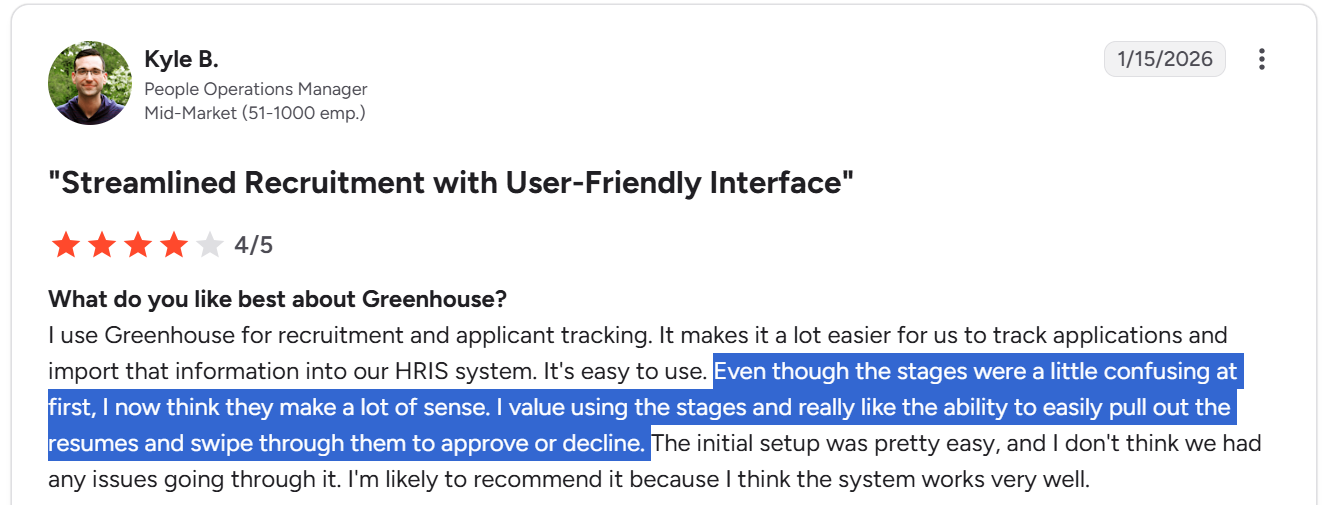
But the good news, Greenhouse offers automated workflows to support the entire hiring cycle, from creating a requisition to placing an offer, with a comprehensive feature set. It keeps everything in one place
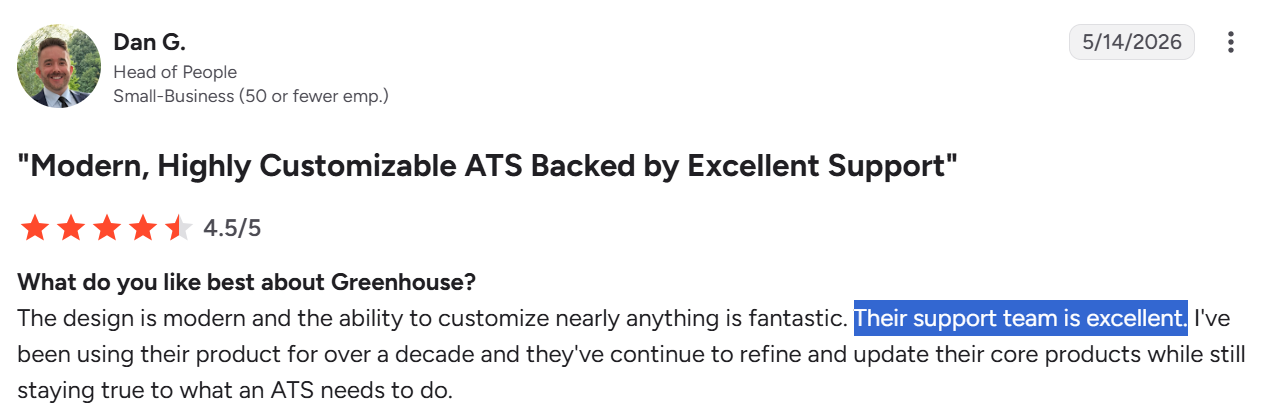
AI is bolted in, and so are over 400 pre-built integrations with an open API. Integrations require a simple, straightforward process; no complications there. Although the implementation process is heavy, many users on G2 have praised their customer support.
Why teams choose it: Structured hiring methodology is well-respected, brand credibility with executives, strong compliance features for OFCCP-regulated companies, and established integration ecosystem.
Why teams struggle at this stage: Implementation is heavy, the reporting is "complex and unintuitive," there are too many clicks for basic tasks, the DEIB reporting is a paid add-on and the pricing model includes feature gating that frustrates mid-market buyers.

Honest verdict: A credible choice if you have someone whose job is to own the ATS configuration. Wrong fit if your TA team is lean
Pricing: Greenhouse uses custom pricing across its Core, Plus, and Pro plans, with costs varying based on hiring complexity and required capabilities. The platform scales well as companies grow, however, for mid-market companies, the total cost of ownership can increase as hiring needs evolve.
2. Lever
Best for: Mid-market teams with relationship-driven recruiting models and lower hiring volume.
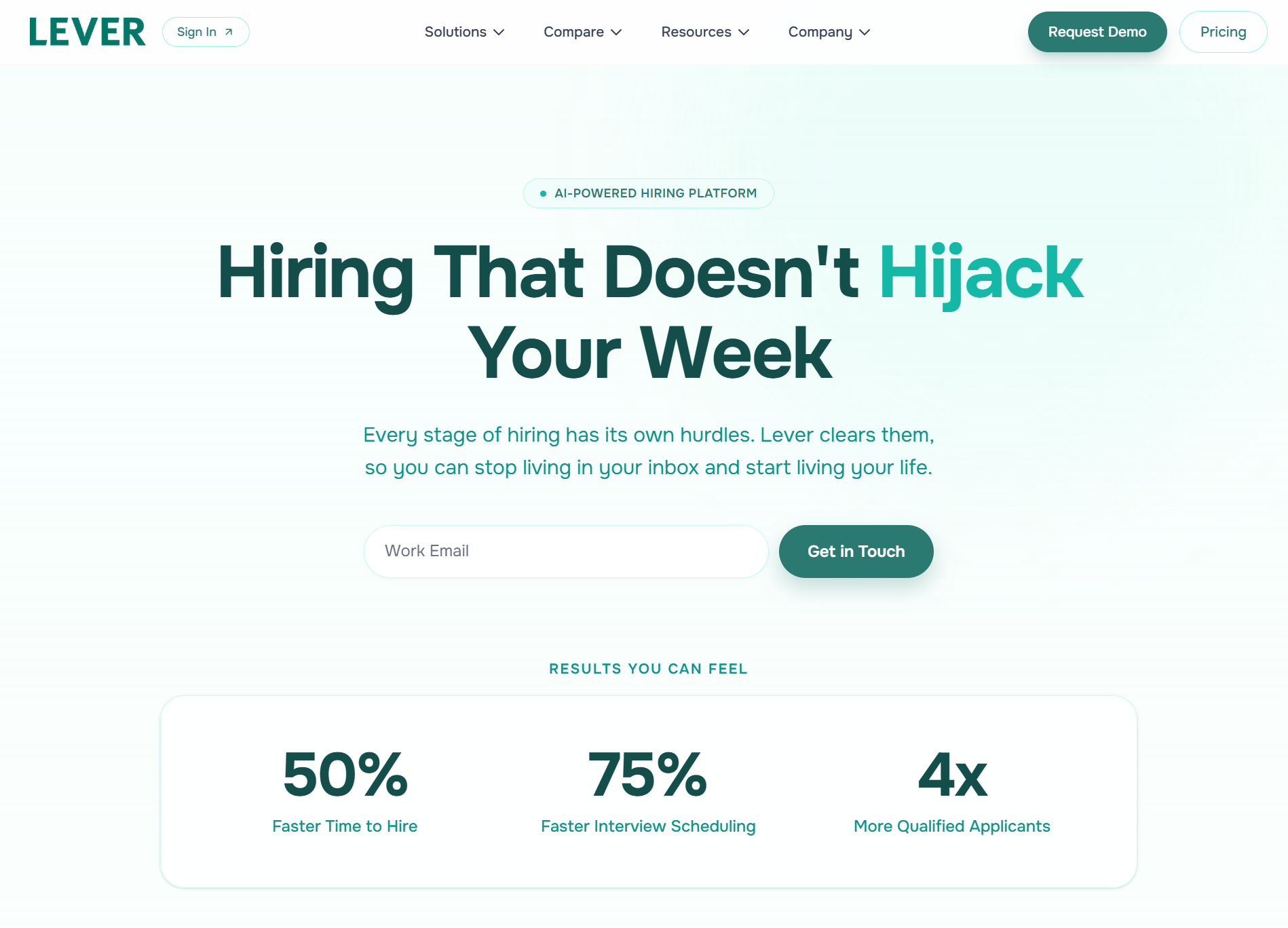
Lever is an all-in-one ATS, very intuitive and user-friendly. AI is embedded throughout the hiring workflow, assisting with sourcing, candidate communication, and recruiting operations within a single platform.
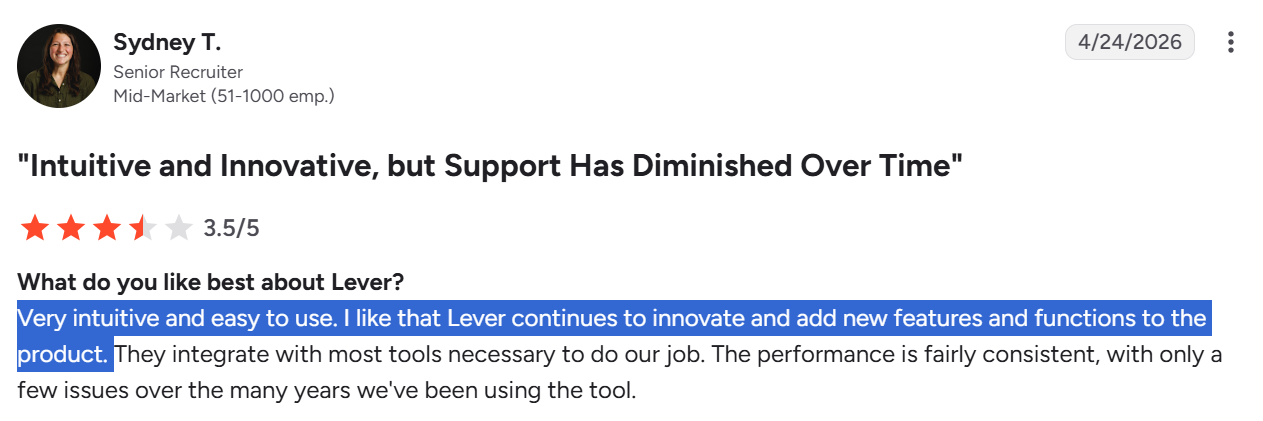
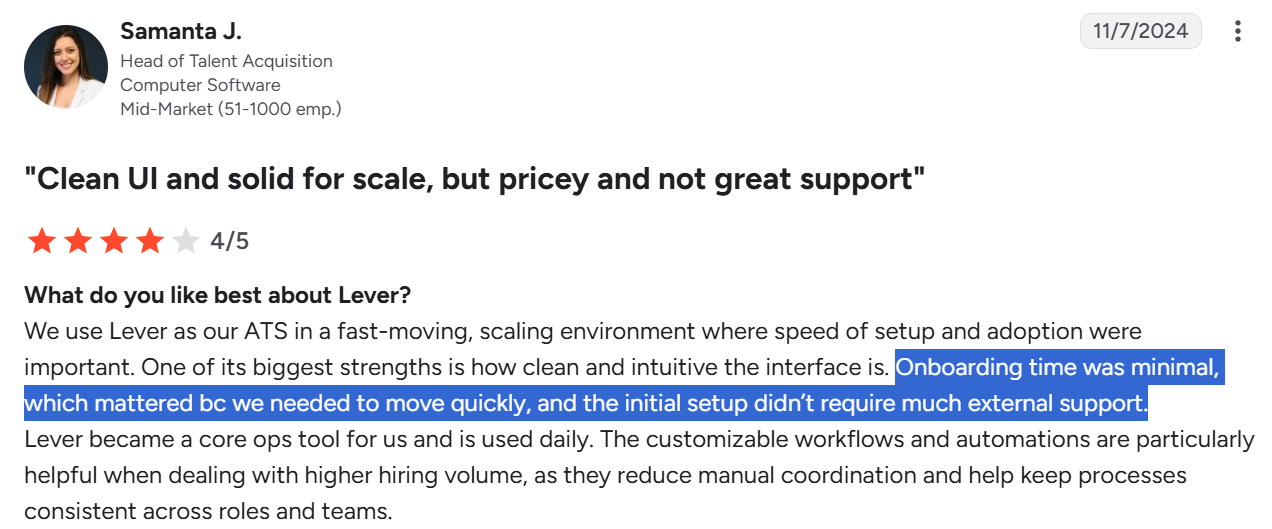
The implementation and adoption process is comparatively easier than Greenhouse, but companies do need IT support for the setup. Lever also offers in-app support chat for quick query resolutions.
Lever offers a mature integration ecosystem with leading HRIS platforms such as Workday, BambooHR, HiBob, TriNet, Paychex, and Justworks, along with major job boards, background check providers, sourcing tools, and onboarding solutions.
Why teams choose it: CRM-first design is good for nurturing passive candidates, the platform is intuitive, simple setup process,
Why teams struggle at this stage: The product has stagnated significantly. API access is paid and reportedly unreliable. Per-seat pricing punishes scale, and while in-app support chat is useful for resolving small issues, customer support is criticized by many users for not being proactive.
Honest verdict: Best suited for organizations with relatively standardized hiring processes. Companies hiring across multiple departments and complex workflows may find the platform less flexible as they scale.
Pricing: Lever follows a custom pricing model based on your hiring volume and organizational needs. Capabilities such as onboarding, advanced candidate insights, and AI screening are offered as add-ons, which can increase the total cost of ownership.
3. Workable
Best for: Lower mid-market, simpler workflows, teams that prioritize ease over depth.
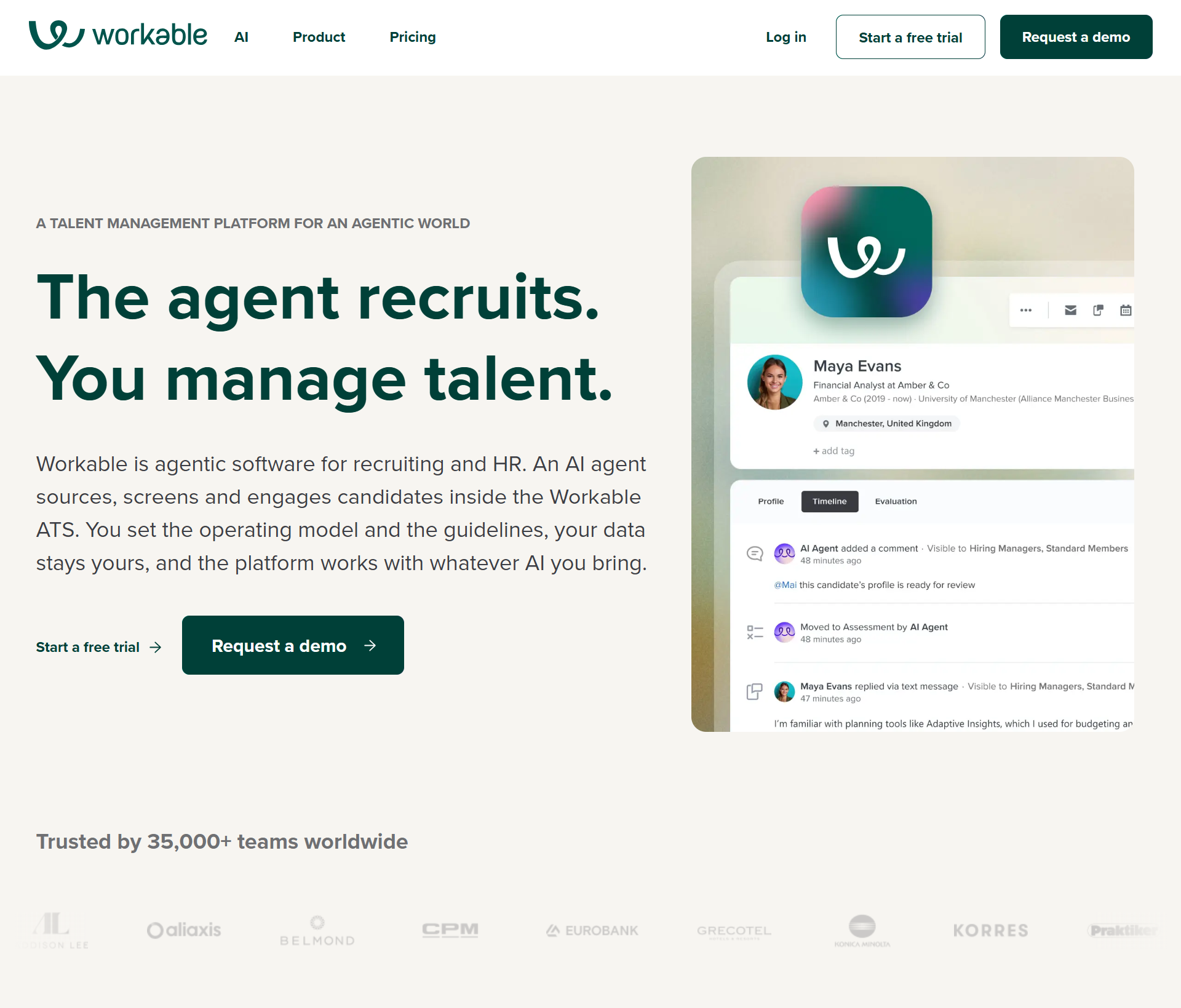
Workable is relatively a simpler recruiting platform with customizable and automated workflows, not just tied to hiring operations, but for HR as well.
Workable migration and implementation are comparatively quick and easy, as the system goes live in as little as 2 to 7 days, and full implementation takes 1 to 2 weeks. Many users have praised Workable's smooth onboarding and setup process.
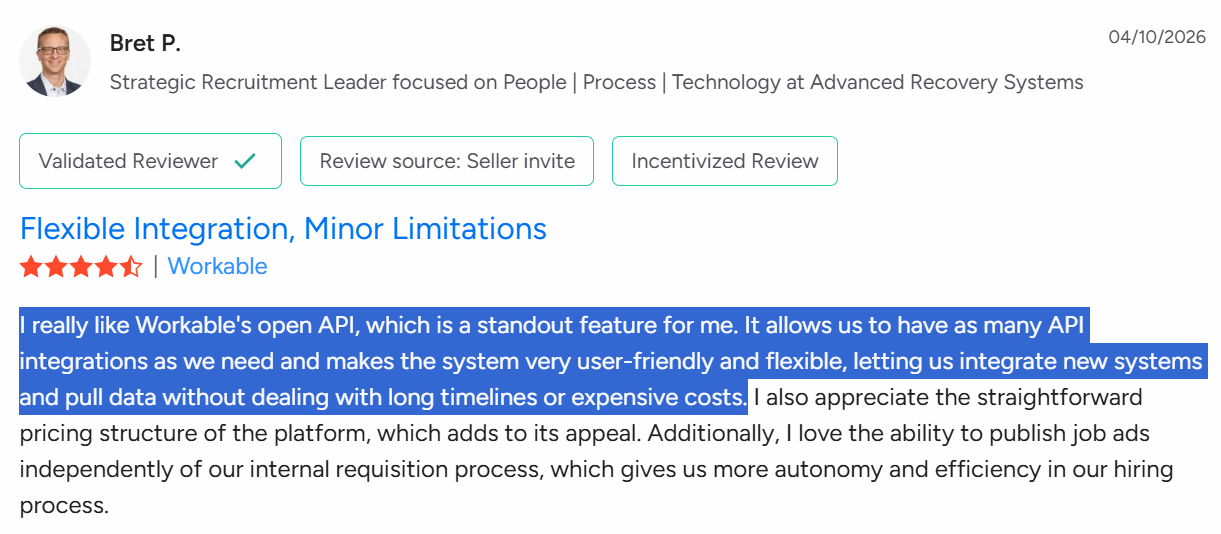
Workable offers built-in integrations with LinkedIn, Indeed, Glassdoor, and others, with an open API for custom integrations.
Why teams choose it: Easy to use, no implementation overhead, and reasonable pricing at the entry tier.
Why teams struggle at this stage: Not a fit for organizations with 200 employees or more because of limited features, and not compatible APIs. Reporting is counterintuitive at a 1,000-plus people scale, and additional reports require subscription upgrades.
Honest verdict: A good first ATS that becomes a constraint at mid-market scale. Most teams outgrow it. If your priority is getting a recruiting platform live within days rather than months, Workable is one of the easiest ATSs to deploy.
Pricing: Workable offers transparent, tiered pricing starting at $299/month (Standard), $599/month (Premier), and $719/month (Enterprise), with plans available for organizations ranging from small businesses to enterprises with 1,000+ employees. The platform includes core ATS, sourcing, and HR capabilities across all plans, while advanced features such as texting, video interviews, assessments, and the AI Recruiting Agent are either included in higher tiers or priced separately.
4. Ashby
Best for: Analytically sophisticated mid-market teams with dedicated TA ops capacity.
Asby is another modern all-in-one ATS tool, best suited for a technically sophisticated team. Ashby offers customizable workflows for interview scheduling, sourcing, analytics, and workforce planning into a single platform with AI embedded into it.
Ashby supports 250+ native integrations, and implementation and migration typically take just 2–3 days, while implementation usually ranges from 1–3 months.
The reporting system is the VIP feature of Ashby, it is very detailed, customizable, and easy to understand.
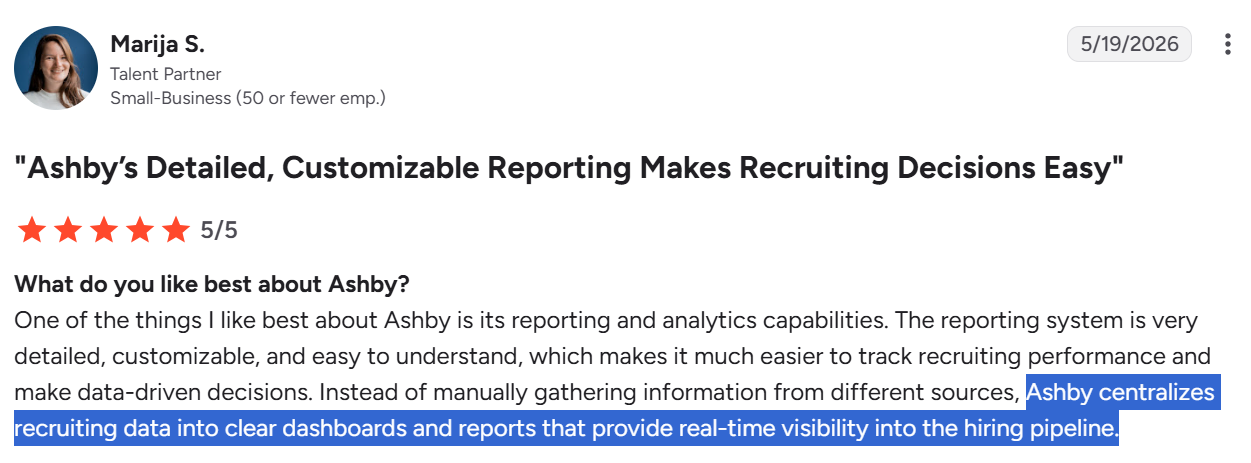
Why teams choose it: Deep analytics, strong reporting, genuine workflow flexibility, all-in-one architecture.
Why teams struggle at this stage: The depth that makes Ashby powerful also makes it complex. Non-technical users hit a learning curve. Platform language is not intuitive. The reporting power requires someone who knows how to configure it. Pricing is not transparent.
Honest verdict: A strong choice for mid-market teams with technical sophistication and ops capacity. Less of a fit for teams that want intuitive over powerful.
Pricing: Ashby offers transparent pricing for startups, with plans starting at $400/month for companies with up to 100 employees. For mid-market companies (101–1,000 employees), it provides custom pricing based on company size, hiring volume, and contract commitment.
5. Kula
Best for: Mid-market teams consolidating a Franken-stack, especially those switching off Lever or stuck mid-contract on Greenhouse.
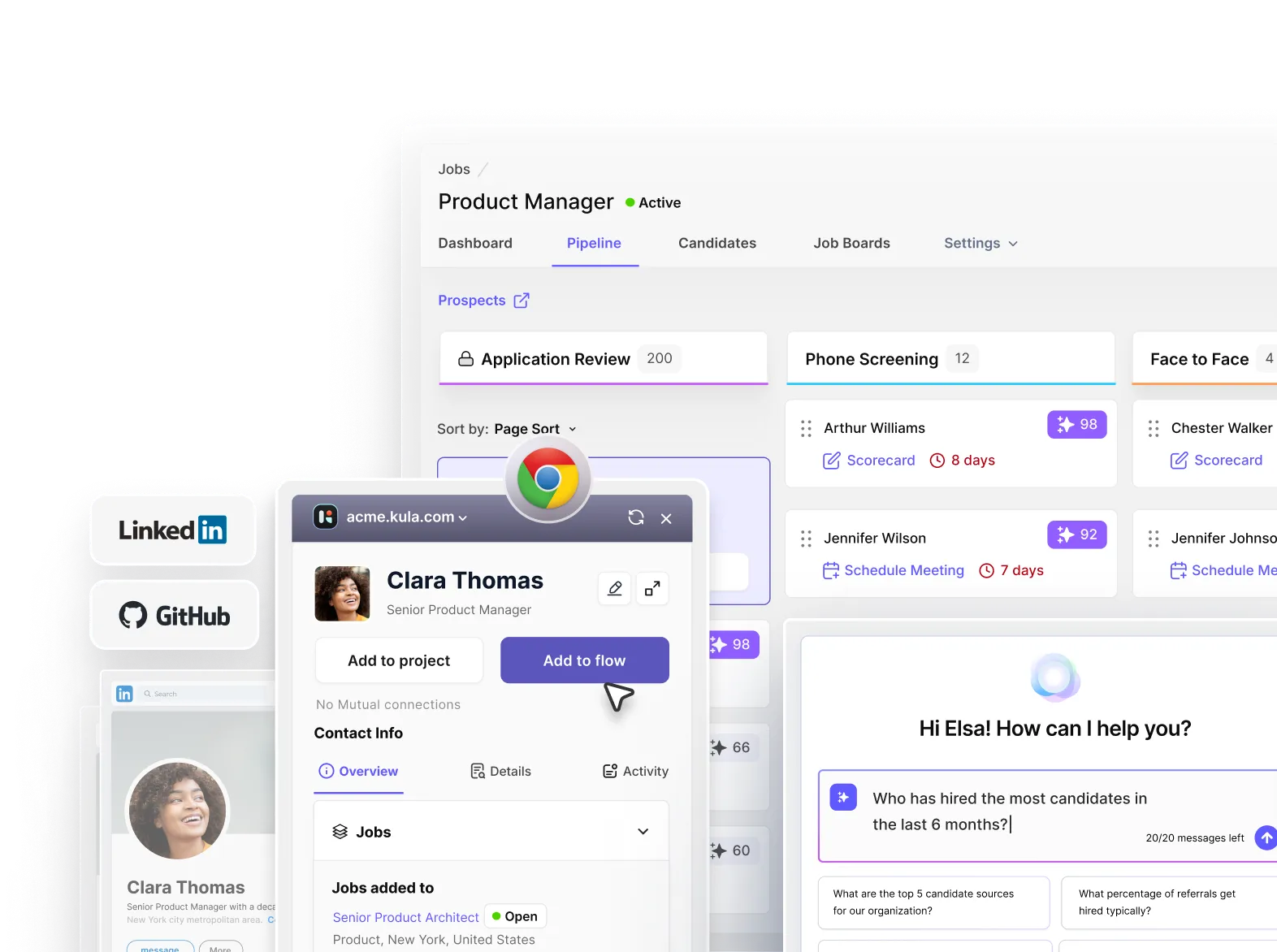
Kula is an AI-native all-in-one ATS platform that consolidates ATS, sourcing, scheduling, analytics, and notetaking into one system at a price point below the Greenhouse-plus-Gem-plus-ModernLoop stack.
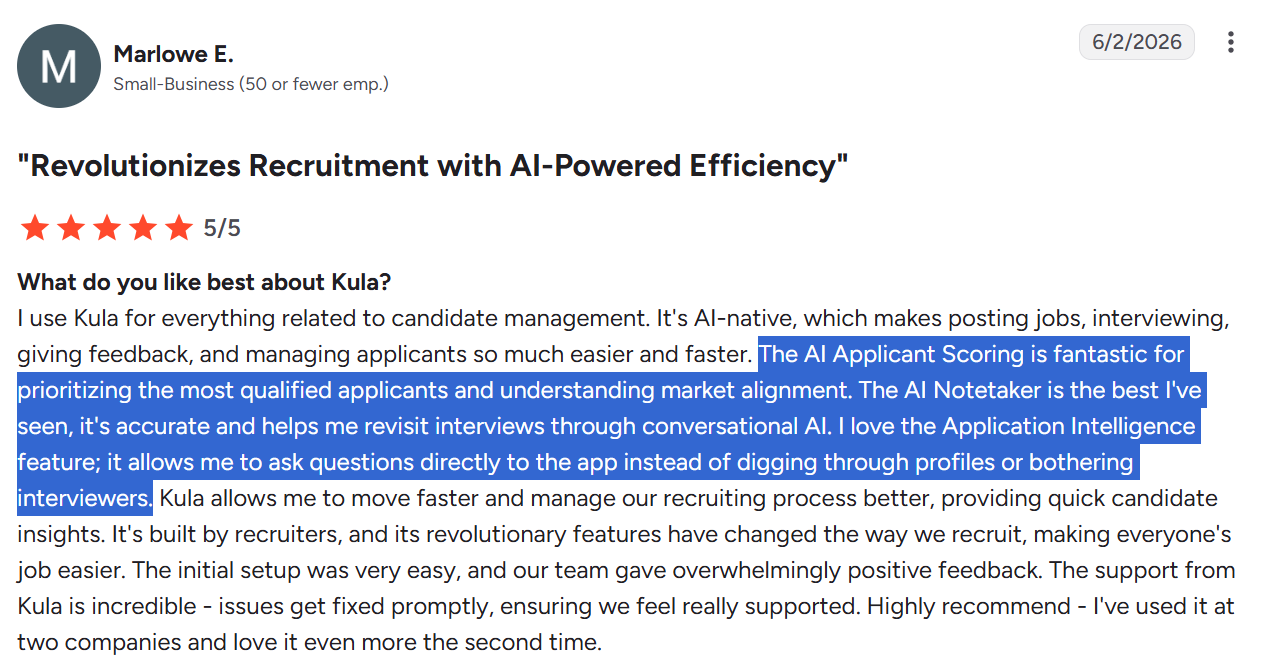
AI is embedded into all core hiring workflows, from sourcing to onboarding, and Kula performs AI audits monthly to ensure AI remains bias-free and effective.
Kula typically takes 4 to 6 weeks for complete implementation, and in some cases, Lever-to-Kula migrations are reported in under three weeks.
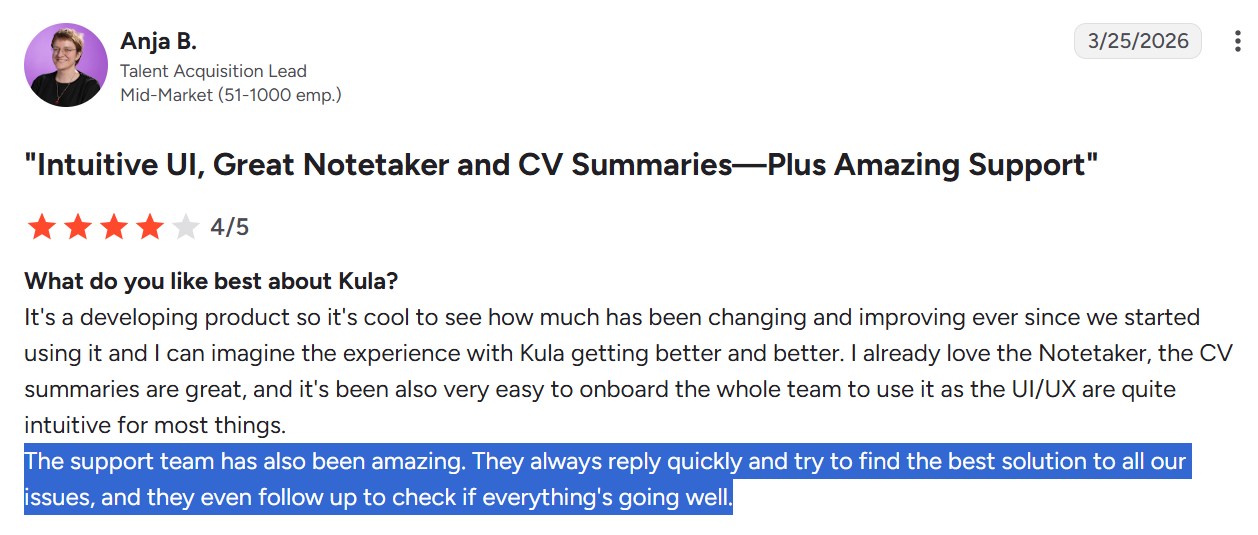
Many users on G2 have strongly appreciated Kula for its intuitive interface and proactive customer support.
Why teams choose it: AI-native architecture rather than bolt-on. Fast implementation: Built specifically for the messy middle. Real before-and-after from a 500-1000 employee customer: "Before Kula, we relied on Lever along with LinkedIn Recruiter, spreadsheets, Slack, and email. The result was a patchwork system that demanded constant manual effort. Kula's AI Scoring has sped up our ability to find quality candidates."
Why teams struggle: Not the right fit for an enterprise team with 10,000-plus employees and complex governance requirements.
Honest verdict: Built for this exact stage. Right fit for a 200 to 1,000-person company tired of the Franken-stack.
Pricing: Kula uses a transparent, headcount-based pricing model, starting at $4,800/year for companies with 1–50 employees, $7,200/year for companies with 51–75 employees, $9,600/year for 76–100 employees, and custom pricing for organizations with 101+ employees. Unlike many ATS vendors, Kula includes every feature in every plan, with no feature gates, usage-based pricing, or paid add-ons.
The Implementation Reality: What Mid-Market Teams Should Expect
Implementation at mid-market is different from startup implementation in three specific ways:
More stakeholders: Unlike startups, at the mid-market, implementation decisions involve more than just the recruiting team. IT, HR, finance, legal, security, and hiring managers often need to review different parts of the rollout. A clear implementation plan with defined owners, timelines, and approval checkpoints helps keep the project on track.
HRIS integration is non-optional: Workday, BambooHR, Rippling, whichever HRIS the company runs on, the ATS has to integrate cleanly. In many implementations, integration is often the longest phase in the process. The quality of the vendor’s implementation support matters more than the integration complexity. Also, IT must be looped in early to complete critical configurations.
Parallel running is real: Mid-market teams cannot afford a hard cutover. Most teams run their existing ATS alongside the new platform for one to two weeks while active job requisitions, candidates, and hiring workflows are gradually migrated. Planning for this overlap helps reduce disruption and ensures business continuity.
One factor consistently separates smooth implementations from difficult ones: having a dedicated implementation manager who owns the project from kickoff through go-live. Before selecting an ATS, ask whether you'll have a named implementation specialist, what the onboarding timeline looks like, and how issues are escalated throughout the rollout.
Learn more specifics about ATS migration in our guide, How to Migrate Without Losing Data or Momentum.
The decision framework: three questions that determine the right tool for your company
Question 1: Are we consolidating or adding?
If the goal is to replace three tools with one, the answer is an all-in-one platform. If the goal is to upgrade just the ATS while keeping existing sourcing and scheduling tools, the answer is a best-of-breed ATS that integrates well.
Question 2: How much TA ops capacity do we have?
If you have a dedicated TA ops person or team, Ashby or Greenhouse (more technical tools) become realistic options. If your TA team is lean and cannot dedicate someone to system administration, you need a platform (like Workable or Kula) that runs without configuration overhead.
Question 3: How important is AI to our hiring strategy in the next 12 months?
If AI is core to the strategy, such as automated screening, intelligent outreach, and conversational analytics, the answer is a platform that builds AI into the foundation. Bolt-on AI features from legacy vendors generally underperform native AI from modern platforms.
Final Thoughts
For mid-market companies, the best ATS isn't the one with the most features, it's the one that simplifies hiring today while giving your recruiting team room to scale tomorrow.
If your team has outgrown a fragmented recruiting stack and is looking for a platform built specifically for the 200–1,000 employee stage, Kula brings ATS, sourcing, scheduling, analytics, and AI into one system, with fast migration paths.
Book a demo to see how Kula can support the next stage of your hiring growth.