




Hiring doesn't end when a candidate accepts the offer. In many cases, it ends when the background check clears.
A few years ago, most recruiters worried about slow turnaround times.
Today, they're just as likely to deal with identity fraud, fake credentials, or compliance rules that vary depending on where they're hiring. Add in background check vendors that promise results in hours instead of days, and it's easy to see why the process has become much more than an administrative task.
Whether you're building a screening process from scratch or simply trying to choose the right vendor, here's what recruiters should know about background checks in hiring.
Types of background checks in hiring and what they actually cover
A lot of recruiters assume a background check is just a criminal record search.
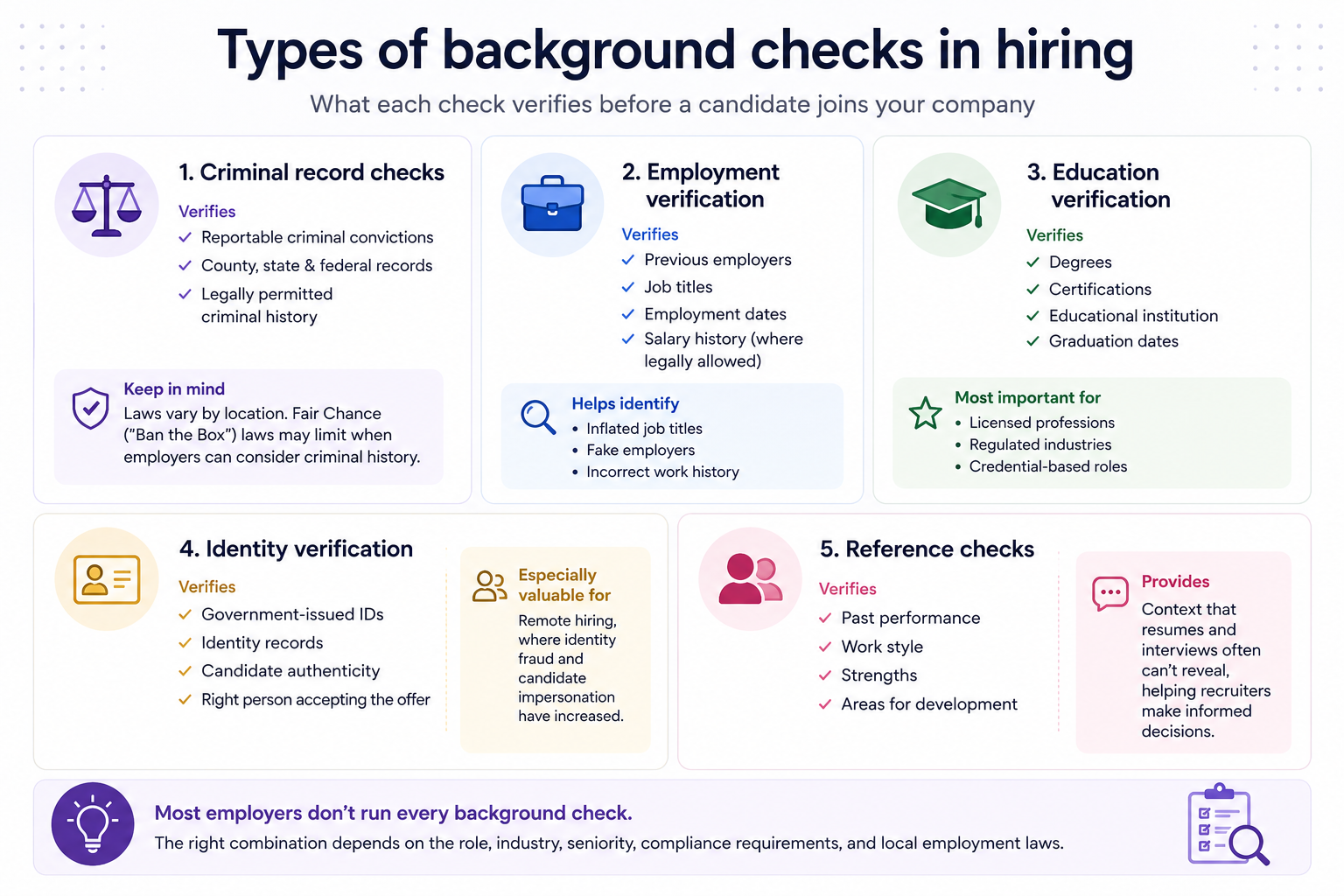
In reality, it's a collection of different verifications that help confirm a candidate is who they say they are and that the information on their application is accurate. The exact checks depend on the role, industry, and location, but most pre-employment background checks include a mix of the following.
Here are some of the most common types of background checks used by recruiters and what they cover:
- Criminal record checks
This is the part most people think of first.
Criminal background checks search federal, state, and county records for reportable convictions or other legally permitted records. What employers can see varies by jurisdiction. Some states across the U.S also have Fair Chance or "Ban the Box" laws that restrict when criminal history can be considered during the hiring process.
- Employment verification
Did the candidate actually work where they said they did?
Employment verification confirms previous employers, job titles, and dates of employment. Some employers also verify salary history where it's legally allowed. It's one of the easiest ways to catch inflated job titles or inaccurate work history.
- Education verification
Degrees and certifications are becoming easier to fake than many recruiters realize.
Education verification confirms the institution, qualification, and graduation dates. It's particularly important for regulated professions or roles that require specific credentials.
- Identity verification
This has become one of the fastest-growing parts of background screening.
Most vendors now verify government-issued IDs and identity records to confirm the person who interviewed is the same person accepting the offer. As remote hiring has increased, so have cases of identity fraud and candidate impersonation.
- Reference checks
Reference checks are still part of many hiring processes, even if they're often automated today.
While online reference forms save time, many recruiters still find that a short conversation with a former manager reveals context that a questionnaire simply can't.
- Additional checks for specific roles
Not every candidate needs the same screening package. Depending on the role, employers may also run:
- Credit checks for finance positions
- Drug screenings for regulated industries
- Driving record checks for transportation roles
- Professional license verification
- International employment or education verification
Some organizations have also started adding biometric liveness checks to prevent identity fraud and continuous monitoring for employees in regulated industries, where new criminal charges or license suspensions need to be flagged after hiring.
One thing background checks don't do is measure how good someone will be at the job. They verify facts, not skills or potential. Think of them as a risk management tool, not a hiring decision in themselves.
Of course, these checks also depend on the kind of role a candidate is being hired for. The type of background check can depend on what role a recruiter is hiring for.
How long do background checks take?
One of the first questions recruiters ask after initiating a background check is, "When will the results be ready?"
The answer depends on what you're verifying.
A few years ago, waiting 5 to 10 business days for a background check was completely normal.
If the process involved international employment verification or education checks from universities with manual record systems, it could easily stretch to two or even three weeks.
These days, modern background screening vendors have automated much of the process, reducing turnaround times from days to hours for many standard checks.
Identity verification and US criminal record searches can often be completed in minutes, while employment and education verification typically take 24 to 72 hours because they still rely on previous employers and educational institutions responding.
That said, there are still a few situations that can slow things down:
- International verifications: Overseas employers and universities often take 5 to 10 business days, depending on the country and local processes.
- Manual court records: Not every county court has digitized records, so criminal record retrieval may require manual processing.
- Candidate delays: Missing consent forms, incomplete information, or unresponsive references are some of the most common avoidable bottlenecks.
- Disputed findings: If a candidate challenges information in the report, the vendor must investigate before finalizing the results.
As a general benchmark, a standard US background check should take around 24 to 48 hours for automated checks and up to 72 hours when employment or education verification is included.
International or more complex screening packages typically take 5 to 7 business days.
If your background checks consistently take much longer than that, it's usually a sign that either your screening vendor or your internal workflow needs a closer look.
Best background screening software and vendors in the market
If you're choosing a vendor, you're really weighing four things: how fast you get results back, whether it plugs into your ATS without extra manual work, how well it covers the countries you hire in, and what it costs per check.
Here's how the main players stack up on those:
1. Checkr
Best for: Tech and mid-market to enterprise teams that want everything running inside the ATS.
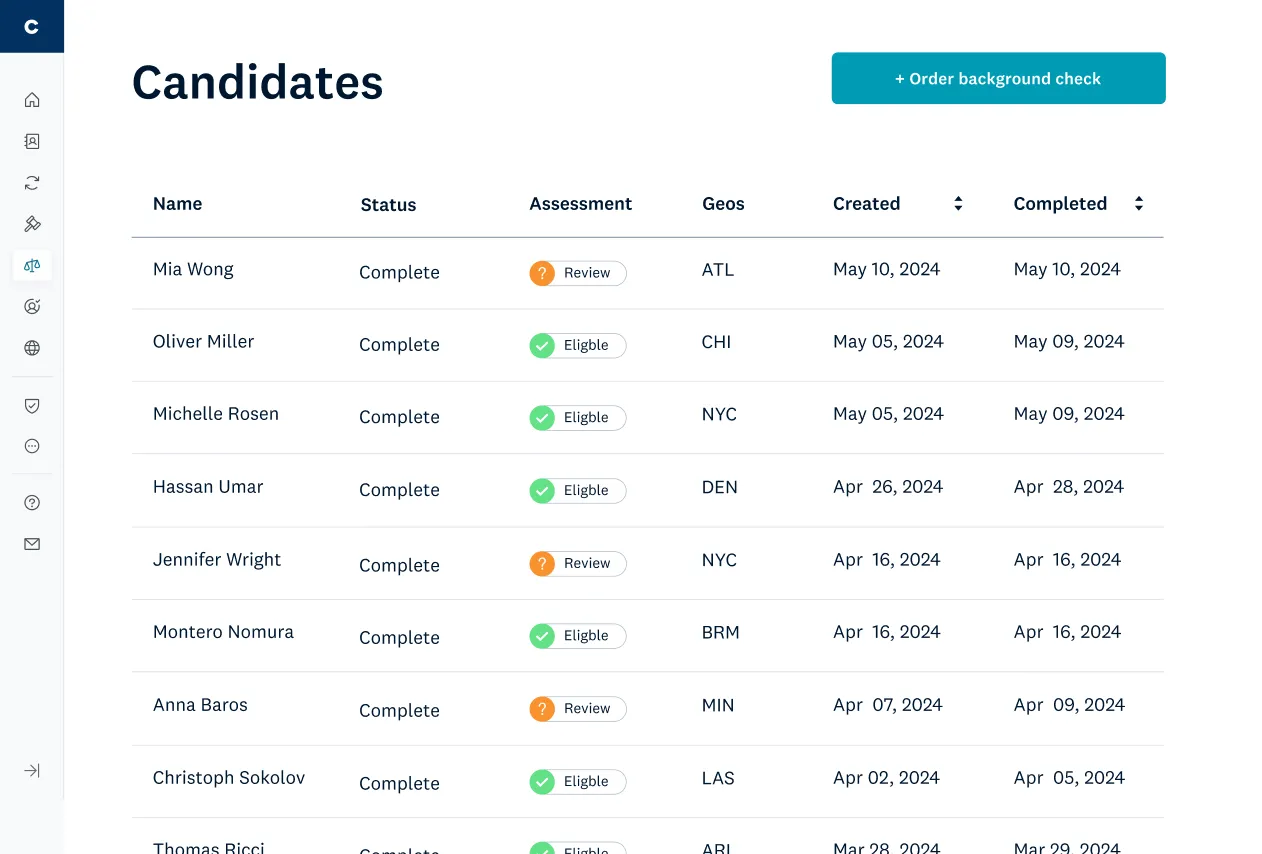
Checkr is a background check service that offers comprehensive identity verification and employment screening.
Their platform provides services such as criminal background checks, employment history verification, and education verification, helping recruiters ensure that candidates have the qualifications and history they claim.
- Covers criminal, employment, education, identity, and drug screening, with Fair Chance hiring built in.
- Standard package: 24–48 hours. Identity and other automated checks often clear in a few hours.
- Native integrations with Ashby, Gem, Greenhouse, Lever, Workday, BambooHR, iCIMS, and 100+ others.
Why recruiters pick it: You can send a check, get a status update, and act on the result without ever leaving the candidate's profile. That matters most when you're moving fast and don't want a background check step to be the thing that stalls an offer.
2. Certn
Best for: Volume hiring, Canadian operations, or teams that want speed without a long-term contract.
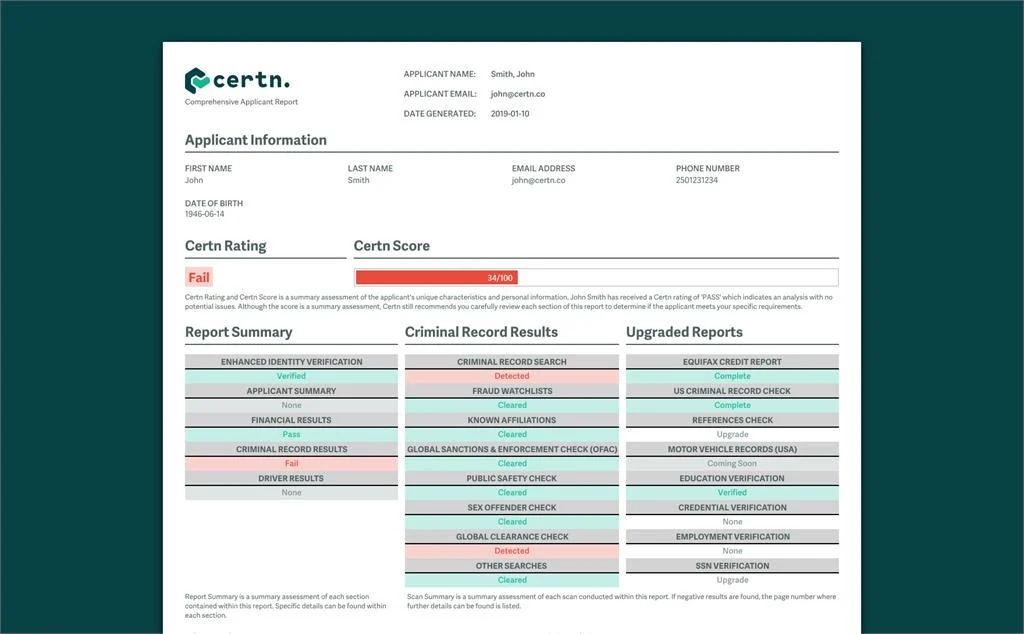
Certn is a modern background screening software provider that focuses on fast turnaround times and flexible pricing.
One of Certn's biggest differentiators is its automation. Identity verification and many standard checks can often be completed in minutes, helping recruiters move candidates through the hiring process without waiting days for routine screening.
The platform also includes candidate self-service features and real-time status tracking, improving visibility for both recruiters and applicants.
- Criminal, identity, employment/education verification, plus international checks across 200+ countries.
- Identity and standard checks often complete in minutes.
- Integrates with Gem, Greenhouse, Lever, Workday, iCIMS, and 100+ ATS/HRIS platforms.
- Pay-as-you-go pricing, no subscription required.
Why recruiters pick it: if your team hires in bursts—seasonal, gig, or high-volume roles—paying per check instead of a flat contract fee actually matters, and the turnaround holds up under volume.
3. First Advantage (formerly Sterling)
Best for: Regulated industries and enterprise hiring across multiple countries.
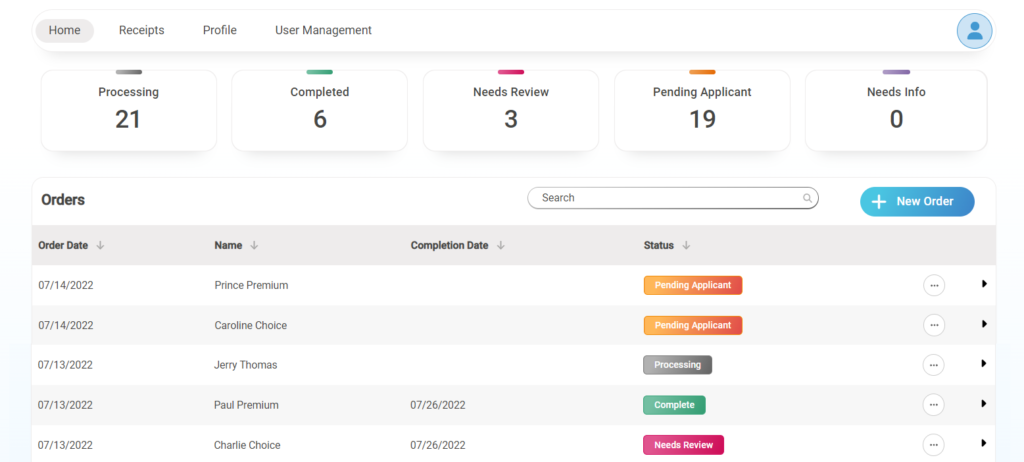
First Advantage is like a one-stop shop for all things related to pre-employment background checks. You’ll find a lot of background screening options whether it’s for drug and alcohol screening, social media screening, form I-9 compliance checks, criminal record monitoring and much more.
What makes this vendor unique is that they offer a candidate-friendly platform for applicants so they can track their background screening process.
- Covers criminal, drug and health screening, education/employment verification, and post-hire monitoring.
- 80,000+ clients globally, 100M+ screens run per year, 200+ countries, 100+ ATS integrations.
- Integrates with Greenhouse, Oracle, ICIMS, Bullhorn and other applicant tracking systems.
- Not the fastest option, but the deepest global coverage on this list.
Why recruiters pick it: when you're hiring across a dozen countries and need one vendor that won't hit a compliance wall in any of them, breadth wins over speed.
4. HireRight
Best for: Global enterprise hiring, especially in regulated industries.
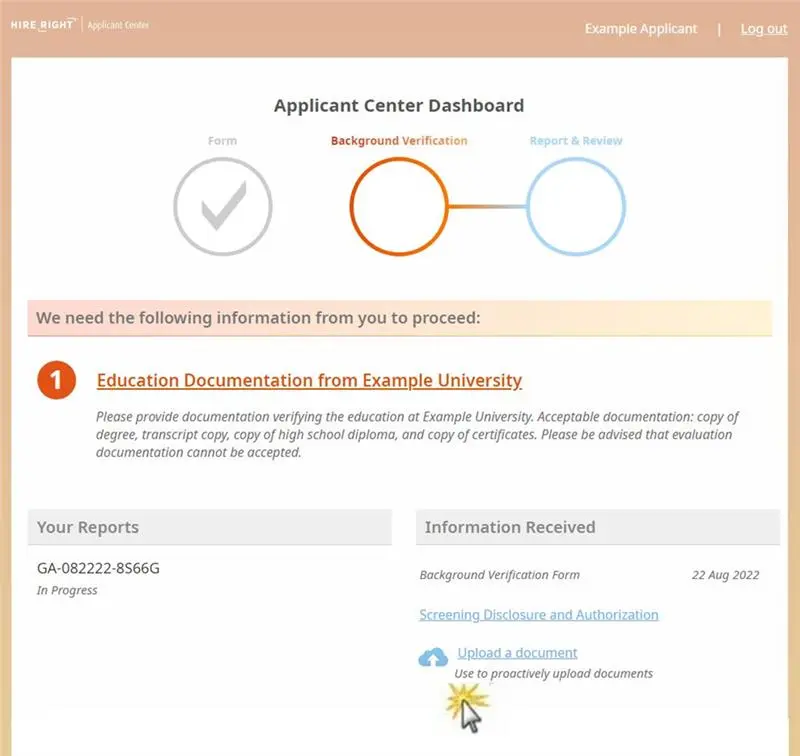
HireRight is one of the longest-established background check vendors and is widely used by large enterprises with complex hiring requirements.
Its background screening software supports criminal record checks, employment and education verification, identity verification, sanctions screening, drug testing, occupational health screening, and I-9 and employment eligibility services.
The platform is a strong fit for multinational hiring programs.
- 200+ countries and territories, 20+ languages
- Native Ashby integration, 70+ ATS integrations overall
Why recruiters pick it: similar use case to First Advantage—global, regulated, high-volume— but teams often choose based on existing vendor relationships or specific industry expertise rather than the tech stack, since it's less API-forward than Checkr or Certn.
5. Verified First
Best for: US/Canada mid-market teams that want broad ATS coverage without enterprise pricing.
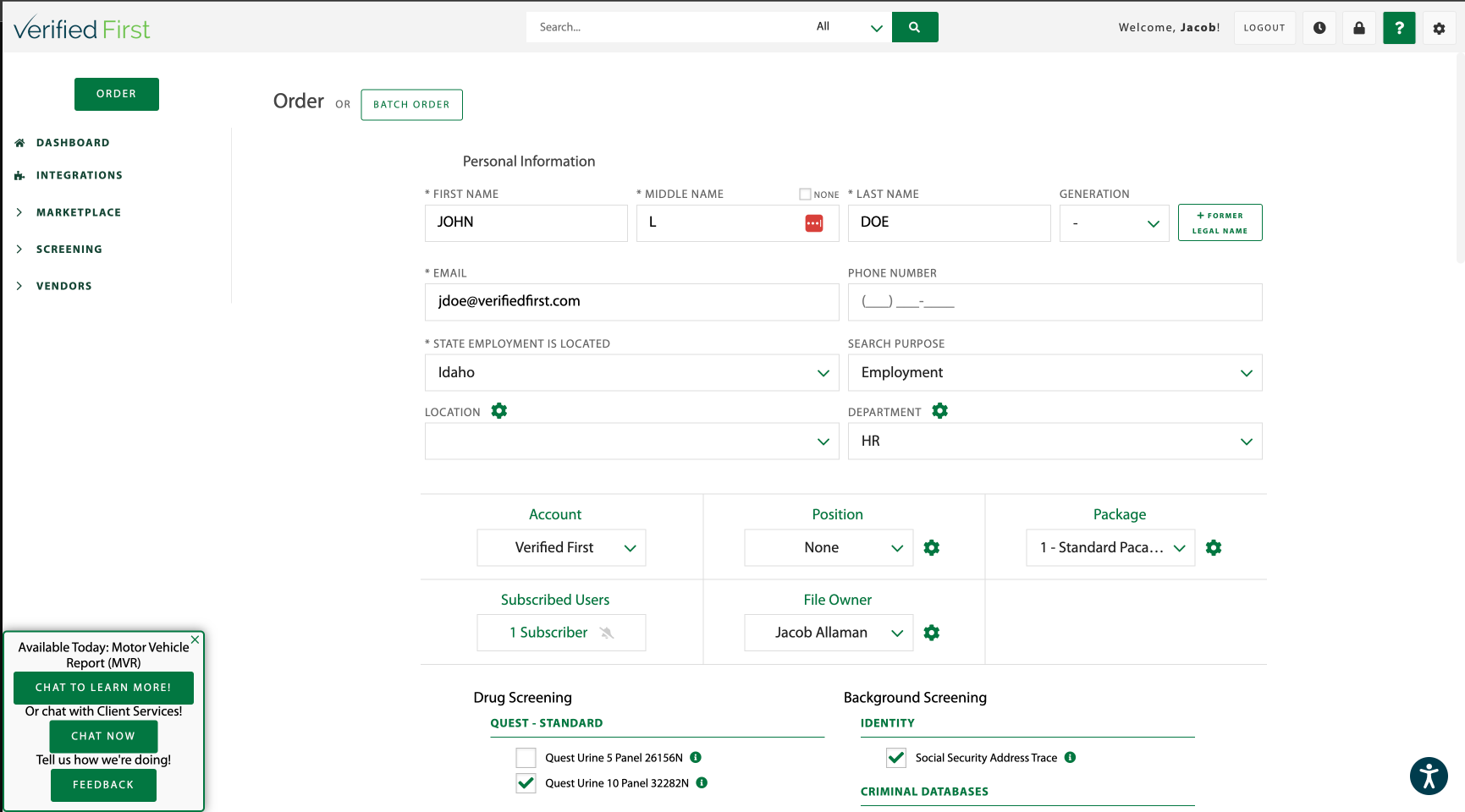
Verified First focuses on making pre-employment background checks easy to launch from the HR systems recruiters already use.
Its platform includes criminal background checks, drug testing, employment and education verification, credit reports, I-9 and E-Verify services, motor vehicle records, and occupational health screening.
One of its biggest differentiators is its integration ecosystem, with 150+ HR, ATS, HRIS, and payroll integrations, including Lever, Bullhorn, Workable, Workday, SmartRecruiters, and Zoho Recruit.
The platform emphasizes reducing manual work by letting recruiters order, track, and review background checks in hiring directly from their ATS and automates parts of the compliance workflow, including pre-adverse action notices, while offering customizable screening packages for different hiring needs.
- Criminal, drug testing, credit reports, I-9 and E-Verify
- Integrates with 100+ HR platforms, including Lever, Bullhorn, and Workable
- Advertises a 98% client satisfaction rating (self-reported, not independently audited — worth knowing, not disqualifying)
Why recruiters pick it: it's the option for teams that don't need First Advantage's global depth but still want their background check tool to talk to whatever ATS they're already using.
How to choose the best background check vendor for your team
Ask yourself these three questions in order:
- Where do I hire? If you’re hiring mainly across the U.S and North America only, Checkr, Certn, or Verified First all work. But if you’re hiring spans across multiple countries or regulated industries, First Advantage or HireRight is a better fit for you.
- How fast do I need results? If speed is the priority, Checkr and Certn lead. If coverage matters more than speed, First Advantage and HireRight are built for that tradeoff. But remember to take a look at customer reviews to get a better understanding of each vendor’s speed and efficiency.
- Does it need to work inside my ATS today? Check the integration list against your actual stack before signing anything. A vendor with a great reputation but no native connection to your ATS just means someone on your team is exporting and re-uploading CSVs by hand.
Common background check issues recruiters face (and how to handle them)
Most background check guides stop at "run the check and review the results." Recruiters know that's rarely how it plays out.
The difficult part isn't ordering a background check. It's deciding what to do when the results aren't black and white.
Here are four situations that routinely create uncertainty.
1. A candidate has a pending criminal charge
A pending charge isn't the same as a conviction, but it often raises the hardest questions.
For example, a candidate with a pending DUI may appear on a background check even though the case hasn't been resolved. Whether that affects the hiring decision depends on the role, the industry, and local regulations.
For roles involving public safety, commercial driving, government work, aviation, or defense, even pending charges may prevent someone from moving forward because of regulatory or security requirements.
Recruiters may choose to wait for additional context rather than treating a pending charge as an automatic disqualifier.
The key is consistency. Similar cases should be evaluated using the same documented process to reduce legal risk and ensure fair hiring decisions.
2. The background check uncovers something the candidate didn't disclose
Sometimes a background check reveals information that genuinely changes the hiring decision. Other times, it simply exposes a misunderstanding or missing context.
An undisclosed termination, employment dates that don't match, or a criminal record that wasn't disclosed may require recruiters to reconsider an offer. But that's only part of the story.
Offer rescissions aren't always caused by the background check itself. Communication gaps between recruiters, hiring managers, and candidates can derail offers just as easily. A hiring manager discovering an undisclosed start-date conflict or accommodation request after the offer is extended can create the same outcome, even if the background report is completely clear.
If a background check does influence your decision, don't skip the formal adverse action process. Give candidates an opportunity to review the report, explain discrepancies, and dispute inaccurate information before making a final decision.
3. Identity fraud is becoming a real hiring risk
Background checks used to focus on verifying someone's past. Increasingly, recruiters first need to verify the person sitting in the interview.
Remote hiring has made identity fraud significantly easier. Some candidates use stolen identities, while others rely on AI-generated deepfakes or proxies to complete interviews on their behalf. Gartner predicts that by 2028, one in four job candidates globally could be fake, making identity verification an increasingly important part of the hiring process.
One emerging best practice is to verify identity twice: once during the interview process and again after the candidate accepts the offer.
Combining government-issued ID verification with biometric liveness checks makes it much harder for impersonation attempts to slip through unnoticed.
4. References aren't always genuine
Reference fraud has become more sophisticated alongside resume fraud.
A study from Crosschq Data Labs found that candidates are almost four times more likely to intentionally misrepresent themselves than they would have in 2021.
Instead of listing former managers, some candidates provide friends, family members, or entirely fabricated contacts who pose as professional references. Email-only reference checks make this easier because it's difficult to verify who's actually responding.
For higher-risk or senior-level hires, a quick phone conversation often provides far more confidence than an automated questionnaire. It's also worth confirming that the reference actually worked with the candidate by cross-checking LinkedIn profiles, company records, or employment verification reports when possible.
Background checks can verify employment history, but they can't always verify the credibility of the person providing the reference. That's still where recruiter judgment makes the biggest difference.
Compliance guardrails recruiters should know before running a background check
Disclaimer: This section covers common compliance considerations for background checks in hiring. It isn't legal advice. Employment screening laws vary by country, state, and industry, so always consult your legal or compliance team before making policy decisions.
1. Get written consent before you start
Before initiating any pre-employment background check, you must obtain the candidate's written authorization. In the US, this is required under the Fair Credit Reporting Act (FCRA) whenever a third-party consumer reporting agency is used to conduct the screening.
Most background check vendors automate this step by sending digital disclosure and consent forms to candidates. Even so, recruiters are ultimately responsible for ensuring consent has been obtained before a screening request is submitted.
2. Pay attention to when you run the check
Timing matters just as much as the check itself.
Many U.S states and local jurisdictions have Ban the Box or Fair Chance hiring laws that restrict when employers can ask about or consider criminal history. In many cases, criminal background checks can only be initiated after a candidate has received a conditional job offer.
Running a check too early can expose your organization to unnecessary legal risk, even if the results never influence the hiring decision.
3. Follow the adverse action process
Not every issue uncovered during hiring background verification should lead to an automatic rejection.
If a background check influences your hiring decision, the FCRA generally requires employers to follow an adverse action process.
That typically includes providing the candidate with a copy of the background report, notifying them of the potential decision, and giving them an opportunity to dispute inaccurate or incomplete information before a final decision is made.
4. Know the rules for your industry
Different industries have different screening requirements. For example:
- Transportation roles regulated by the US Department of Transportation (DOT) often require drug testing and motor vehicle record checks.
- Financial services firms may require FINRA fingerprinting and additional regulatory screening.
- Healthcare employers commonly perform OIG exclusion checks before hiring clinical staff.
- Cannabis businesses face screening requirements that vary significantly by state.
Before choosing a screening package from a background check vendor, confirm that it aligns with the regulations for the role you're hiring for.
5. Consider international hiring rules
Global hiring introduces another layer of complexity.
Countries have different rules governing what employers can verify, how candidate data must be handled, and whether certain types of screening are permitted at all. For candidates in the European Union, for example, GDPR imposes strict requirements around collecting, processing, and storing personal data.
If you're hiring internationally, work with a vendor that understands local compliance requirements rather than applying a US screening process everywhere.
6. Protect candidate data
Background check reports contain highly sensitive personal information, including identity documents, employment history, and criminal records.
Your background screening software should meet recognized security standards such as SOC 2, and your candidate screening tool or ATS should have appropriate access controls so only authorized team members can view screening results. Strong security practices aren't just good governance.
They're essential for protecting candidate privacy and maintaining trust.
How background checks integrate with your ATS
The best ATS integrations make hiring background verification feel like just another step in your recruiting workflow.
Instead of switching between recruiting tools, recruiters should be able to launch a pre-employment background check, track its progress, and review the results directly from the candidate's profile.
That saves time, reduces manual work, and keeps everyone working from the same information.
Flexibility matters too. Some teams run background checks after a conditional offer, while others wait until final approvals. Your ATS should support the workflow that works for your team, not force you into a fixed process.
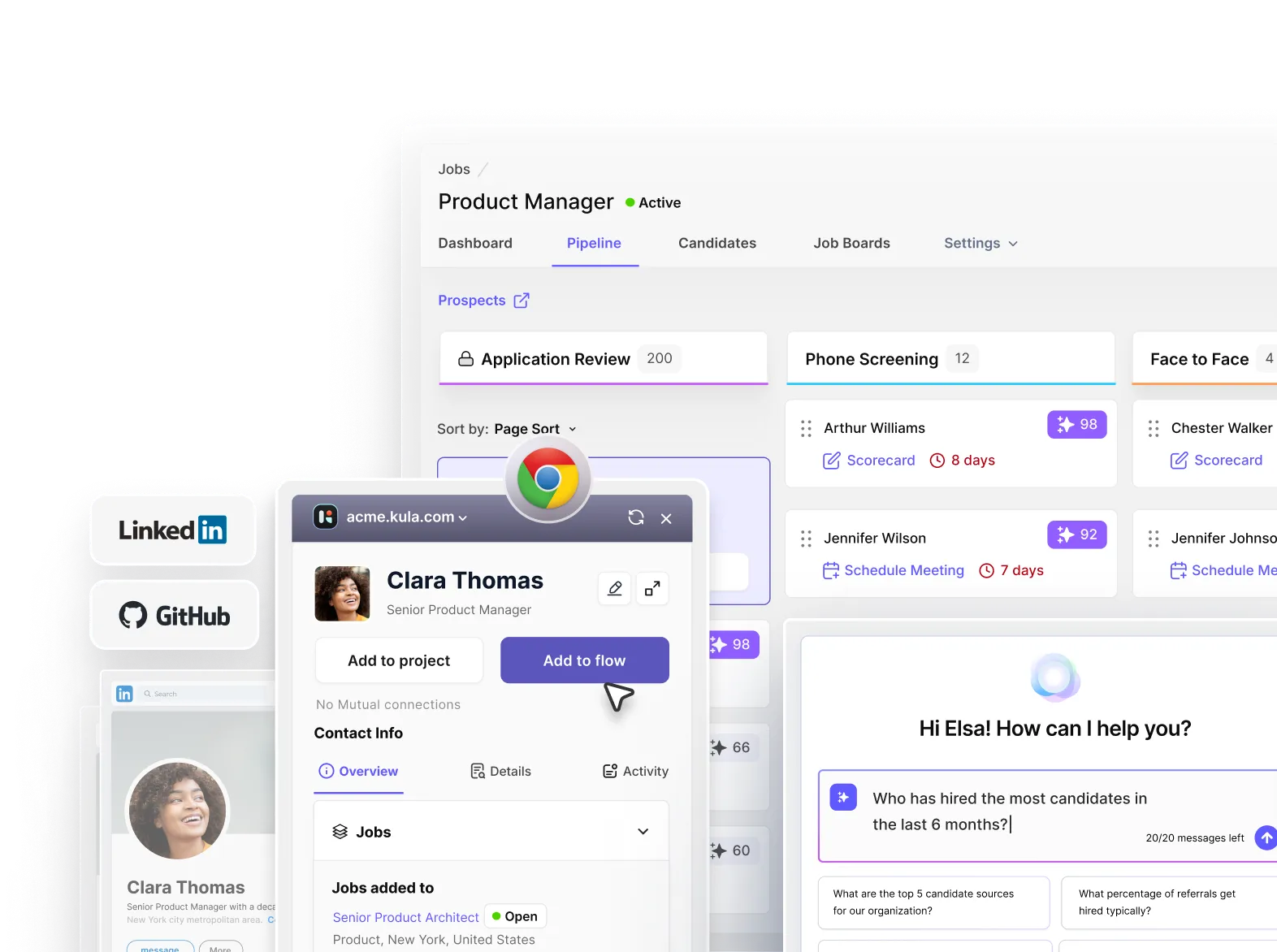
For example, Kula integrates with providers like Checkr, Certn, Zinc, and Verified First, allowing recruiters to launch background and reference checks in one click, monitor their status, and view results without leaving the ATS.
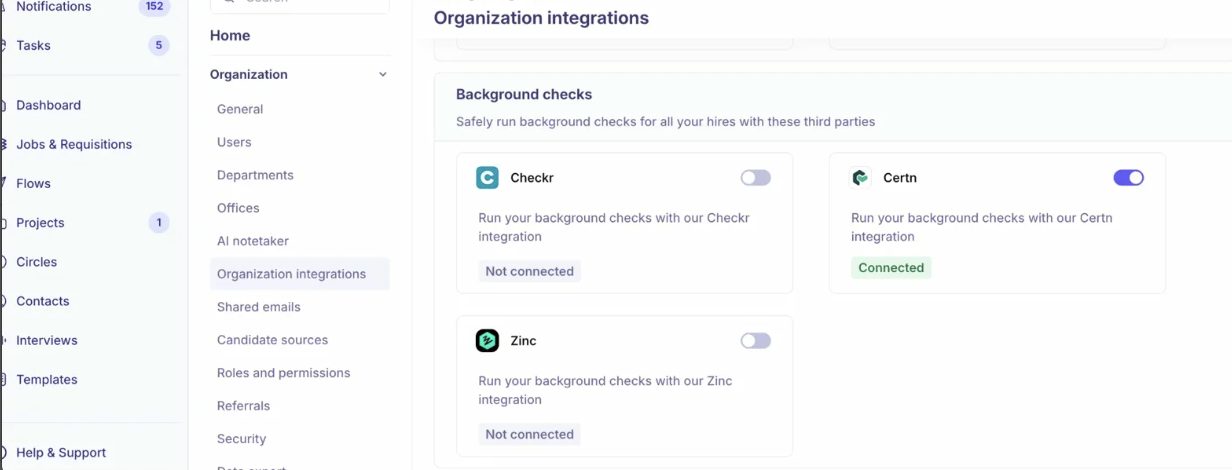
When evaluating background screening software, look for native integrations over import-export workflows. The fewer manual steps involved, the smoother your hiring process will be.
A practical background check checklist for recruiters
Use this checklist to make sure every pre-employment background check is consistent, compliant, and easy to defend if questions arise.
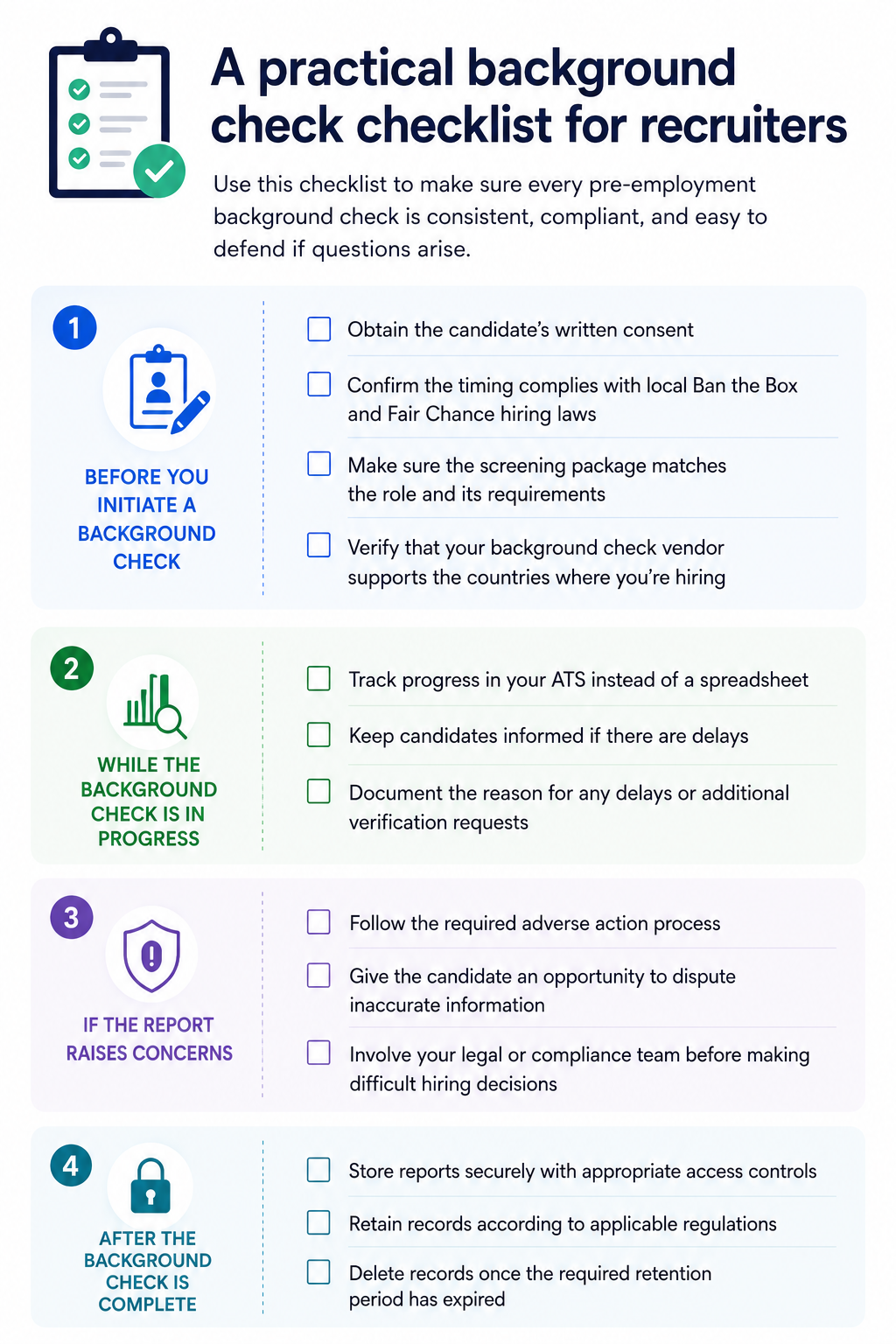
Before you initiate a background check
☐ Obtain the candidate's written consent
☐ Confirm the timing complies with local Ban the Box and Fair Chance hiring laws
☐ Make sure the screening package matches the role and its requirements
☐ Verify that your background check vendor supports the countries where you're hiring
While the background check is in progress
☐ Track progress in your ATS instead of a spreadsheet
☐ Keep candidates informed if there are delays
☐ Document the reason for any delays or additional verification requests
If the report raises concerns
☐ Follow the required adverse action process
☐ Give the candidate an opportunity to dispute inaccurate information
☐ Involve your legal or compliance team before making difficult hiring decisions
After the background check is complete
☐ Store reports securely with appropriate access controls
☐ Retain records according to applicable regulations
☐ Delete records once the required retention period has expired
Following the same process for every hire doesn't just make recruiting more efficient. It also helps reduce compliance risks and creates a hiring process that's consistent, repeatable, and fair.
The best background check process is one recruiters barely have to think about. When screening, compliance, and hiring workflows work together, teams spend less time chasing updates and more time making hiring decisions.
With native integrations for providers like Checkr, Certn, Zinc, and Verified First, Kula helps recruiting teams launch background and reference checks in one click and manage the entire screening process from within the candidate profile.
Book a demo with Kula now to see it in action!

The process typically includes obtaining the candidate's written consent, choosing the appropriate screening package for the role, running the background check through a trusted provider, reviewing the results, and following the required adverse action process if issues arise. Employers should also ensure the process complies with local employment and privacy laws.
Some of the most popular background check providers for small businesses include Checkr, Certn, Verified First, HireRight, and First Advantage. The right choice depends on your hiring volume, budget, geographic coverage, ATS integrations, and the types of background checks your business requires.
Look for a provider that offers the checks you need, supports the countries where you hire, integrates with your ATS, follows relevant compliance requirements, and provides transparent pricing and turnaround times. Strong customer support and data security certifications such as SOC 2 are also important considerations.
A standard employment background check typically includes criminal record searches, employment verification, education verification, identity verification, and reference checks. Depending on the role, employers may also include credit checks, driving records, drug screening, or professional license verification.
The cost of an employment background check varies depending on the provider and the type of screening. Basic packages typically start at $30–$60 per candidate, while more comprehensive checks that include employment verification, education verification, international screening, or drug testing can range from $100-$200+ per candidate. Enterprise pricing is often customized based on hiring volume.