




Technical talent sourcing has become much harder in the last few years.
The best senior engineers are already employed, recruiter inboxes are crowded, and AI has made both resumes and interviews harder to evaluate. The sourcing tactics that worked when a LinkedIn search and a batch of InMails could fill a pipeline aren't enough anymore.
To make things worse, a polished resume doesn't always tell you what someone can build, while an AI-assisted interview can make a candidate sound stronger than they are. At the same time, experienced engineers have seen enough generic outreach to know when a recruiter hasn't done much homework.
Instead of relying on job boards, keyword searches, and high-volume outreach, recruiters need better ways to identify engineers, assess the evidence behind their experience, and give strong candidates a reason to engage.
Keep reading to learn more about how technical talent sourcing works today, including the best platforms to find top tech talent, and building a sourcing process that can compete for hard-to-hire engineering talent.
Why standard technical sourcing is failing today
A lot of technical recruiting still follows the same basic process: write a job description, search for people who match the required skills, send outreach, and screen the candidates who respond.
But with AI thrown into the picture, along with the evolving job market, the same standard workflow doesn’t work anymore. Here’s why:
Recruiter fatigue is making outbound harder
Senior engineers are exposed to a constant stream of recruiting outreach, much of it based on the same handful of signals: job title, location, years of experience, and a few technologies pulled from their profile.
When someone receives enough messages that look interchangeable, another generic pitch isn't going to stand out just because the subject line is slightly better.
For technical recruiters, that makes targeting more important than outreach volume. Before contacting an engineer, you should have a clear reason for choosing them beyond the fact that their profile contains "Python" and "software engineer."
Their recent work, technical background, career trajectory, or experience with a particular problem should give you something specific to talk about.
The outreach then becomes an extension of the sourcing work rather than a separate step where the same generic message gets sent to everyone.
The mass-rejection experience creates another problem
Candidates are often being screened against hiring criteria that aren't clearly defined or don't match the job description, particularly when a role has been written broadly but the hiring manager is looking for a very specific level of experience.
That creates unnecessary rejection on both sides. Recruiters spend time reviewing candidates who were never a realistic match, while candidates go through applications and recruiter screens without a clear understanding of what the company actually needs.
For technical recruiting, the sourcing process should start with a well-calibrated hiring profile.
What skills are genuinely required? Which ones can be learned? What kind of technical experience matters most for this particular role? What evidence would convince the hiring manager that someone can do the work?
Without those answers, even a sophisticated candidate sourcing strategy is working from a weak brief.
AI has weakened resume signal
Generative AI has made it much easier for candidates to produce resumes that are polished, keyword-rich, and tailored to a job description.
As a result, resumes can now create a stronger impression of technical experience than the evidence behind it supports.
Gartner projects that 1 in 4 candidate profiles worldwide will be fake by 2028.
The projection is based on a survey of 3,000 job candidates, of whom 6% admitted to interview fraud, including posing as someone else or having someone else interview on their behalf.
For recruiters sourcing engineers, this makes resume screening a weaker standalone signal. A candidate's GitHub activity, open-source work, portfolio, technical projects, or other evidence of hands-on experience can provide useful context that a resume can't.
The point isn't to investigate every candidate's entire online history. It's to avoid making a sourcing decision based on a document that may have been heavily optimized for the job description.
AI is changing the interview stage as well
The same problem now extends into technical interviews. Candidates can use AI to prepare answers and, in some cases, assist them during live assessments. That makes it harder for hiring teams to rely on polished responses as evidence of technical ability.
In fact, 72% of TA leaders now run at least one in-person interview stage specifically to counter AI-assisted fraud.
That doesn't mean every company needs to bring every candidate into an office. It does mean technical hiring teams need assessment methods that reveal how someone reasons through a problem rather than simply how well they can produce a prepared answer.
For technical recruiters, this matters at the sourcing stage because the evaluation process affects who you should source in the first place. If the hiring team has no reliable way to distinguish between a strong resume and strong technical ability, adding more candidates to the funnel won't solve the problem.
The sourcing signal needs to change
This is where technical talent sourcing is moving beyond traditional resume databases.
When resumes provide less reliable signal, recruiters need other ways to understand a candidate's technical background. For example:
- GitHub activity can show recent work
- Open-source contributions can provide context around how someone builds and collaborates
- A portfolio can reveal the depth of their projects
- Technical communities can help identify people who may never appear in a conventional sourcing search
None of these signals should be treated as a shortcut for evaluating someone. They are simply additional evidence that can help a sourcer decide whether a candidate is worth approaching.
And with a major skills gap in the job market, developer sourcing should be more about finding evidence of relevant work, not just finding keywords that match a job description.
Compensation still limits the pipeline
A strong sourcing strategy can get the right people into the funnel, but compensation, title, equity, flexibility, and role scope still influence whether those conversations turn into hires.
Technical sourcing therefore can't operate in isolation from the rest of the hiring strategy. If the company knows it can't compete on compensation, the sourcing team needs to understand what it can compete on before it starts building the pipeline.
The hiring channels that actually produce technical hires
If your technical sourcing strategy still starts and ends with LinkedIn, you're working with a pretty narrow view of the engineering talent pool. The best channel depends on the role, but technical recruiters have several places to find stronger signals than a resume database can provide.
1. GitHub
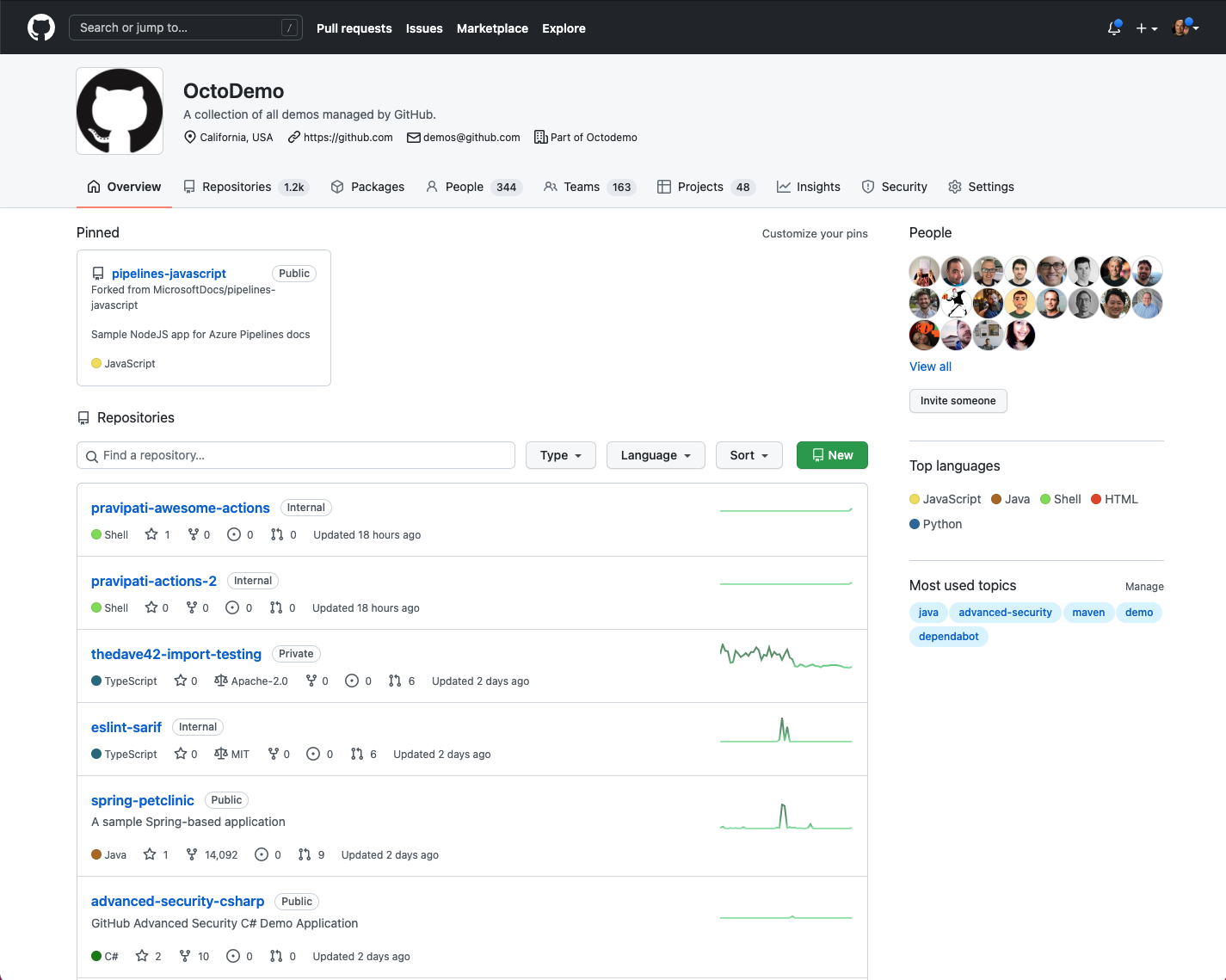
GitHub gives you something most candidate sourcing tools don't: evidence of what an engineer has actually worked on.
With more than 180 million developers on the platform, sourcing on Github is especially useful for technical talent sourcing, especially when you know exactly what kind of signals you're looking for.
GitHub's search operators let you get much more specific than searching for a job title. For example:
stars:>15 language:TypeScript created:>2019-01-01
This narrows the search to TypeScript repositories with meaningful traction. You can also combine topic:machine-learning with language:python to find developers working in a particular area, or use pushed:>YYYY-MM-DD to focus on recent activity.
A few other signals are worth checking:
type:prto find people contributing to public projects- contribution history to see whether activity is consistent
- repository quality and relevance to the role
- followers as a rough indicator of community recognition
Don't treat GitHub activity as proof that someone is a good hire. Use it to answer a more useful sourcing question like, does this person have recent, relevant evidence of doing the kind of work we're hiring for?
2. Stack Overflow
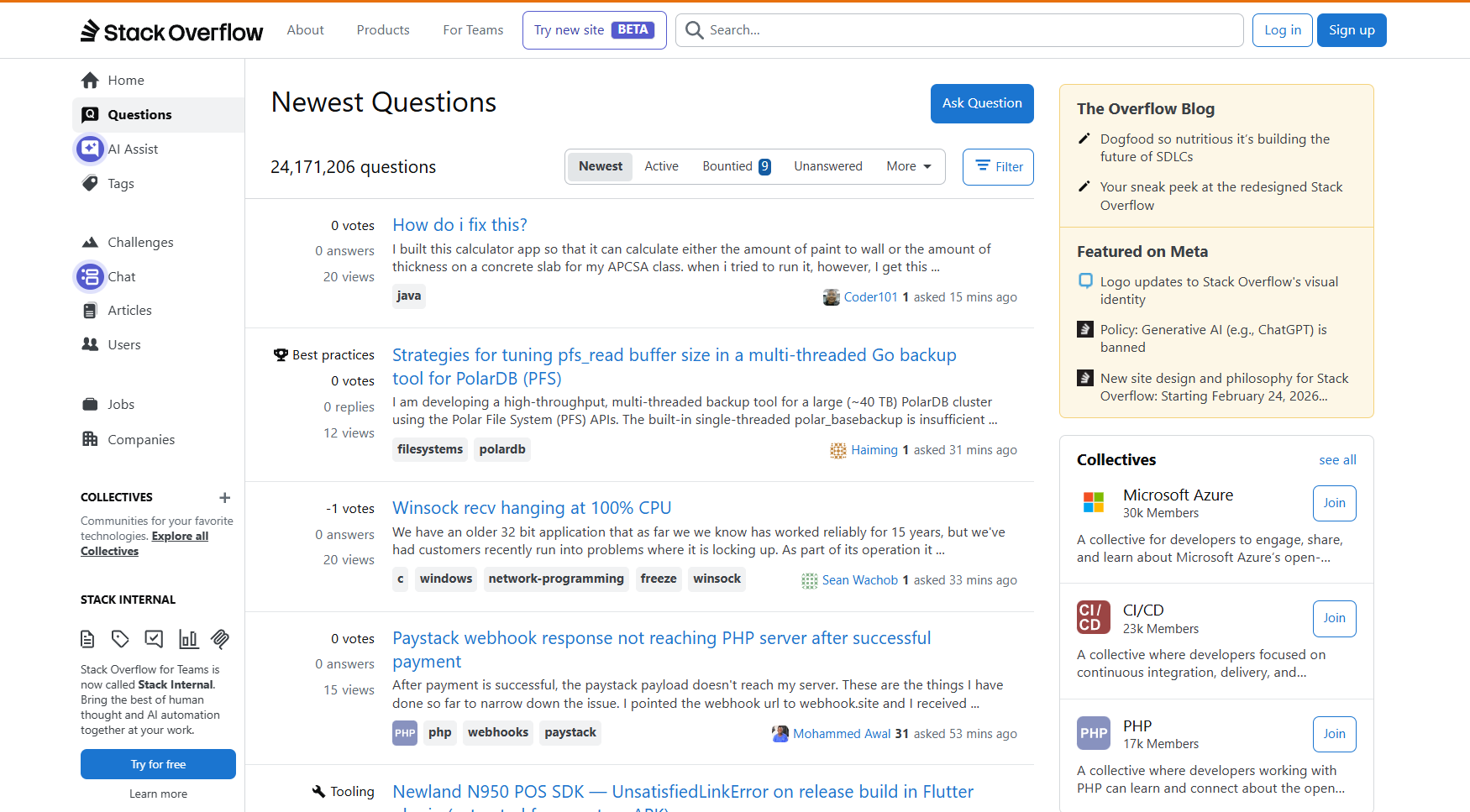
Stack Overflow can add another layer of signal, particularly for established technology stacks.
Search specific tags and look at who is consistently answering questions. For example:
[python] answers:>3
You can then use the Users tab and reputation filters to find people with deeper activity around a particular technology.
The strongest approach is to cross-reference that activity with GitHub. If someone has been answering Python questions for years and has recent Python projects on GitHub, you have a much stronger sourcing signal than either profile provides alone.
3. Technical and engineering meetups
Meetups are easy to overlook because they don't look like conventional sourcing channels.
That's exactly why they can work.
Look for smaller technical groups where organizers actually know their members. Instead of treating the event as another candidate database, build a relationship with the organizer and ask who they would recommend for the type of role you're hiring.
A warm introduction from someone who knows the local engineering community can get you much further than another cold message.
4. Discord, Slack, and GitLab community
Technical communities on Discord and Slack can be useful for specialized roles where you already know the ecosystem you're hiring from. Data science, frontend, and language-specific communities can all surface people who aren't actively advertising themselves as job seekers.
The important part is how you participate. Join the community, understand its norms, and contribute before turning every interaction into recruiting outreach.
GitLab community is another useful channel for developer sourcing, particularly when you're hiring in ecosystems where engineers already use it heavily. Developers can contribute ideas in the community, participate in Hackathons and they also have a Discord, GitLab Forum, and events where you can spot potential tech talent.
5. Conferences, hackathons, and diverse engineering networks
Local technical conferences and hackathons can work well when you need to build relationships at scale. They're especially useful for specialized engineering roles where technical community participation itself is a valuable signal.
For diverse engineering pipelines, established networks such as the National Society of Black Engineers, Code2040, Techtonica, the Grace Hopper Program, and CodePath can provide more targeted sourcing opportunities.
You can also test newer platforms such as Devlancer if you're specifically trying to reach developers who have opted out of traditional recruiter channels.
And remember, you don’t always need one "best" sourcing channel.
A strong technical recruiting strategy uses several channels at once, then tracks which ones actually produce qualified candidates and hires. That lets you invest more time in channels that work for your roles instead of assuming LinkedIn should carry the entire sourcing process.
AI sourcing tools built for technical hiring
The sourcing channels above can help, but they still leave recruiters handling a lot of manual work. AI sourcing tools automate parts of that process, from technical search and candidate screening to outreach and talent rediscovery.
Here are the tools worth considering for a technical recruiting stack.
1. HeroHunt.ai: Autonomous technical sourcing from search to outreach
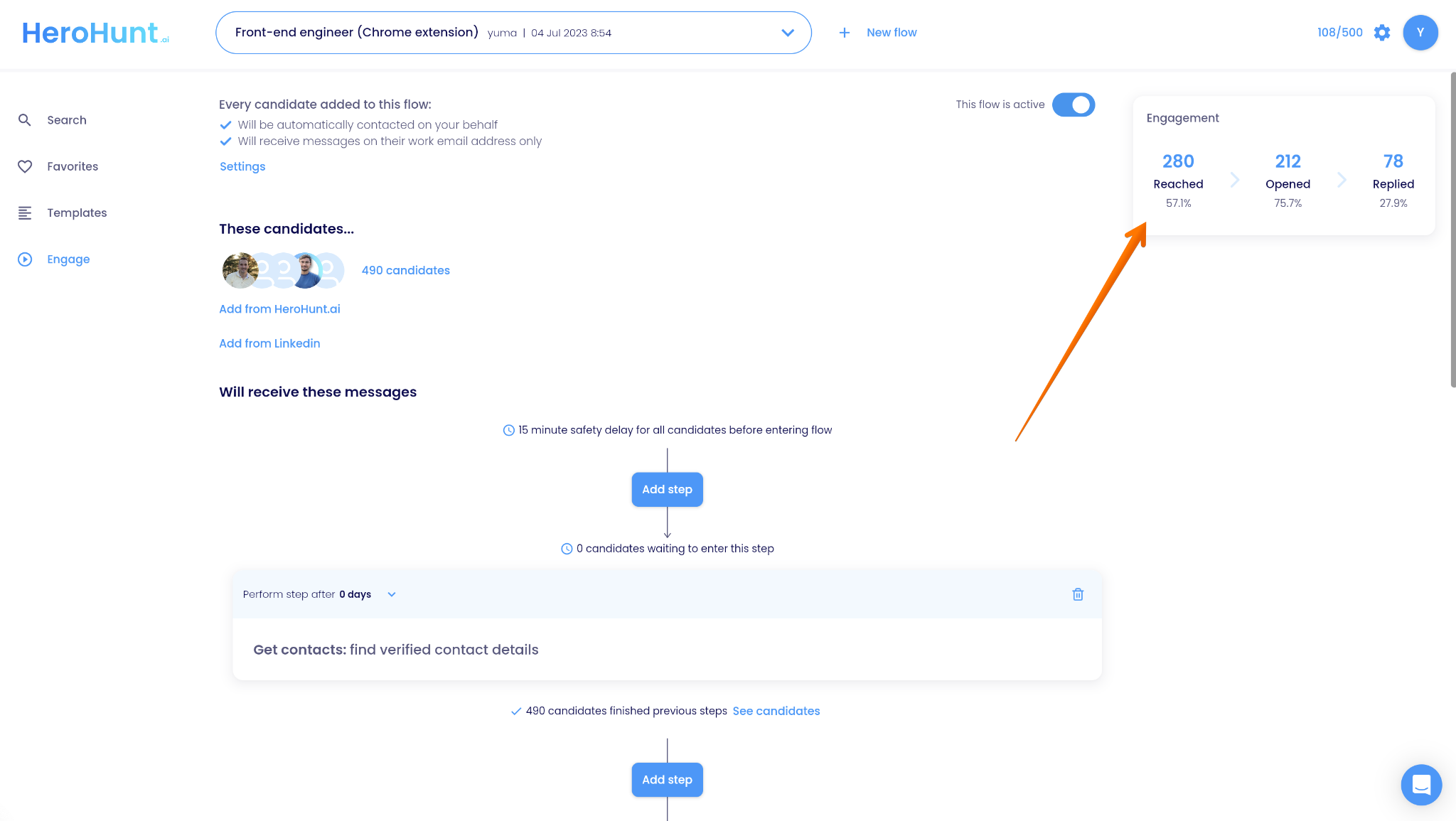
HeroHunt is designed to operate more like an autonomous recruiter than a traditional candidate search tool. It searches across LinkedIn, GitHub, and the open web, screens candidates against your written role criteria, and can then run multichannel outreach across LinkedIn, email, and WhatsApp.
Its RecruitGPT feature is particularly useful if you don't want to spend your time translating a hiring brief into Boolean strings. You can describe the engineer you're looking for in plain language and have the system turn that into a candidate shortlist.
HeroHunt isn’t just great for technical sourcing, but it actually continues into screening, messaging, and follow-ups without requiring a recruiter to manually move every candidate through each step.
That makes it worth considering for teams where the main constraint is sourcing volume and recruiter bandwidth, or high volume hiring, rather than a lack of access to candidate data.
2. Kula: Connect technical sourcing with evaluation
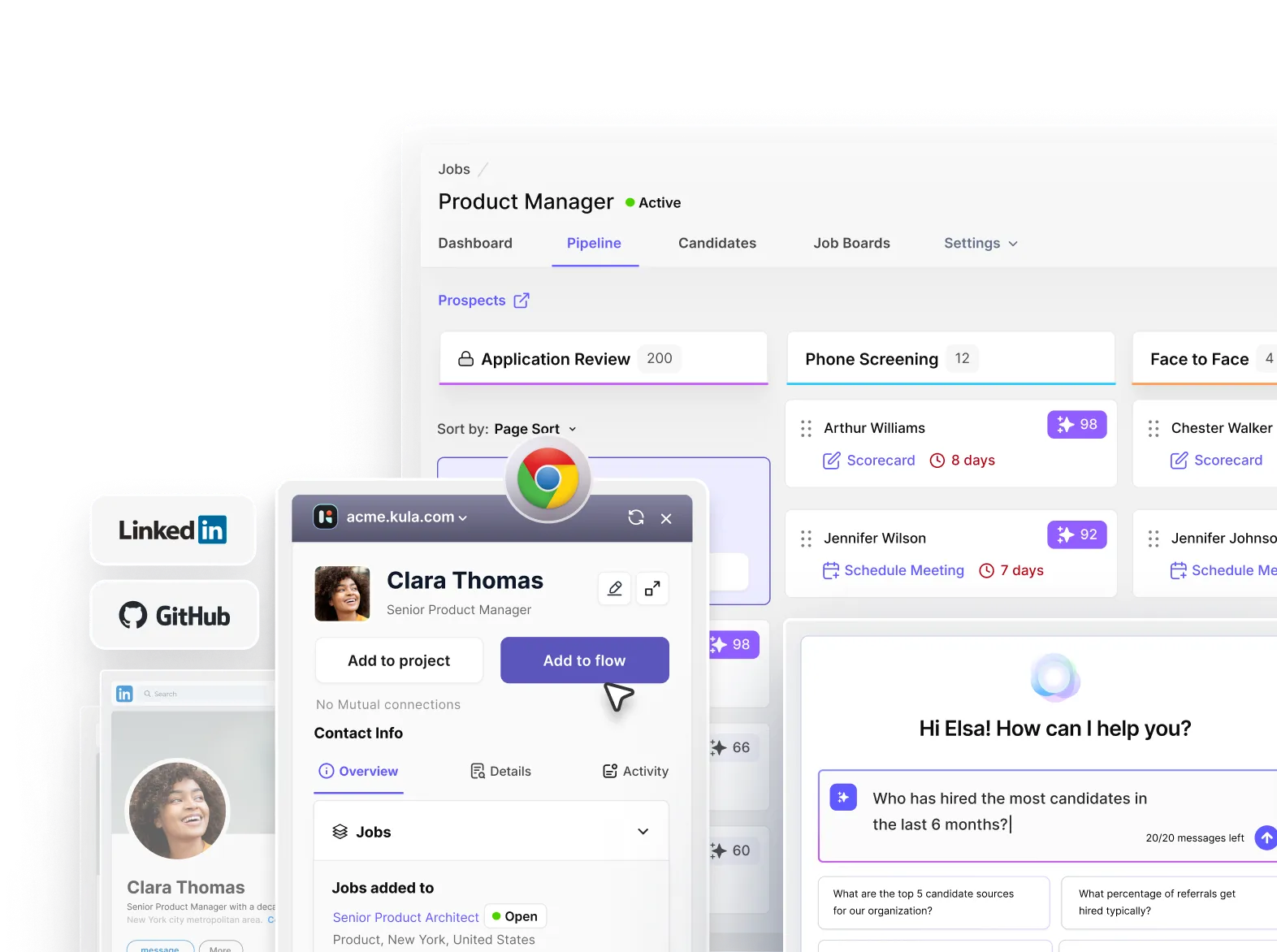
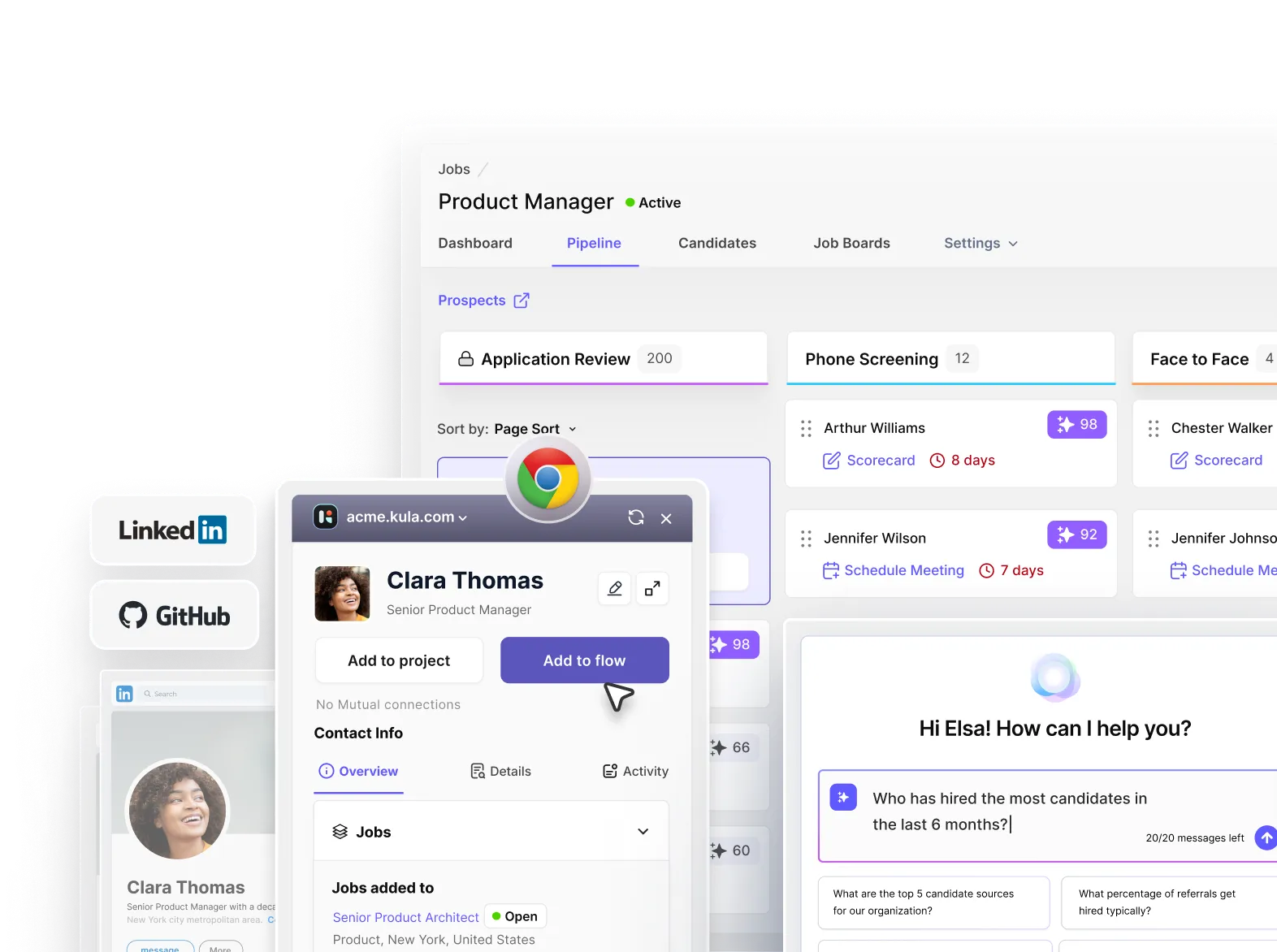
Kula takes a more ATS-first approach. Its Chrome extension lets recruiters capture candidates from LinkedIn and GitHub in one click and move them directly into Kula's sourcing workflow, avoiding the usual copy-paste between a sourcing tool and ATS.
Once the candidate enters the system, Kula's AI scoring lets recruiters define the criteria that matter for a role, including skills, education, and relevant experience, and then rank candidates against those requirements.
For example, when hiring a front-end engineer, recruiters can prioritize JavaScript, React, and CSS rather than relying on a generic resume match.
Recruiters can then use Kula's native sequencing for multichannel outreach, including hiring-manager-led outreach.
That combination is useful when you want technical sourcing, candidate evaluation, and outreach in the same workflow rather than adding another standalone sourcing database to your stack.
Plus, Kula also offers integrations with other applicant tracking systems, background check tools, and HR platforms like BambooHR, Workday, and many more. So you won’t have trouble syncing data from other platforms.
3. hireEZ: AI search without giving up Boolean control
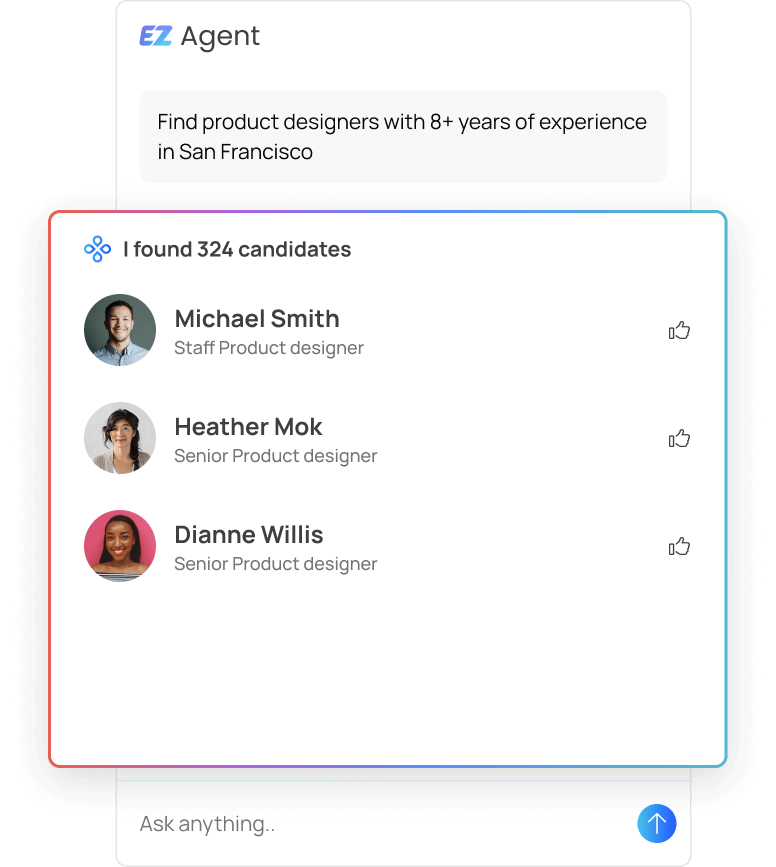
hireEZ is a strong option for recruiters who want AI search but aren't ready to abandon traditional sourcing techniques.
The platform searches across 45+ sources, including GitHub, Stack Overflow, and personal blogs, and consolidates the results into a single candidate profile. Its semantic search can understand relationships between skills rather than requiring an exact keyword match, which is useful when an engineer's job title doesn't neatly match the role you're sourcing for.
You can still use traditional Boolean, wildcard, fuzzy, and proximity operators when you need more control.
Then there's EZ Agent, which automates more of the sourcing workflow from search through candidate nurture. Outreach can happen through email, SMS, and InMail without leaving the platform.
The key distinction is that hireEZ doesn't force you to choose between manual search and AI. You can use AI for discovery while keeping the search controls experienced sourcers are already comfortable with.
4. Gem: Sourcing, application review, and fraud detection
Gem approaches AI recruiting as three connected workflows rather than one sourcing feature.
Its AI sourcing agent can search for new candidates while also prioritizing people already sitting in your ATS. That makes candidate rediscovery part of the sourcing process rather than an occasional cleanup exercise.
And with the AI application review agent, recruiters can evaluate inbound candidates against selected criteria with proper reasoning, so you can work through large applicant pools without treating keyword matches as the final decision.
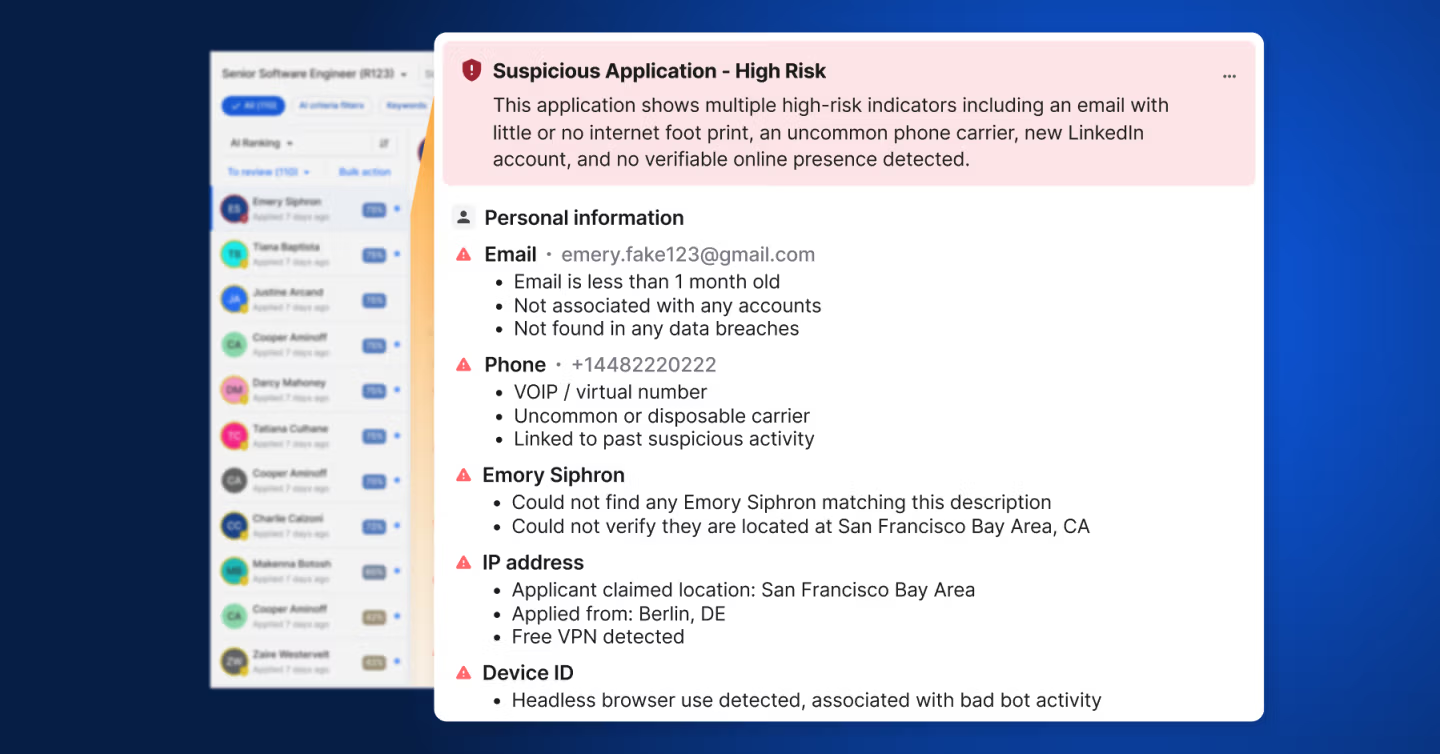
The most unique aspect is their AI fraud detection feature. Gem checks applications across multiple signals and flags potentially suspicious candidates.
That makes Gem one of the more interesting options if your sourcing problem isn't simply "find more engineers," but find, evaluate, and verify candidates across an increasingly AI-assisted hiring process.
Gem also integrates with ATSs including Greenhouse, Workday, Lever, and iCIMS, so teams can add these capabilities without replacing their existing system of record.
5. Ashby: Sourcing done directly from the ATS
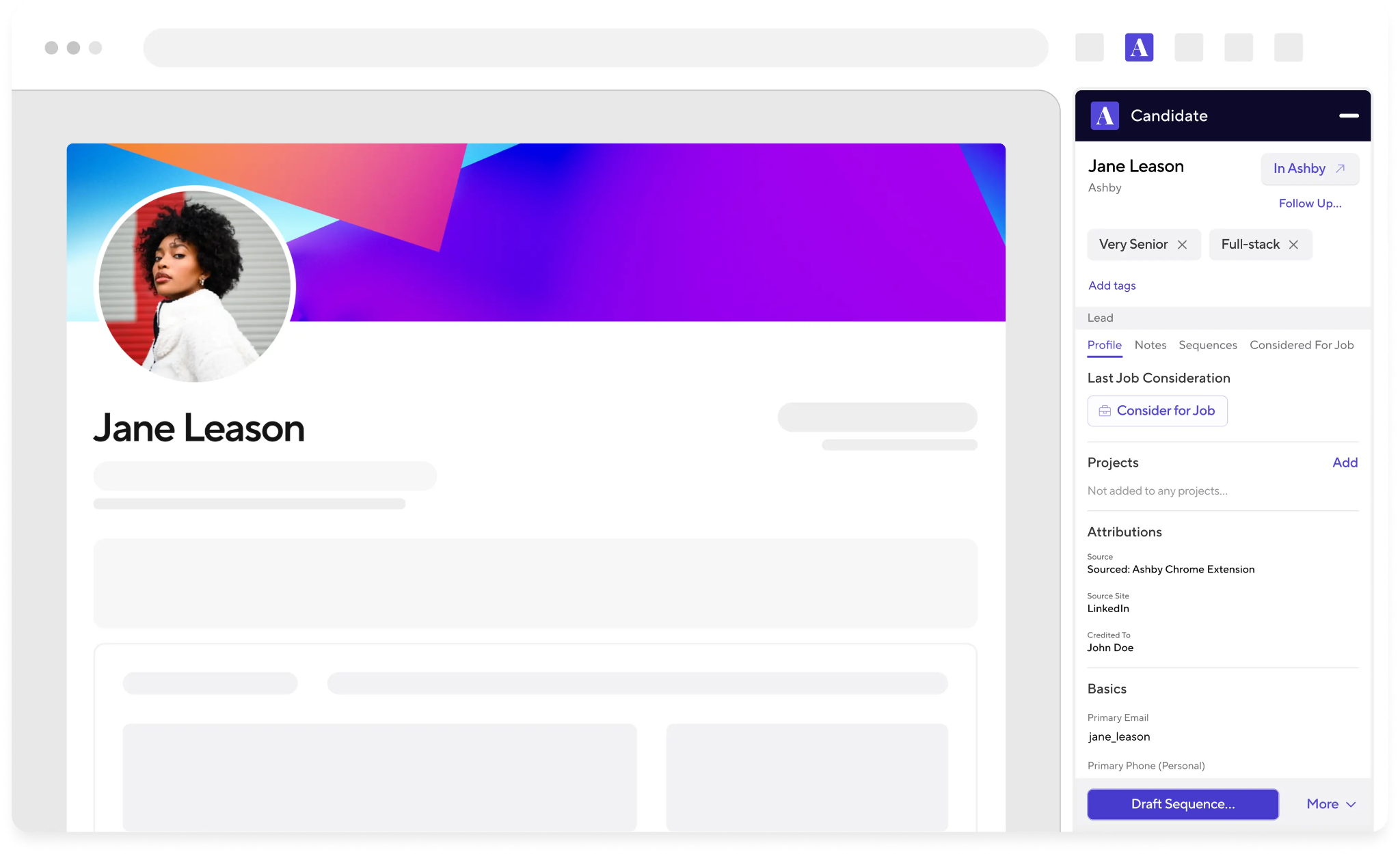
Ashby's Chrome extension takes a simpler approach by bringing sourcing into the ATS itself.
Recruiters can add candidates from LinkedIn or GitHub, and Ashby automatically checks whether that person already exists in the database using their LinkedIn URL.
This is great for preventing duplicate profiles as repeated outreach becomes a real problem when multiple recruiters are sourcing for the same engineering organization.
The extension can also look up a personal email address and enroll the candidate into an email or LinkedIn sequence.
From there, Ashby's AI can generate personalization based on the candidate's background and the specific job, but the generated content requires human review before it is sent.
The differentiator here is workflow continuity. You're not sourcing in one system and then manually transferring candidates into your ATS. The sourcing activity happens where your recruiting data already lives.
6. daily.dev Recruiter: Don't cold-message developers at all
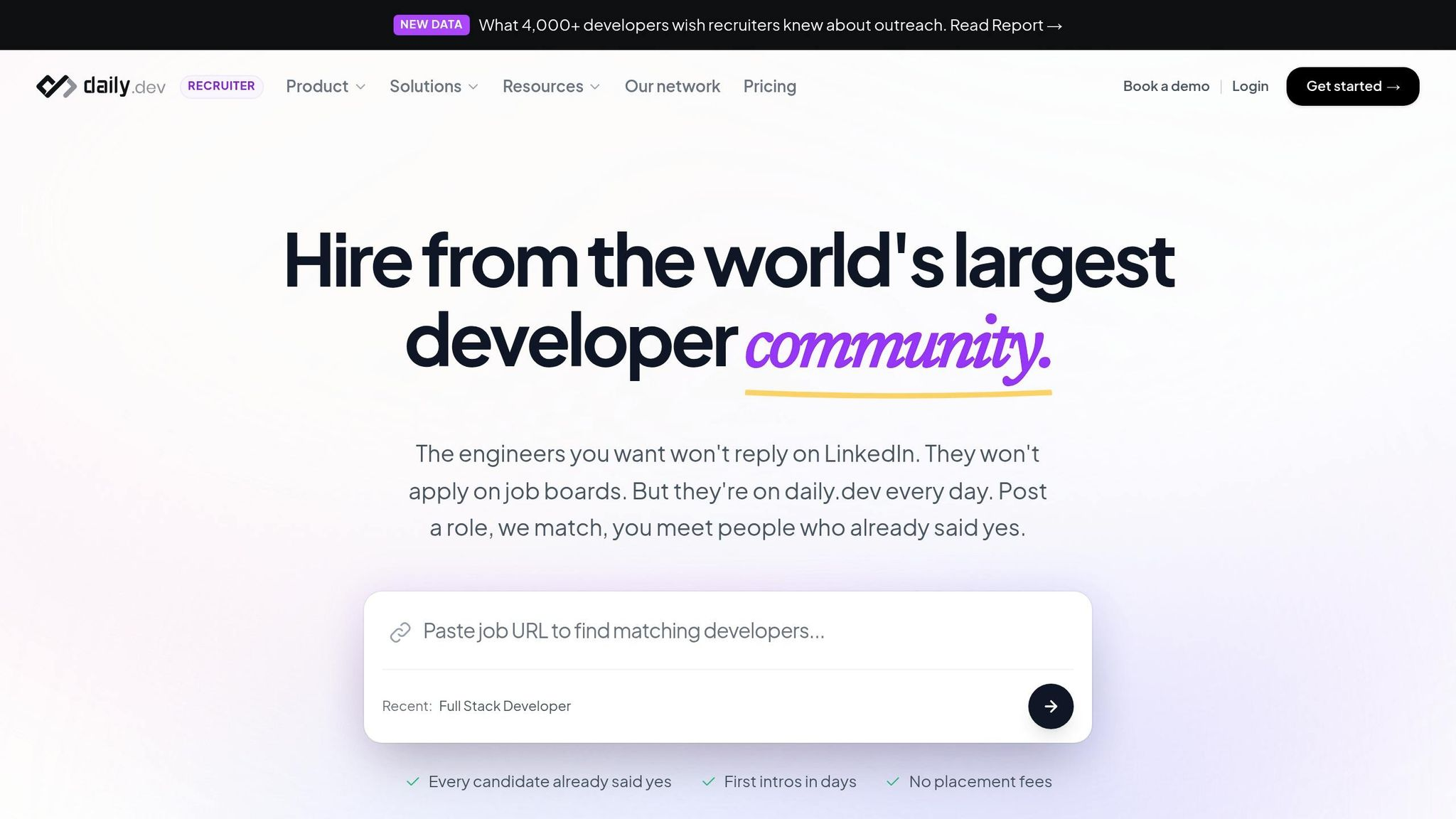
Instead of helping recruiters send more effective outbound messages, daily.dev Recruiter puts jobs in front of developers inside their developer network. An introduction only happens when the developer has opted into the specific opportunity.
That directly addresses one of the problems with conventional technical sourcing: outreach fatigue.
daily.dev says its network has more than 1 million developers who use the platform frequently for technical content. Those engagement figures are self-reported, so they should be treated accordingly.
The platform also uses a Developer Trust Framework that requires things such as transparent salary ranges and accurate role information, alongside a no-mass-outreach policy.
7. SeekOut Recruit: Make your existing candidate database useful again
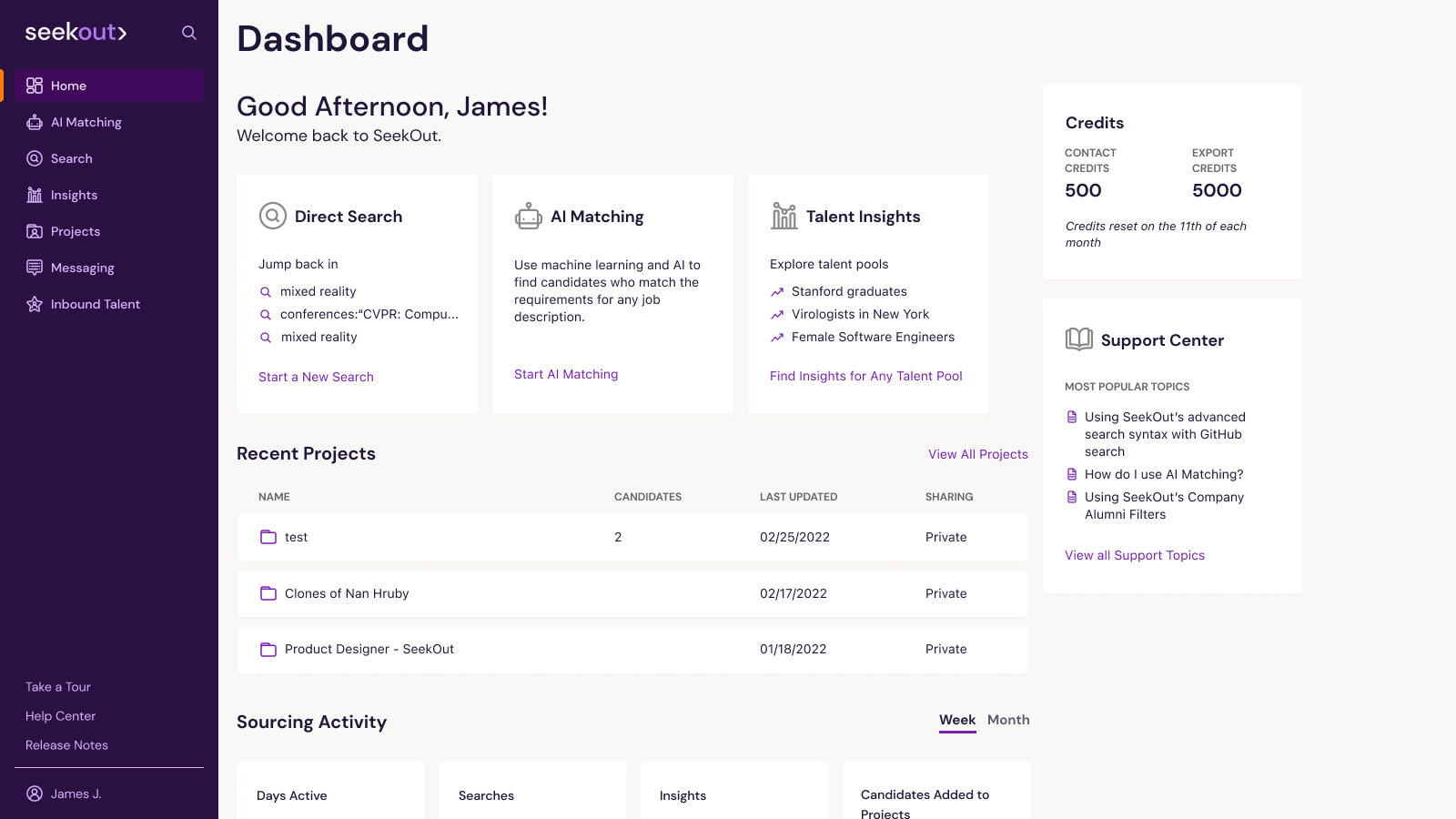
SeekOut is particularly strong for teams that have accumulated years of candidate data but aren't doing much with it.
Its search covers sources such as LinkedIn, GitHub, academic publications, and patents, with dedicated support for engineering roles. More importantly, its Talent Rediscovery capability connects to your ATS and surfaces previous applicants and silver-medalist candidates who may now fit a new role.
The platform can enrich those profiles with updated skills and experience, so recruiters aren't simply looking at an old application and hoping nothing has changed.
SeekOut also offers AI scorecards that evaluate candidates against a custom rubric and Workspaces that can generate search criteria and outreach messaging from a job description.
If you've already invested years in building a candidate database, this makes SeekOut particularly relevant. Your next engineering hire may already be somewhere in your ATS tool.
8. Candyfloss AI: Technical sourcing with GitHub at the center
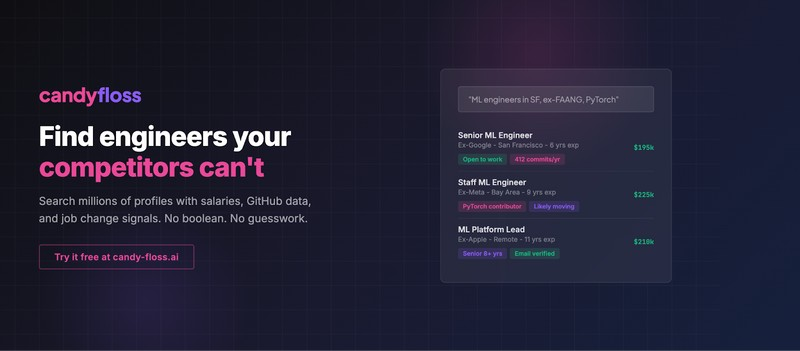
Candyfloss takes the narrowest approach here. Rather than building a broad recruiting platform, it's designed specifically around technical recruiting.
Its search uses natural-language queries instead of requiring recruiters to construct Boolean strings. You can describe something like an ML engineer in San Francisco with PyTorch experience and a particular background, and the platform handles the search.
Candidate profiles combine GitHub contribution activity with signals such as salary estimates and job-change indicators, giving recruiters several pieces of context in one place. AI-generated candidate briefs then summarize the person's background so a sourcer can quickly understand why someone might be relevant.
The focus on GitHub is the key differentiator as Candyfloss treats technical activity as a core sourcing signal rather than simply another database to search.
Which type of tool do you actually need?
Remember, these platforms aren't interchangeable. The best fit depends on what you need your sourcing stack to do:
- If your biggest bottleneck is manual sourcing work, HeroHunt is built around automating the process from candidate search and screening through outreach and follow-ups.
- If you want to keep sourcing and candidate evaluation in the same system, Kula connects LinkedIn and GitHub sourcing with its ATS, outreach workflows, and AI scoring based on your role-specific criteria.
- If your sourcers rely heavily on Boolean search but want AI to do more of the discovery, hireEZ combines semantic search with advanced Boolean, fuzzy, wildcard, and proximity operators.
- If you're dealing with both inbound volume and candidate fraud, Gem brings sourcing, application review, talent rediscovery, and fraud detection into one platform.
- If you already use Ashby as your ATS and want to avoid another sourcing system, its Chrome extension keeps candidate capture, duplicate checks, contact enrichment, and outreach within the same workflow.
- If developer outreach fatigue is the bigger issue, daily.dev takes a different route: developers opt into specific roles before recruiters are introduced to them.
- If your company has a large database of past applicants and silver medalists, SeekOut's talent rediscovery can help turn that existing pool into a sourcing channel.
- If you want a tool built specifically around technical signals, Candyfloss puts GitHub activity at the center of candidate discovery rather than treating it as just another data source.
The point isn't to find the most powerful sourcing platform on paper. It's to identify the part of your technical recruiting workflow that's slowing you down and choose a tool that actually addresses it.
How to write outreach that senior engineers actually respond to
Good technical sourcing can still fall apart at the outreach stage. Senior engineers don't need more information about your company. They need a clear reason to care about the specific opportunity, and they should be able to understand it without reading a wall of text.
A few rules are especially useful here.
1. Keep the first message short
An analysis of 40 million emails by Boomerang found that messages between 50 and 125 words had response rates above 50%, while response rates dropped sharply once messages passed 200 words.
The study isn't specific to engineering recruiting, and it's a few years old, so treat the numbers as a useful benchmark rather than a guarantee. The point is to give senior engineers the important details without making them work through a long pitch.
A good first message usually needs only:
- Why you're reaching out to them
- What the role involves
- One relevant detail about the opportunity
- A simple next step
Save the company history and five-paragraph explanation of the role for later.
2. Make the message specific to the person
Generic outreach makes it difficult for a candidate to understand why you chose them.
LinkedIn shared an example from one of its engineering recruiting teams where response rates increased from 28% to 85% after the team moved away from broad outreach and focused on specific, high-affinity candidates.
That's one team's experience, not a universal benchmark. Still, the difference is large enough to make personalization worth taking seriously.
For technical recruiting, personalization doesn't need to mean writing an entirely different message for every engineer. Start with something genuinely relevant:
I noticed you've been working on distributed systems at [company], particularly around [specific area]. We're building something similar at [company], but at a much larger scale...
That's more useful than:
Your background looks like a great fit for an exciting opportunity at a fast-growing company.
The first tells the candidate why you contacted them. The second could have been sent to anyone.
3. Give candidates a compensation signal
Compensation is one of the easiest ways for a candidate to help decide whether an opportunity is worth their time.
A 2026 Resume Genius survey found that 72% of job seekers are less likely to apply when a posting doesn't include salary information, while 79% said missing pay information makes them question an employer's transparency.
Those figures cover job seekers broadly rather than senior engineers specifically, but the principle is especially relevant when you're sourcing experienced technical talent. Someone who isn't actively looking has little reason to spend time on an opportunity if they can't tell whether the compensation is even in the right range.
If you can share a salary range, put it in the initial outreach. If equity, location flexibility, or another part of the package is genuinely competitive, mention that too.
4. Follow up, but don't turn it into spam
One message shouldn't be the end of the conversation.
At the same time, there's a difference between a thoughtful follow-up and sending the same pitch four times with "just bumping this" added to the top.
There isn't a reliable neutral benchmark for exactly how many follow-ups technical recruiters should send, so your own data is more useful here. Track first-touch response rates separately from follow-up response rates and look at where replies actually come from.
A simple sequence might give you a first message, a relevant follow-up with additional context, and one final check-in. If someone doesn't respond after that, move on.
5. Consider who should send the message
Research from Aline Lerner (Founder of interviewing.io), has looked at the effectiveness of reaching out to hiring managers directly rather than relying exclusively on recruiter-led outreach.
The advantage in this approach is that a message from the person who would actually manage the candidate can carry more credibility.
This can work particularly well for senior engineers. A staff engineer or engineering manager reaching out personally about the technical problem the team is solving is a very different proposition from another generic recruiting message.
That doesn't mean hiring managers should take over sourcing. It means your sourcing motion can use them selectively when their credibility adds something the recruiter can't.
6. Send when engineers are actually likely to see it
A noon.ai analysis of 147,882 timestamped candidate replies found that reply volume dropped by roughly 77% on weekends and was highest Tuesday through Thursday during business hours.
So if your team has been saving outreach for Saturday because candidates supposedly have more time to browse job opportunities, the data suggests doing the opposite.
For a global engineering team, test send times against your own candidate response data rather than assuming one schedule works everywhere.
7. Make exploratory outreach genuinely low-pressure
Senior engineers who aren't actively looking don't need to be convinced that they should change jobs. They first need a reason to have a conversation.
An exploratory message can work well when there isn't an immediate role that perfectly matches their background:
I’ve been following your work in [area], and your background is relevant to the engineering teams we build periodically. There isn't a specific opening I'm trying to push you into right now, but would you be open to a short conversation about what you're interested in next?
That's a template to test, not a guaranteed formula. The important part is that you're giving the candidate room to say no without turning the message into a hard sell.
8. Cut the recruiting buzzwords
Technical candidates don't need to be called "rockstars," "ninjas," "gurus," or "wizards."
Indeed’s data found that these types of buzzword job titles had declined substantially from their peak, while other hiring guidance has pointed to concerns about this language discouraging qualified candidates from engaging.
More importantly, these words don't tell an engineer anything useful about the work.
Tell them what they'll actually be building, what technical problems they'll work on, what level of ownership they'll have, and why their experience is relevant.
Ultimately, the best technical sourcing outreach doesn't try to sound impressive. It makes the opportunity specific enough that the right engineer can quickly decide whether they want to know more.
How to evaluate candidates when AI can influence the process
Finding the right engineer is only half the problem. Once candidates enter the pipeline, you need evaluation methods that give you useful signals even when candidates can use AI to prepare resumes, write take-home assignments, or rehearse interview answers.
1. Use live technical assessments when you need stronger signal
Take-home assignments are harder to rely on when candidates can use AI throughout the exercise. A live technical candidate evaluation gives interviewers a chance to see how someone approaches a problem, asks questions, responds to interview feedback, and changes their approach when something doesn't work.
That doesn't mean every role needs a live coding interview. The format should match the work. The point is to create at least one stage where the candidate has to demonstrate their technical thinking in real time.
2. Standardize the assessment
If every interviewer uses a different technical exercise, candidate scores become difficult to compare.
One approach is to use a standardized 4-to-6-hour assessment, with a pre-configured environment and a consistent technology stack. Interviewers can then evaluate candidates against the same core signals instead of changing the bar from one interview to the next.
You can also test the assessment internally before using it. Have two or three strong engineers already succeeding in the role complete the same exercise anonymously. Their results give the hiring team a reference point for what good performance actually looks like.
3. Use structured scorecards instead of gut feel
A structured interview scorecard forces interviewers to evaluate the criteria that were agreed on before the interview.
For an engineering role, that might include:
- Technical problem-solving
- Knowledge of the required stack
- Code quality
- Ability to reason through unfamiliar problems
The exact criteria should reflect the role. The important part is that interviewers are evaluating the same things and recording evidence for their decisions.
This also makes calibration easier. If a hiring manager rejects someone because they "didn't feel senior enough," the team can look at the specific scorecard criteria and evidence rather than debating impressions.
4. Look at the work, not just the resume
When resume signal is weaker, the candidate's actual work becomes more useful.
For junior engineers especially, review relevant GitHub activity, deployed projects, portfolios, or open-source contributions where available. Look at what they built, how recently they worked on it, and whether they can explain the decisions behind it.
The goal isn't to penalize candidates who don't have public code. It's to add another source of evidence when one is available.
5. Probe past experiences instead of accepting polished answers
AI can produce a convincing behavioral response. Specific memories are harder to fake.
Instead of stopping at "Tell me about a time you handled a difficult technical problem," ask follow-up questions that require the candidate to reconstruct what actually happened:
What would you do differently if you could redo it?
Or:
What happened between Tuesday and Thursday when you were working through that problem?
The goal isn't to catch someone out. It's to move the conversation from a rehearsed answer toward the details of how they actually worked.
Some teams have also introduced unusual anti-AI measures, such as asking candidates to remove headphones during interviews or moving away from highly predictable STAR-style questions.
These tactics won't suit every hiring process, but they reflect the broader need to assess genuine reasoning rather than polished responses.
6. Prefer collaborative technical exercises over performance tests
Pair programming can provide a more realistic view of how an engineer works than an adversarial whiteboard exercise. You can see how they communicate, ask for clarification, respond to another engineer, and work through a problem together.
That's a useful signal for engineering roles because the job itself rarely involves solving problems alone on a whiteboard while someone watches.
7. Mine your existing talent pool before starting from zero
One of the most overlooked evaluation signals may already be sitting in your ATS.
Candidates who reached the final stages of a previous engineering role but weren't hired have already gone through part of your assessment process. If their skills are still relevant, they're worth revisiting before launching another cold sourcing campaign.
Talent rediscovery isn't just a sourcing shortcut, but also acts as a quality filter.
Your previous interview process has already generated evidence about these candidates, which can make a silver-medalist worth revisiting before an engineer you've never evaluated.
How to build a technical sourcing function that can compete with big tech
1. Give technical sourcing enough specialization
If you're hiring engineers at scale, dedicated technical sourcers can bring skills that generalist recruiters may not have. They can assess GitHub profiles, understand the difference between adjacent technologies, recognize relevant technical experience, and have more credible conversations with engineers.
That specialization becomes especially valuable when you're hiring for several engineering roles at once. The sourcer isn't starting from scratch with every new req.
2. Keep the sourcer, recruiter, and hiring manager aligned
This is one of the simplest things to get right and one of the easiest to neglect.
Set up a regular intake sync between the sourcer, recruiter, and hiring manager. Use it to agree on what a strong candidate looks like, which requirements are genuinely non-negotiable, and what evidence the hiring manager expects to see.
Then use the candidates coming through the pipeline to recalibrate.
If the hiring manager keeps rejecting candidates for reasons that weren't part of the original brief, the problem isn't necessarily the sourcer. The hiring profile needs to be updated.
3. Let engineering managers participate in sourcing
Engineering managers can also be valuable sourcing partners, particularly for senior or highly specialized roles.
For example, an ATS for tech companies can allow engineering managers to source candidates for their own open roles using sequencing tools. That way, engineering managers can go into the ATS, find candidates, and send their own pre-built sequences.
The advantage is obvious: engineers may respond differently when the person reaching out actually leads the team and can talk about the technical work firsthand.
It also gives the hiring manager direct exposure to the talent pool instead of making candidate sourcing something that happens several steps away from them.
4. Measure what actually produces hires
Don't evaluate your sourcing function by how many profiles were added to a spreadsheet.
Track recruiting KPIs like:
- Response rate by outreach approach
- Qualified candidates by sourcing channel
- Interview-to-offer and offer-to-hire rates
- Time spent in each hiring stage
A lot of recruiters rely on gut feel, but whether or not a candidate feels like a good fit, your sourcing data should tell you which channels and approaches are actually producing qualified candidates and hires.
5. Treat competitive intelligence as part of sourcing
Know where your target engineers are working and what is happening at those companies.
Track competitor hiring and headcount changes. Keep an eye on organizations reducing engineering teams. Monitor the technical communities and companies where the skills you need are concentrated.
This gives sourcers a better starting point than repeatedly searching the entire market for the same job title.
7. Build an employer brand engineers can find
Mid-market companies can't always compete with big tech on compensation or brand recognition. They can make the technical work itself easier to discover.
Engineering blogs, open-source contributions, conference sponsorships, technical talks, and genuine engineering culture content can give prospective candidates a reason to know the company before a recruiter reaches out.
That can reduce how much convincing your outreach needs to do.
And none of this works if the compensation strategy can't support the hiring plan. If the compensation floor isn't competitive for the senior engineers you're targeting, the sourcing team can build a great pipeline and still struggle to close it.
Is your technical sourcing strategy working?
Before adding another sourcing tool or channel, look at the basics. Ask yourself:
1. Which channel actually produced your best engineers?
If you can't trace your strongest hires back to a sourcing channel, you don't have reliable attribution. Fix that before changing the channel mix.
2. Can you find 10 qualified engineers for a specific role within five business days without LinkedIn Recruiter?
If the answer is no, you're probably too dependent on one channel. A healthy technical talent sourcing strategy shouldn't collapse when one source gets noisy.
3. Do engineering managers know the offer acceptance rate for candidates your team sources?
If they don't, sourcing and hiring are operating as separate functions. Hiring managers need visibility into what happens to the candidates entering their pipeline, including where sourcing quality is helping or hurting conversion.
If any answer is no, there's a structural problem to fix before buying another tool or adding another channel.
Technical recruiting has changed quickly, and the teams that adapt their sourcing process will have an easier time competing for strong engineers.
A few changes can make the biggest difference:
- Diversify your sourcing channels. Look beyond LinkedIn to GitHub, Stack Overflow, technical communities, conferences, and your existing candidate pool.
- Make outreach worth responding to. Keep it concise, show that you've done your homework, and give candidates a clear reason to consider the opportunity.
- Look for real technical signal. GitHub activity, portfolios, live assessments, structured scorecards, and practical exercises can tell you more than a polished resume alone.
- Keep hiring teams involved. Regular calibration between sourcers, recruiters, and engineering managers keeps the sourcing process aligned with the actual hiring bar.
- Track what turns into hires. Measure channel performance, response rates, candidate conversion, and offer acceptance so you can invest in what works.
The next step is making these practices repeatable. When sourcing, screening, outreach, interviews, and hiring data live in disconnected systems, it's harder to see what's working and where candidates are falling out of the process.
Kula brings those workflows together in one ATS, including AI candidate screening and sourcing, AI-powered scoring, outreach, interview management, and recruiting analytics.
See how Kula can fit into your technical hiring workflow.