




Some of the best candidates for a role will never apply for it.
They're busy succeeding in their current jobs, not browsing career pages or scrolling job boards.
Outbound recruiting is the practice of proactively identifying and engaging those candidates before they ever enter your hiring funnel. Rather than waiting for applications to arrive, recruiters actively build relationships with people who have the skills, experience, and potential to succeed in the role.
For startups, leadership hires, niche positions, and other hard-to-fill roles, that often leads to a much larger and higher-quality talent pool than inbound recruiting alone can provide. Keep reading to learn exactly how you can nail your outbound recruiting process.
What is outbound recruiting?
Outbound recruiting is a proactive hiring approach where recruiters identify and reach out to potential candidates instead of waiting for them to apply.
The goal is to engage professionals who have the skills, experience, and potential to succeed in a role, regardless of whether they're actively looking for a new job. This often includes passive candidates who may be satisfied in their current position but are open to hearing about the right opportunity.
A typical outbound recruiting process involves:
- Defining the ideal candidate profile
- Sourcing potential candidates
- Reaching out through channels like email, LinkedIn, referrals, or professional communities
- Building relationships and nurturing interest
- Moving qualified candidates through the hiring process
Think of it as the difference between posting a job and hoping the right candidate finds it versus actively going out and finding the right candidate yourself.
While outbound recruiting has traditionally been associated with executive search and hard-to-fill roles, it's now a core part of talent acquisition for many companies hiring in competitive markets.
Why outbound recruiting matters more than ever
1. Most talent never enters your inbound pipeline
The biggest limitation of inbound recruiting is that it only reaches people who are actively looking for a job.
But the problem is that most professionals aren't active job seekers in the market.
LinkedIn research found that 70% of the global workforce qualifies as passive talent, meaning they aren't actively job hunting. More importantly, 45% of those passive candidates said they would be open to hearing about a new opportunity if the right one came along.
The same trend appears in broader labor market data.
Rally Recruitment Marketing's ReachMap, built using U.S. Bureau of Labor Statistics data, found that active job seekers represent just 4.1% of the reachable talent market. The overwhelming majority of available talent sits in passive or semi-passive segments that rarely apply through traditional channels.
Since most qualified candidates will never apply to your job, and your hiring strategy relies entirely on inbound applications, you're competing for a small fraction of the available talent market.
2. The best candidates are usually already employed
The challenge isn't just that most candidates are passive. It's that many of the highest-performing candidates are passive.
As Onrec noted in late 2025, the professionals who create the most impact for a business are often already employed, succeeding in their current roles, and not actively browsing job boards.
This creates a structural disadvantage for inbound recruiting because it focuses on people who choose to enter the hiring funnel. But many of the strongest candidates never do.
And the results show up in hiring outcomes.
According to Gem's 2026 Recruiting Benchmarks Report, outbound-sourced candidates are 8x more likely to be hired than candidates who apply through traditional job boards.
That doesn't mean inbound recruiting is ineffective. It means that when companies need specialized skills, leadership talent, or candidates in highly competitive markets, waiting for applications is often not enough.
3. Hiring demand continues to outpace talent supply
According to the World Economic Forum's Future of Jobs Report 2025, 70% of employers expect to hire talent with new skills in the coming years, while 85% plan to prioritize workforce upskilling to remain competitive.
As organizations compete for increasingly specialized talent, relying solely on job boards and career pages becomes less effective.
The candidates with the right experience are often already employed, difficult to reach, and being approached by multiple employers.
That's why outbound recruiting has evolved from a competitive advantage into a necessity for many hiring teams. The organizations that consistently fill hard-to-hire roles are rarely the ones waiting for talent to come to them—they're already building relationships long before a candidate decides to start looking.
Inbound vs outbound recruiting: what's the difference?
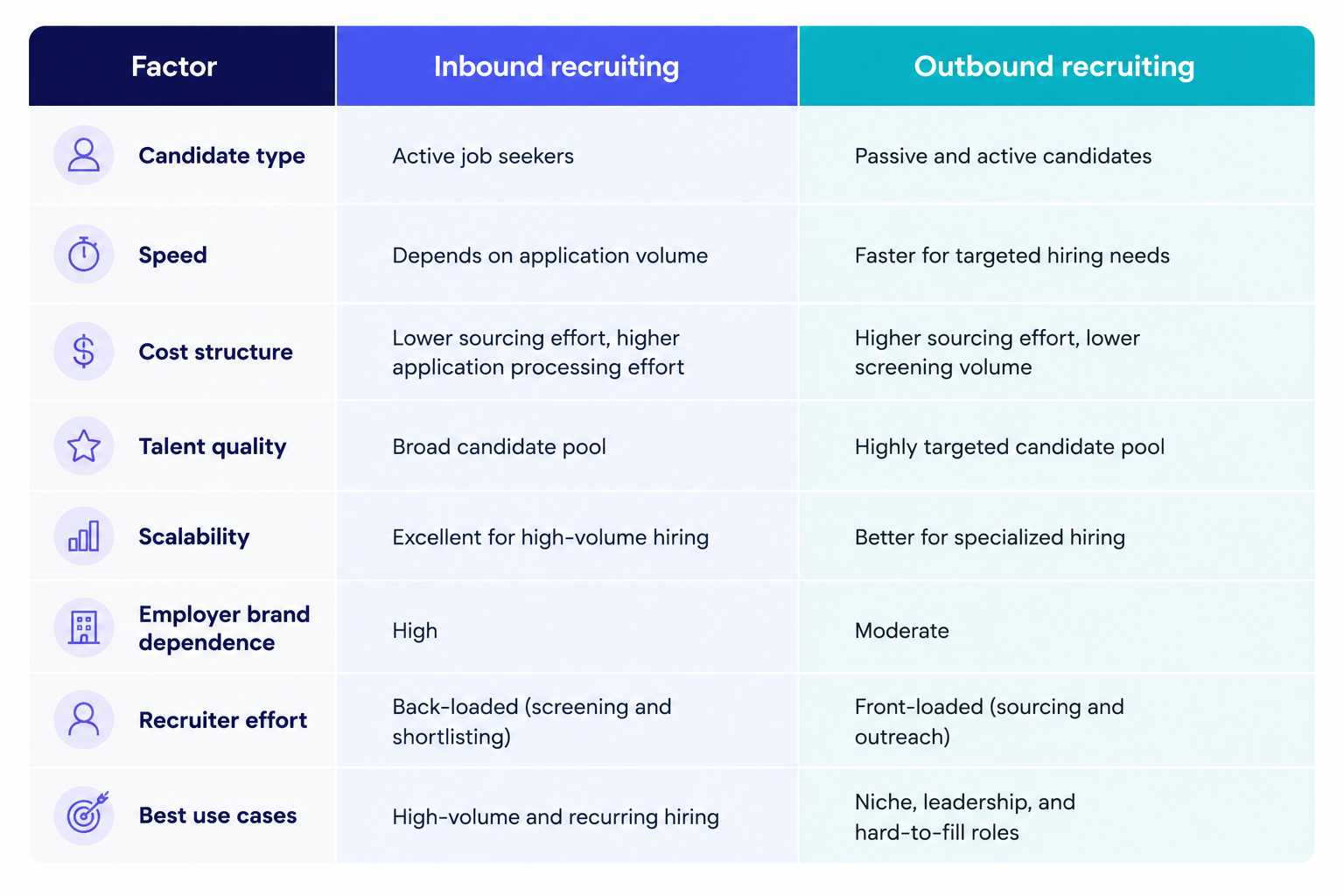
Inbound and outbound recruiting ultimately serve the same goal: finding qualified candidates. The difference is how those candidates enter your hiring funnel.
Inbound recruiting focuses on attracting candidates through job postings, career pages, employer branding, referrals, and recruiting marketing efforts. Candidates discover your company and choose to apply.
Outbound recruiting flips that model. Recruiters proactively identify and engage potential candidates, often before they've shown any interest in changing jobs.
Neither approach is inherently better. The most effective hiring teams know when to use each one.
When inbound recruiting works best
Inbound recruiting is often the right choice when candidate supply exceeds demand and your goal is attracting large numbers of applicants efficiently.
It tends to work particularly well for:
- High-volume hiring
- Entry-level and early-career roles
- Organizations with strong employer brands
- Well-known companies that naturally attract applicants
- Roles where qualified talent is readily available
The biggest advantage of inbound recruiting is scale.
A strong employer brand, optimized career site, and effective recruiting marketing strategy can generate a steady flow of applicants without recruiters having to source every candidate individually.
The tradeoff is that recruiters often spend significant time reviewing applications, many of which may not be a strong fit for the role.
When outbound recruiting works best
Outbound recruiting becomes increasingly valuable when qualified talent is difficult to find, highly specialized, or unlikely to be actively job searching.
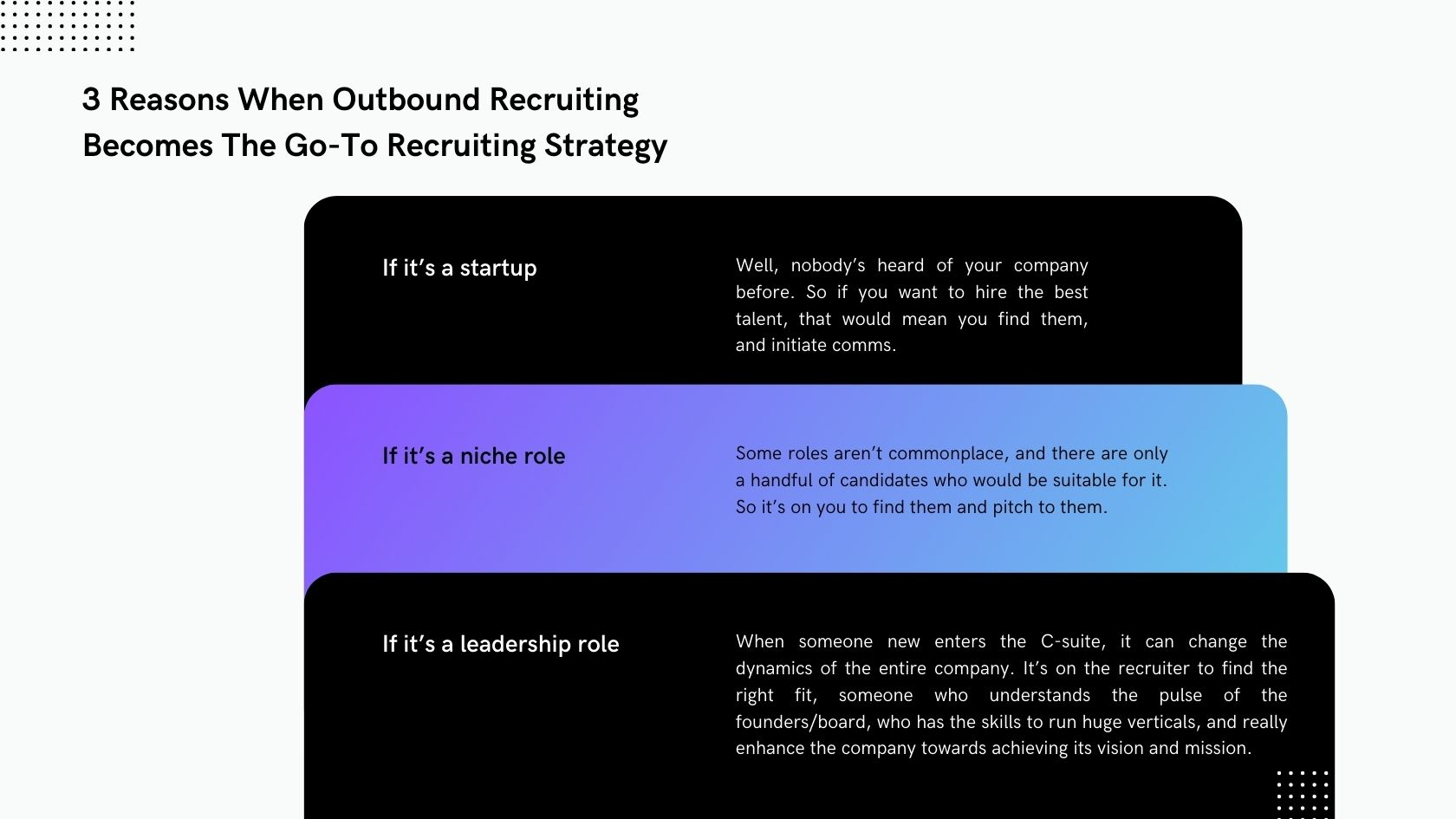
Common use cases include recruiting goals for:
- Niche and specialized roles
- Leadership and executive hiring
- Startup hiring
- Hard-to-fill positions
- Roles requiring emerging or in-demand skills
- Urgent hiring needs with limited candidate supply
In these situations, waiting for the right candidate to apply can significantly slow hiring efforts. Proactive sourcing allows recruiters to reach qualified candidates who may never enter the pipeline through traditional channels.
The most effective candidate sourcing strategies don't treat inbound and outbound recruiting as competing approaches.
Inbound recruiting creates awareness, attracts active job seekers, and generates application volume. Outbound recruiting expands your reach beyond that pool and helps you engage candidates who might otherwise never consider your opportunity.
Think of inbound recruiting as creating opportunities for candidates to find you, and outbound recruiting as creating opportunities for you to find them.
The strongest hiring pipelines typically combine both, depending on the situation or hiring requirements—not rely on a single process.
7 steps for an outbound recruiting process that actually works
Step 1: Build an ideal candidate persona before sourcing
The problem with sourcing isn't a lack of candidates. It's a lack of alignment on what the right candidate actually looks like.
Before opening LinkedIn, GitHub, or any sourcing tool, sit down with the hiring manager and define the ideal candidate persona. Focus on the factors that genuinely predict success in the role, not just what's listed in the job description.
At a minimum, align on:
- Must-have skills
- Nice-to-have qualifications
- Relevant experience patterns
- Career motivations
- Deal breakers
This is where most teams get stuck.
Hiring managers often describe candidates using job titles, while recruiters search based on skills and backgrounds. This leads to a candidate alignment gap where recruiters source profiles that technically match the brief but miss what hiring managers actually want.
Instead of asking, "What title should we target?", ask questions like:
- What predicts success in this role?
- Which backgrounds have consistently produced top performers?
- What experiences separate average hires from exceptional ones?
- What career goals would make someone excited about this opportunity?
For example, a successful Customer Success leader may come from consulting, operations, or implementation backgrounds—not just customer success roles.
Or a strong product marketer may have experience in sales enablement, product management, or content strategy.
The more clearly you define success signals upfront, the more targeted your outbound recruiting strategy becomes. You'll spend less time sourcing, fewer candidates will be rejected later in the process, and hiring managers will see stronger candidate quality from the very first outreach.
Step 2: Source candidates where everyone else isn't looking
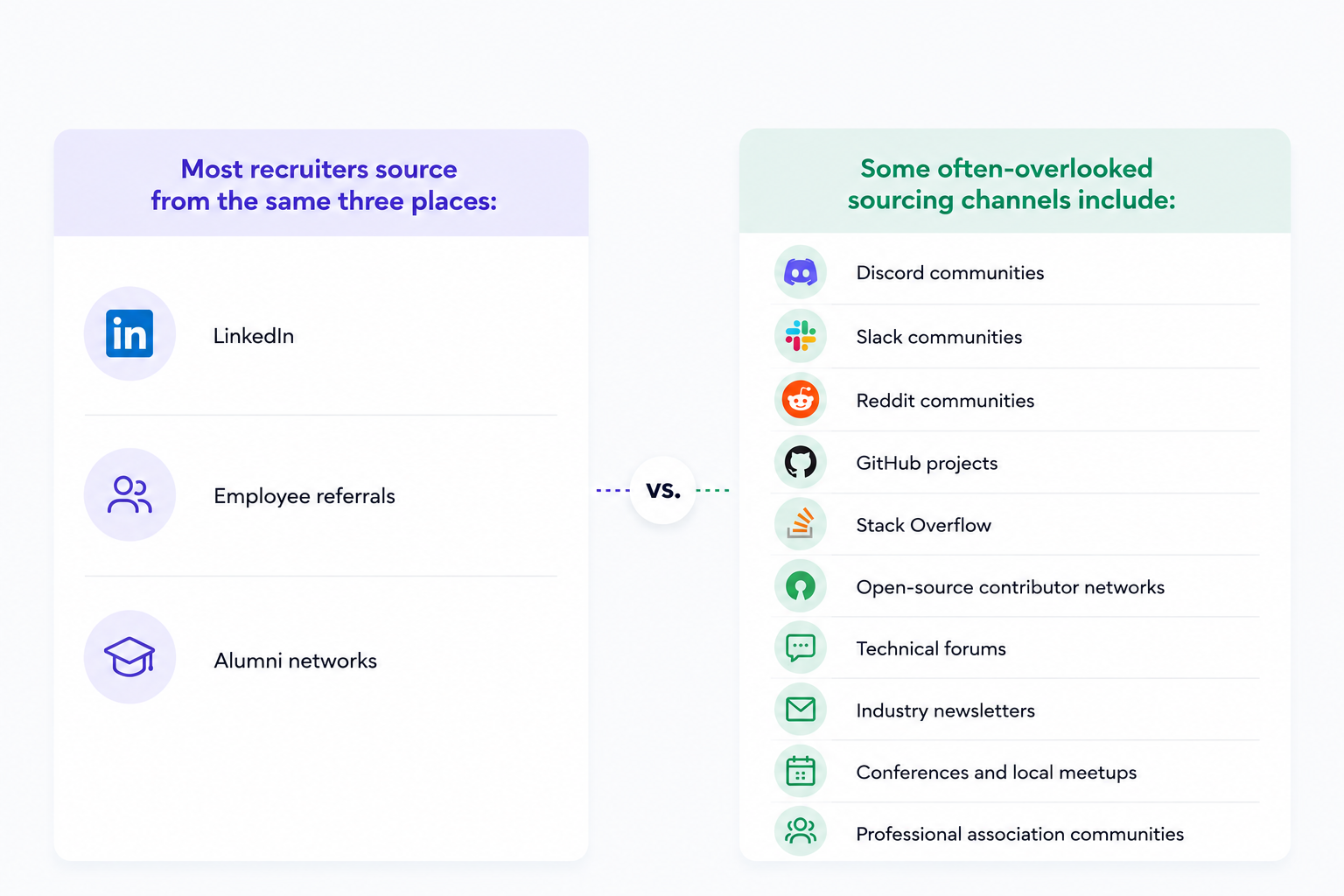
Most recruiters source from the same three places:
- Employee referrals
- Alumni networks
But the problem is, every other recruiter is looking there too.
Some of the most valuable candidates spend very little time updating LinkedIn profiles or responding to recruiter messages. They're busy building products, contributing to communities, solving technical problems, and learning from peers.
Some often-overlooked sourcing channels include:
- Discord communities
- Slack communities
- Reddit communities
- GitHub projects
- Stack Overflow
- Open-source contributor networks
- Technical forums
- Industry newsletters
- Conferences and local meetups
- Professional association communities
For example, a software engineer consistently contributing to open-source repositories may be a stronger prospect than someone with a polished LinkedIn profile but limited evidence of hands-on work. Similarly, cybersecurity professionals often participate in specialized forums and Discord servers where they discuss new threats, tools, and research.
That said, sourcing location is only half the equation.
Timing often matters more than targeting.
A candidate who ignores your message today may respond enthusiastically two months later because their situation changed.
Look for trigger events such as:
- Recent promotions
- Leadership changes
- Company acquisitions
- Funding rounds
- Rapid company growth
- Team expansions
- Layoffs or reorganizations
- Return-to-office mandates
These moments frequently create openness to new opportunities.
A perfect candidate at the wrong time is still a missed opportunity. The best outbound recruiters don't just identify the right people—they reach them when the conversation is most relevant.
Step 3: Run multi-channel outbound recruiting campaigns
Many recruiting teams still run outreach through a single channel. Usually LinkedIn, or sometimes email.
That creates an obvious limitation: you're only reaching candidates where you prefer to communicate, not where they prefer to respond.
A candidate who ignores LinkedIn messages may reply to a well-written email within hours. Another candidate might never open recruiting emails but accept a LinkedIn connection request. If you're only using one channel, you're automatically excluding a portion of your target market.
Research shows that outreach combining email, LinkedIn, and phone increases response rates by 287% compared to using just one channel.
A simple outbound recruiting sequence could look like this:
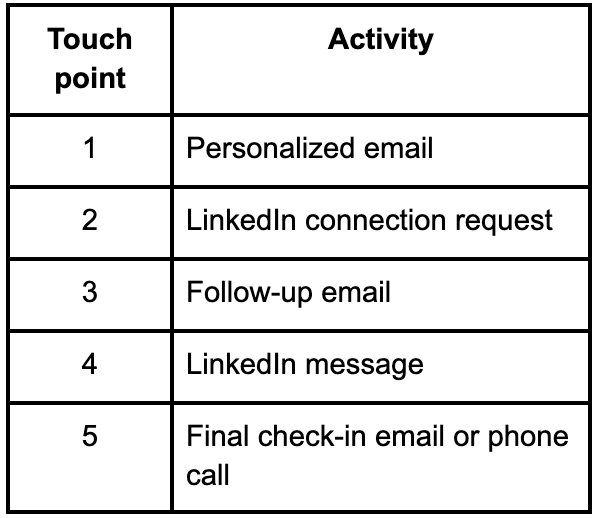
The sequence itself matters less than maintaining consistent follow-up across channels. Most responses don't arrive after the first touchpoint.
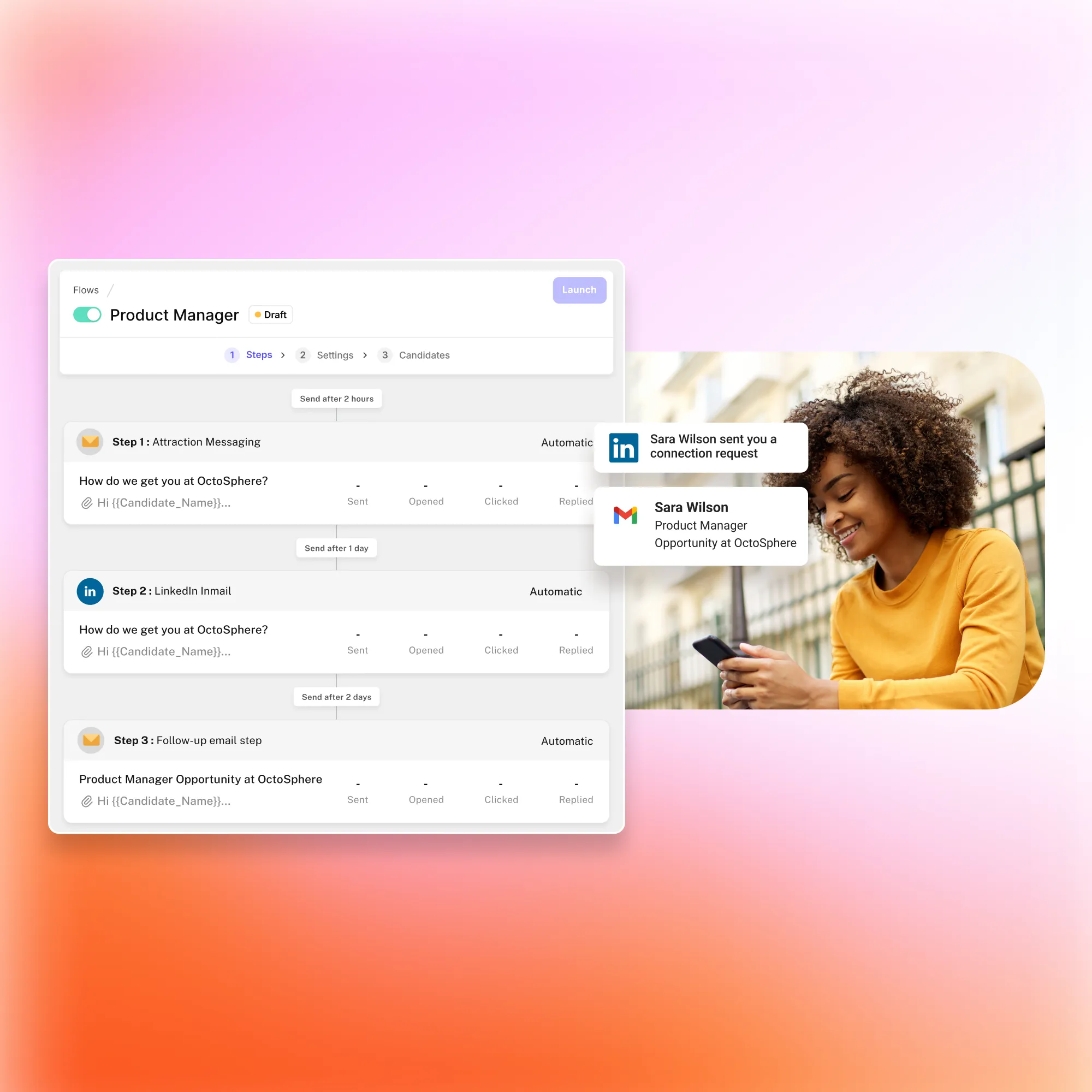
Some applicant tracking systems, can automate multi-channel sequences from a single workflow, allowing recruiters to coordinate email and LinkedIn outreach without tracking every touchpoint in spreadsheets or separate ATS tools.
Step 4: Write outbound recruiting emails candidates actually respond to
Most candidates don't respond because the message isn't relevant enough to justify a reply.
Recruiters often spend time explaining the company, the role, or the compensation package. Candidates are usually asking a different set of questions:
- Why are you reaching out to me specifically?
- Why are you contacting me now?
- Why should I care about this opportunity?
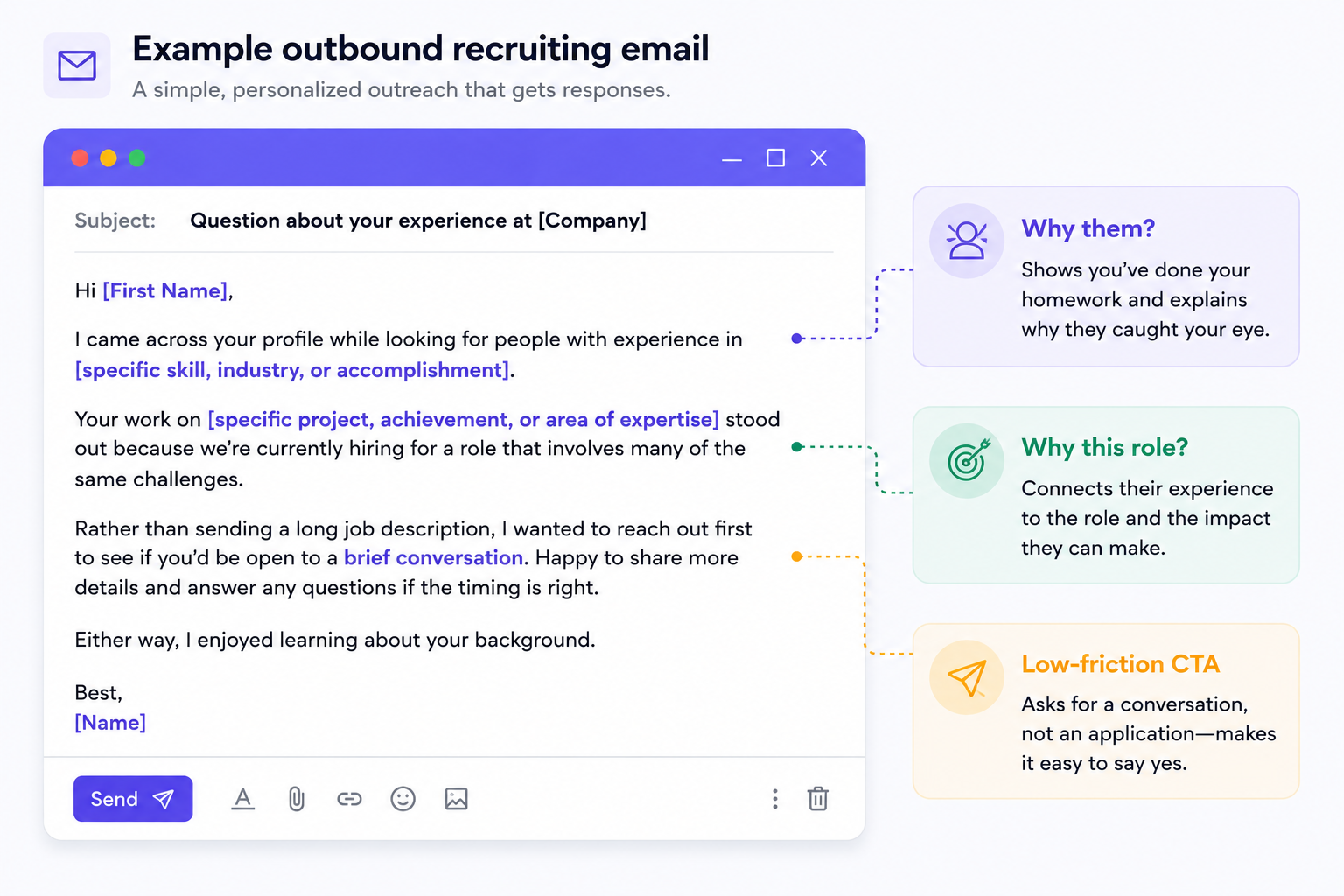
Strong outbound recruiting emails answer all three within the first few sentences.
For example, compare these two approaches:
Generic outreach:
I came across your profile and thought you'd be a great fit for a Senior Product Manager role we're hiring for. I'd love to schedule time to discuss the opportunity.
Targeted outreach:
I noticed you've spent the last three years leading product launches in the fintech space. We're building a new payments platform and are looking for someone who's already solved many of the challenges our team is about to face.
The second message immediately explains why the candidate was selected and why the conversation might be worth their time.
Personalization has become even more important as candidate inboxes get more crowded, especially with AI being thrown in the mix.
Research shows that personalized subject lines increase open rates by 50%, while highly personalized outreach can increase reply rates by up to 142% compared to generic messages.
A few best practices can help improve response rates:
- Keep the first message short and easy to scan
- Focus on the candidate's experience and motivations, not your hiring needs
- Mention something specific about their background
- Explain why the timing makes sense
- Use a low-friction call to action
- Avoid attaching a full job description in the first email
That last point is often overlooked. Most passive candidates aren't ready to review a five-page job description. They're deciding whether the opportunity sounds interesting enough to warrant a conversation.
A simple question such as "Would you be open to a brief conversation?" generally performs better than asking candidates to apply, complete a form, or review extensive materials upfront.
Here's a simple outreach template recruiters can adapt:
Step 5: Follow up consistently (without becoming annoying)
Most recruiters don't lose candidates because their first message was bad.
They lose them because they stop after one attempt.
That's a problem because passive candidates rarely respond immediately. Even when someone is interested in your opportunity, timing may not be right when your message lands.
They could be in the middle of a product launch, traveling, wrapping up a hiring cycle at their current company, or simply buried under a crowded inbox.
In other words, a lack of response doesn't automatically mean a lack of interest.
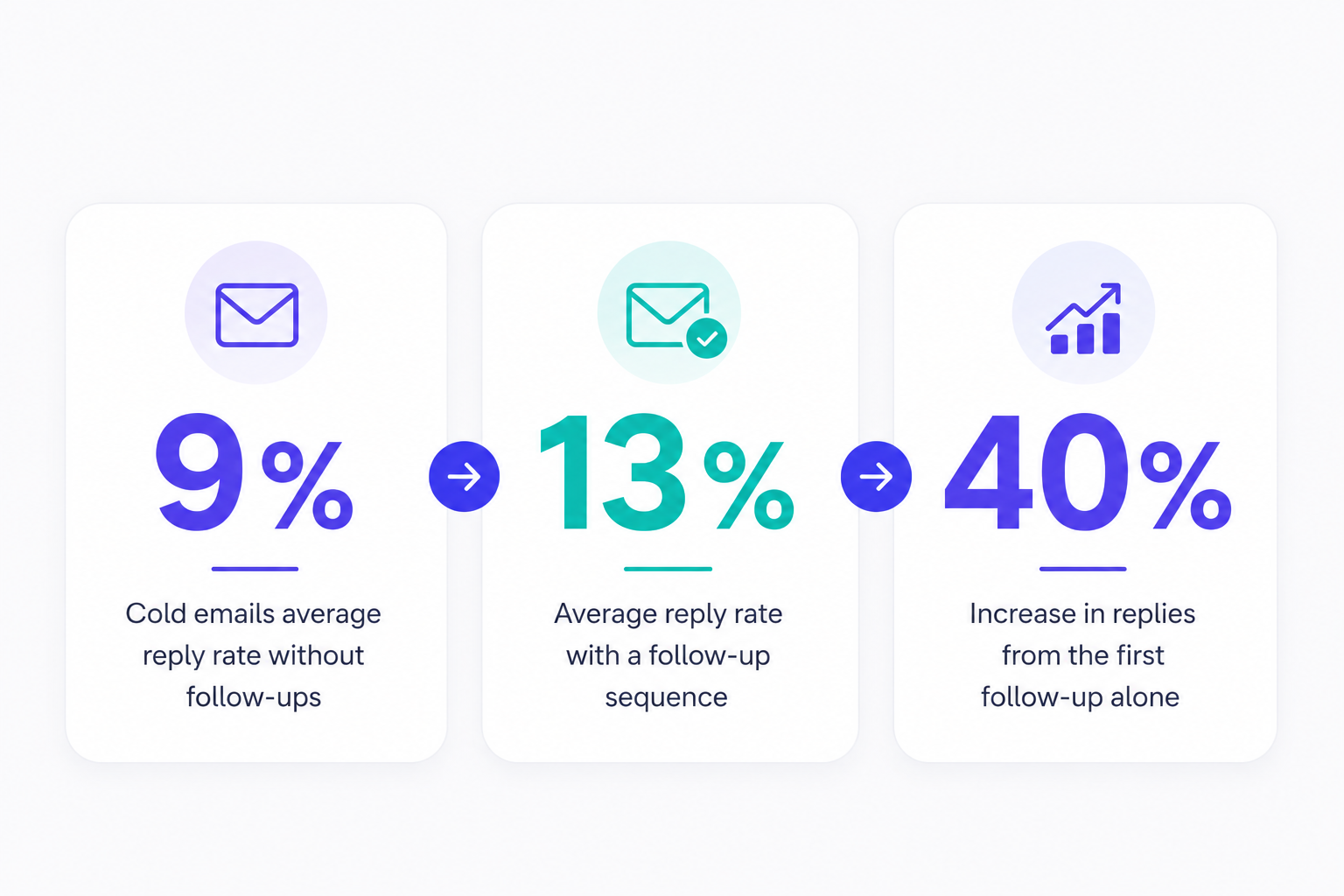
2025 data from Woodpecker shows that cold emails average roughly a 9% reply rate without follow-ups. Add a follow-up sequence, and average reply rates climb to around 13%. Some studies also show that the first follow-up alone can increase replies by approximately 40%.
The challenge is staying visible without becoming a nuisance. Every follow-up should introduce something new rather than simply asking, "Just checking if you saw my last email."
Here's a simple five-touch framework many recruiters use successfully:
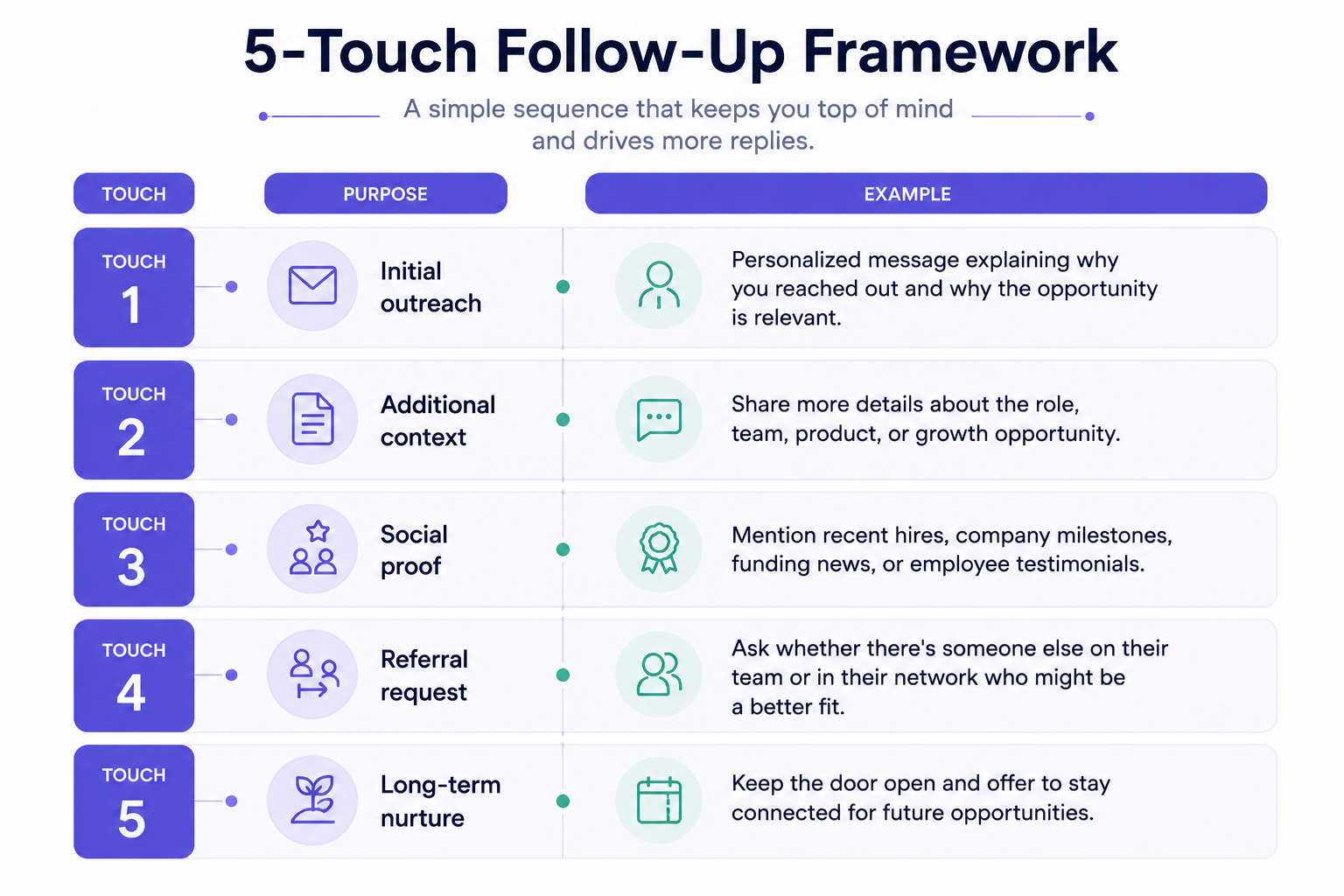
A good rule of thumb is to spread these touches across two to three weeks and vary the channel when possible. For example, start with email, follow up on LinkedIn, then return to email with additional context.
The goal isn't to pressure candidates into responding. You just need to make sure the right opportunity isn't missed simply because your first message arrived at the wrong time.
Step 6: Treat outbound candidates differently during interviews
One mistake recruiting teams make is treating outbound candidates as if they've already sold themselves on the opportunity.
But it’s actually the opposite.
An inbound applicant has already raised their hand. They've visited the careers page, read the job description, and decided the role is worth pursuing.
But an outbound candidate is often much earlier in that decision process. Many are still trying to answer a basic question:
"Why would I leave my current job?"
That's why the strongest outbound interview processes spend more time creating context and less time testing candidates immediately.
A first conversation shouldn't feel like an interrogation. It should help both sides determine whether a deeper evaluation is worth the investment.
Recruiters and hiring managers can make this easier by:
- Explaining why the role exists
- Sharing what makes top performers successful
- Being transparent about challenges, not just opportunities
- Leaving plenty of room for candidate questions
Many passive candidates drop out because they aren't convinced the opportunity is compelling enough, not because they fail the interview.
Step 7: Measure what matters
A lot of recruiting teams track activity, but the best teams track bottlenecks, why and where they occur, and dive deep into their recruiting KPIs.
For example:
If 1,000 candidates receive outreach and only 20 become hires, the response rate isn't necessarily the problem.
The issue could be:
- Strong responses but poor interview conversion
- Weak candidate qualification
- Interview process drop-off
- Low offer acceptance rates
That's why looking at a single metric in isolation rarely helps.
A better approach is tracking the entire outbound funnel and connecting each stage to a specific KPI:
- Are candidates responding? → Response rate
- Are the right candidates responding? → Positive response rate
- Are candidates entering interviews? → Interview rate
- Are candidates progressing through the funnel? → Stage conversion rates
- How many prospects does it take to make a hire? → Outreach-to-hire ratio
- How quickly are roles being filled? → Time-to-hire or time-to-fill
- How much does each hire cost? → Cost-per-hire
Many times you’ll see that the candidates recruiters want most are often the hardest to engage.
A small increase in positive response rate—from 5% to 7%, for example—may not look dramatic on a dashboard. Yet it can significantly improve candidate quality because more high-performing passive candidates enter the funnel.
That's why outbound recruiting metrics should answer a simple question:
Are we creating more conversations with the right people?
Not:
Are we sending more messages?
Common outbound recruiting mistakes
Even experienced recruiters can struggle with outbound recruiting when they focus on activity instead of outcomes. Here are some of the most common mistakes to avoid for your outbound recruiting strategy:
- Prioritizing volume over relevance
Sending 500 generic messages rarely outperforms sending 50 highly targeted ones.
The goal isn't to build the biggest pipeline possible. It's to start conversations with candidates who are genuinely qualified and likely to be interested.
- Relying entirely on LinkedIn
LinkedIn is still one of the most effective sourcing channels available. The problem is that every other recruiter is using it too.
Some of the strongest candidates spend more time in Slack communities, Discord groups, GitHub repositories, industry events, and niche professional communities than they do responding to InMails.
- Sending generic outreach
Candidates can spot a template from a mile away.
Messages that start with "I came across your profile" or immediately paste a job description give candidates very little reason to respond. Strong outreach explains why the recruiter reached out, why the opportunity is relevant, and why the timing makes sense.
- Ignoring follow-ups
Many recruiters give up after one message. Many candidates don't.
A lack of response often reflects timing, not interest. Consistent and thoughtful follow-up is often what separates successful outbound campaigns from unsuccessful ones.
- Failing to nurture candidates
Not every candidate is ready to move today. That doesn't mean they're a bad prospect.
Some of the best hires come from relationships that started months before a role opened or before a candidate was ready to make a move.
- Tracking activity instead of outcomes
More messages sent doesn't automatically mean better recruiting.
The teams that consistently make strong hires focus less on outreach volume and more on metrics like positive response rates, interview conversion rates, and outreach-to-hire ratios.
After all, candidates can't be hired from a spreadsheet. They can only be hired from conversations.
Understanding outbound recruiting fatigue
Outbound recruiting works. But when it's done poorly, it creates fatigue on both sides of the hiring process.
Candidate fatigue
Most professionals have experienced some version of this:
- A recruiter sends a message that clearly wasn't written for them
- The outreach sounds AI-generated or heavily templated
- Multiple recruiters contact them about similar roles
- Follow-ups continue long after they've ignored the original message
Over time, candidates become less likely to open, read, or respond to recruiting outreach—even when the opportunity is genuinely relevant.
Recruiter fatigue
Recruiters face a different challenge.
Low response rates can be discouraging, especially when sourcing and outreach become repetitive. Add manual tasks like finding contact information, tracking follow-ups, switching between tools, and updating spreadsheets, and outbound recruiting can quickly start feeling like a numbers game.
The result is often more outreach volume, which only makes candidate fatigue worse.
How modern recruiting teams reduce fatigue
The solution isn't sending more messages. It's sending better ones. The most effective outbound recruiting teams focus on:
- Better targeting: Contact fewer candidates, but make each outreach more relevant.
- Better timing: Reach out when trigger events create openness to new opportunities.
- Multi-channel outreach: Combine email, LinkedIn, referrals, and other channels instead of relying on one platform.
- Automation: Automate repetitive tasks so recruiters can spend more time building relationships and less time managing workflows.
- Long-term relationship building: Treat sourcing as an ongoing talent pipeline rather than a one-time hiring activity.
When outbound recruiting is done well, candidates receive fewer irrelevant messages, recruiters spend less time on manual work, and conversations become far more productive for everyone involved.
Legal and compliance considerations
Outbound recruiting doesn't operate in a legal vacuum.
Depending on where candidates are located, recruiters may need to comply with regulations such as GDPR in Europe and CAN-SPAM in the United States. While requirements vary, a few principles apply almost everywhere:
- Be transparent about why you're contacting someone.
- Handle candidate data responsibly.
- Provide a clear way for candidates to opt out of future communication.
- Honor unsubscribe and opt-out requests promptly.
Compliance isn't just about avoiding legal risk. Aggressive outreach practices can damage your employer brand and reduce future response rates.
Every outbound interaction shapes how candidates perceive your company, whether they're interested in the role or not. Respectful, relevant outreach tends to strengthen employer brand. Generic mass messaging tends to do the opposite.
Start building your outbound recruiting strategy today!
If there's one thing to remember about outbound recruiting, it's this: the best candidates often aren't looking for jobs.
That has a few important implications:
- Most qualified talent will never enter your inbound pipeline.
- Outbound recruiting works best when it's targeted, personalized, and consistent, not high volume.
- Timing matters as much as sourcing. The right candidate at the wrong moment is often still a missed opportunity.
- Relationships outperform transactions. Teams that build talent pipelines before they have an open role are often the ones that fill positions fastest.
The goal of outbound recruiting isn't to send more messages, but to create more meaningful conversations with the right people.

Outbound recruiting gives hiring teams access to candidates who may never apply for a role on their own. This is particularly valuable for leadership positions, niche skill sets, hard-to-fill roles, and competitive talent markets. Unlike inbound recruiting, which relies on candidates entering the hiring funnel, outbound recruiting allows recruiters to proactively engage passive talent, build stronger talent pipelines, and reduce dependence on job boards and employer brand recognition.
An effective outbound recruiting pipeline starts with defining an ideal candidate profile and identifying the skills, experiences, and success traits that matter most for the role. From there, recruiters should source candidates across multiple channels, run personalized outreach campaigns, follow up consistently, and nurture relationships over time. The strongest pipelines are built continuously—not only when an open role needs to be filled.
The most effective approach is to automate repetitive tasks while keeping candidate communication personalized. Recruiters can use recruiting CRM and ATS platforms to automate candidate sourcing workflows, outreach sequences, follow-ups, reminders, and engagement tracking across channels like email and LinkedIn. This reduces manual work while ensuring candidates receive timely and relevant communication throughout the recruiting process. The key is using automation to improve consistency, not to send generic mass outreach. Candidate targeting, personalization, and timing should still guide every campaign.