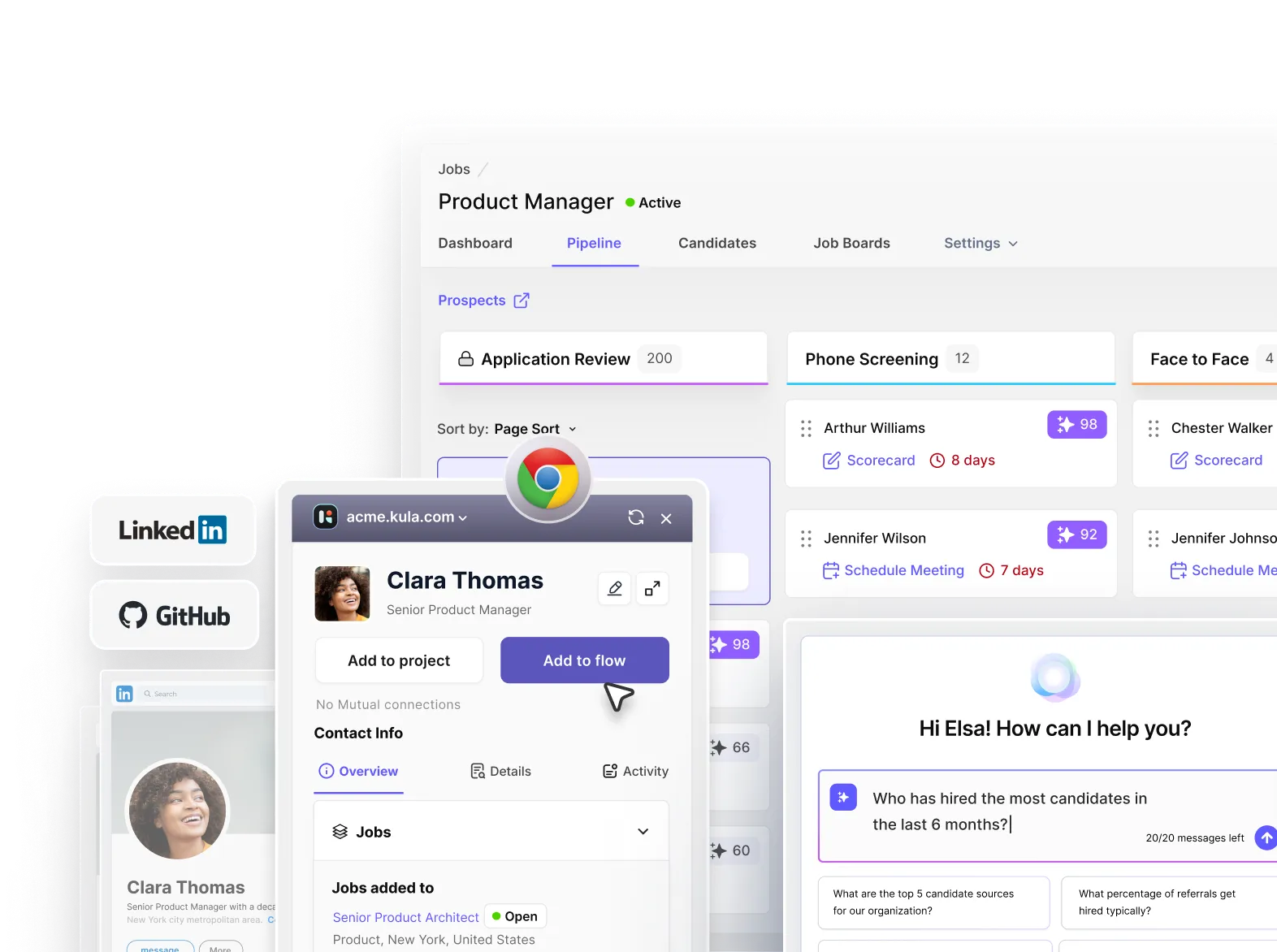





According to LinkedIn’s 2025 Future of Recruiting Report, recruiters spend around 13 hours per role on sourcing, yet much of that time still goes into searching across disconnected systems.
LinkedIn Recruiter has become more expensive, legacy sourcing platforms are full of candidates who never get another look, and many recruiting teams switch between 10 to 20 different tools just to source, engage, and track talent.
At the same time, the way recruiters source talent is changing.
Rediscovering candidates already in your ATS is becoming more valuable than starting every search from scratch, while AI-powered sourcing is beginning to replace traditional Boolean searches.
If you're evaluating candidate sourcing tools in 2026, those changes matter just as much as the feature list.
Why sourcing tooling has fragmented: The Franken-stack problem
Recruiters rarely choose a single sourcing tool anymore. Instead, they build a full fledged recruiting tech stack.
A typical hiring workflow starts in an ATS, moves to LinkedIn Recruiter to search for candidates, continues in a recruitment CRM like (or relies on a Chrome extension to capture profiles), then switches to separate tools for email discovery, scheduling, analytics, or niche talent pools like GitHub.
In short, sourcing one candidate means jumping between multiple platforms.
And this isn't unusual. According to data from HR Tech Institute, 61% of recruiting teams now use three or more recruiting tools, and many recruiters juggle 10 to 20 different applications every day.
How did we get here?
Most applicant tracking systems weren't built for outbound recruiting.
Their job was to store applications, track hiring stages, and support compliance. As sourcing became more proactive, recruiters started adding specialist tools to fill the gaps.
First came sourcing platforms.
Then sequencing tools.
Then email finders.
Then analytics.
Every addition solved a real problem. Together, they created what many recruiting teams now call the “franken-stack”.
The hidden cost isn't just software spend
Using more ATS tools doesn't just increase subscription costs. It creates work that nobody plans for.
Recruiters spend time checking duplicate candidates, copying notes between systems, downloading resumes to review experience, and manually updating candidate activity across different platforms. Those tasks don't appear on hiring dashboards, but they quietly eat into the recruiting week.
The constant switching adds up, too.
A 2023 Capterra survey found that HR teams report half of their software performs overlapping functions, yet employees regularly use only about two-thirds of their tech stack. Meanwhile, 75% of candidates already sitting in ATS databases are never contacted again after they apply.
That means, teams spend more time searching for new talent while qualified candidates they've already invested in remain untouched.
Why this is changing
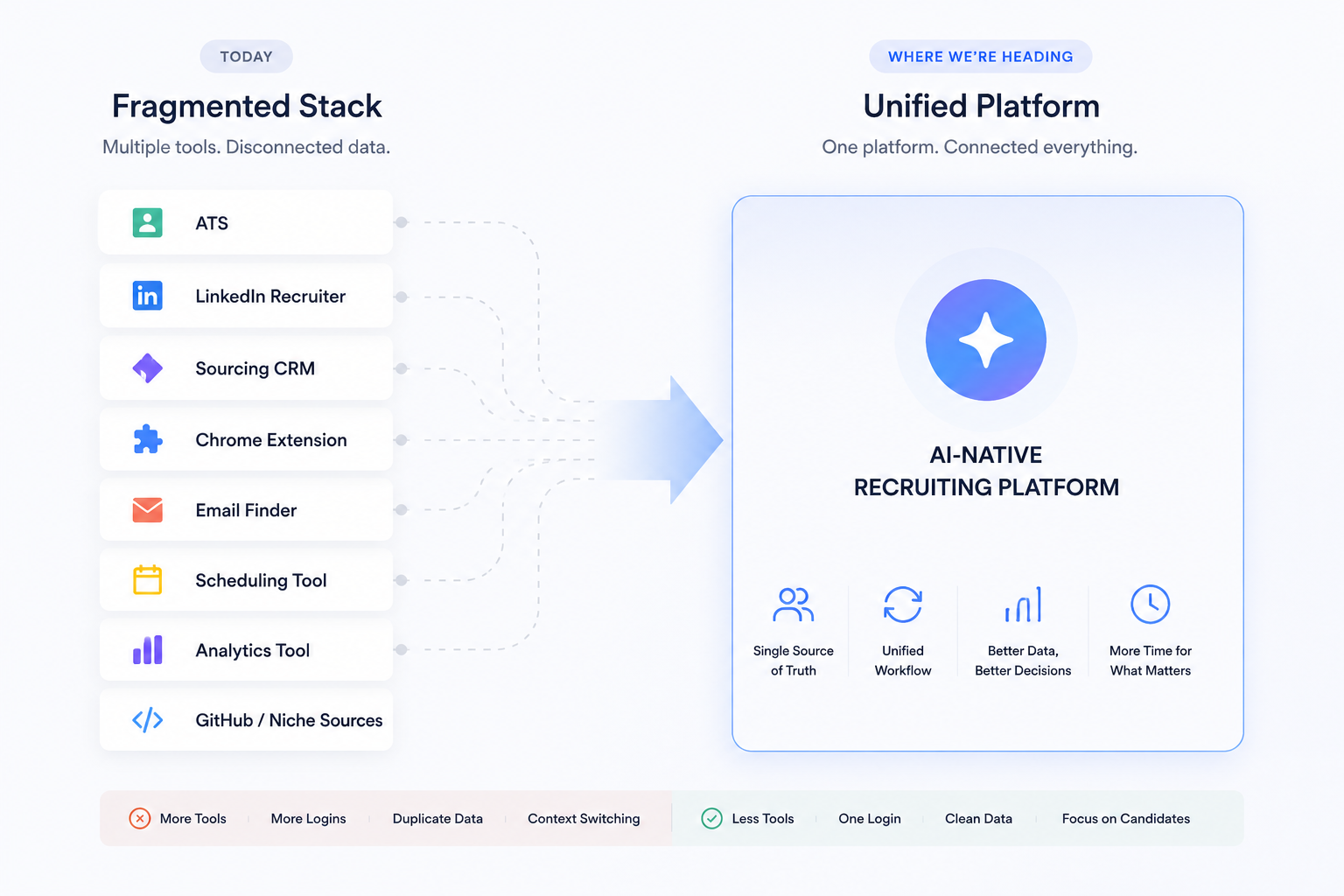
As a result of all these common TA challenges, hiring tools are starting to move in the opposite direction.
AI-native platforms are combining sourcing, outreach, CRM capabilities, and applicant tracking into a single workflow, reducing the need for multiple point solutions. At the same time, rising costs for LinkedIn Recruiter have prompted many teams to re-evaluate whether maintaining a large sourcing stack is still worth it.
The three shifts changing how sourcing works in 2026
For years, candidate sourcing strategies were simple: buy LinkedIn Recruiter, build Boolean strings, send enough outreach, and eventually fill the role. That approach still works, but it's no longer where the biggest hiring wins come from.
If you're evaluating AI sourcing tools today, these shifts matter far more than the size of a platform's candidate database:
Shift 1: Candidate rediscovery is replacing cold sourcing
The biggest sourcing opportunity isn't finding new candidates. It's finding the right candidates you've already met.
According to Gem’s 2025 Recruiting Benchmarks Report, the proportion of hires that are rediscovered within companies’ CRM or ATS has shown a clear upward trend, rising from 29.1% in 2021 to 44.0% in 2024.
That makes candidate rediscovery one of the most significant sourcing trends in recruiting today.
Think about what happens in a typical hiring process.
A candidate reaches the final rounds but loses out to someone slightly stronger. Sixteen months later, another similar role opens, and that candidate is forgotten because nobody remembers they exist.
The best recruiting teams are changing that.
Instead of starting every search from scratch, they're treating their ATS as a long-term talent network. Previous finalists, silver-medalist candidates, and strong applicants who simply applied at the wrong time become the first sourcing pool.
This approach is only possible when your ATS makes historical candidate data easy to search, filter, and re-engage, not just store. Platforms that combine applicant tracking with CRM capabilities make this workflow much easier because candidate history, previous interviews, notes, and outreach all live in one place.
Shift 2: LinkedIn is no longer the only serious sourcing channel
LinkedIn Recruiter is still the default for many recruiting teams, and for good reason. But it isn't the only place where strong candidates can be found anymore.
Newer sourcing tools for recruiters now aggregate profiles from hundreds of public sources, while specialized communities often produce stronger signals for technical hiring than LinkedIn alone.
Engineering recruiters, for example, increasingly source through GitHub repositories, Stack Overflow activity, conference speaker lists, technical blogs, and open-source contributions. These profiles often reveal actual technical work rather than simply listing skills on a résumé.
The result is a broader sourcing strategy.
Instead of asking, "Which platform has the biggest database?", recruiters are asking, "Which platform helps me search across the places where my ideal candidates actually spend time?"
Shift 3: AI is replacing Boolean search
Boolean search used to be a sourcing superpower.
Today, AI is steadily reducing the need for recruiters to memorize complex search strings.
Modern sourcing platforms can interpret natural language prompts like "Senior backend engineers with fintech experience who recently moved into management" and return relevant candidates without requiring dozens of AND, OR, and quotation marks.
They also identify related skills, adjacent experience, and semantic matches that traditional keyword searches would miss.
LinkedIn's Future of Recruiting report found that 37% of talent acquisition professionals were already experimenting with or actively using generative AI in 2025, up from 27% the previous year. Of course, that adoption has definitely continued to grow as AI usage and capabilities continue to expand.
This means that the skill recruiters are building is changing too. Instead of mastering Boolean syntax, they're learning how to write better prompts, evaluate AI-generated matches, and spend more time qualifying candidates instead of constructing searches.
What this means when evaluating candidate sourcing platforms
These shifts change what "good" looks like in a sourcing platform.
The best sourcing tools in 2026 aren't simply the ones with the largest candidate databases. They're the ones that help you rediscover talent already inside your ATS, search across multiple candidate sources, and use AI to reduce manual sourcing work.
Those capabilities ultimately have a bigger impact on hiring outcomes than adding another few million profiles to an already massive database.
Best candidate sourcing tools we’ve tested
Candidate sourcing software generally fall into three categories:
- Primary sourcing databases, where recruiters search for new candidates.
- Sourcing CRMs, which help recruiters manage outreach and nurture pipelines.
- AI-native recruiting platforms, which combine sourcing, outreach, and applicant tracking into a single workflow.
Primary sourcing databases
LinkedIn Recruiter
Best for: Professional hiring across sales, marketing, operations, and other knowledge-worker roles.
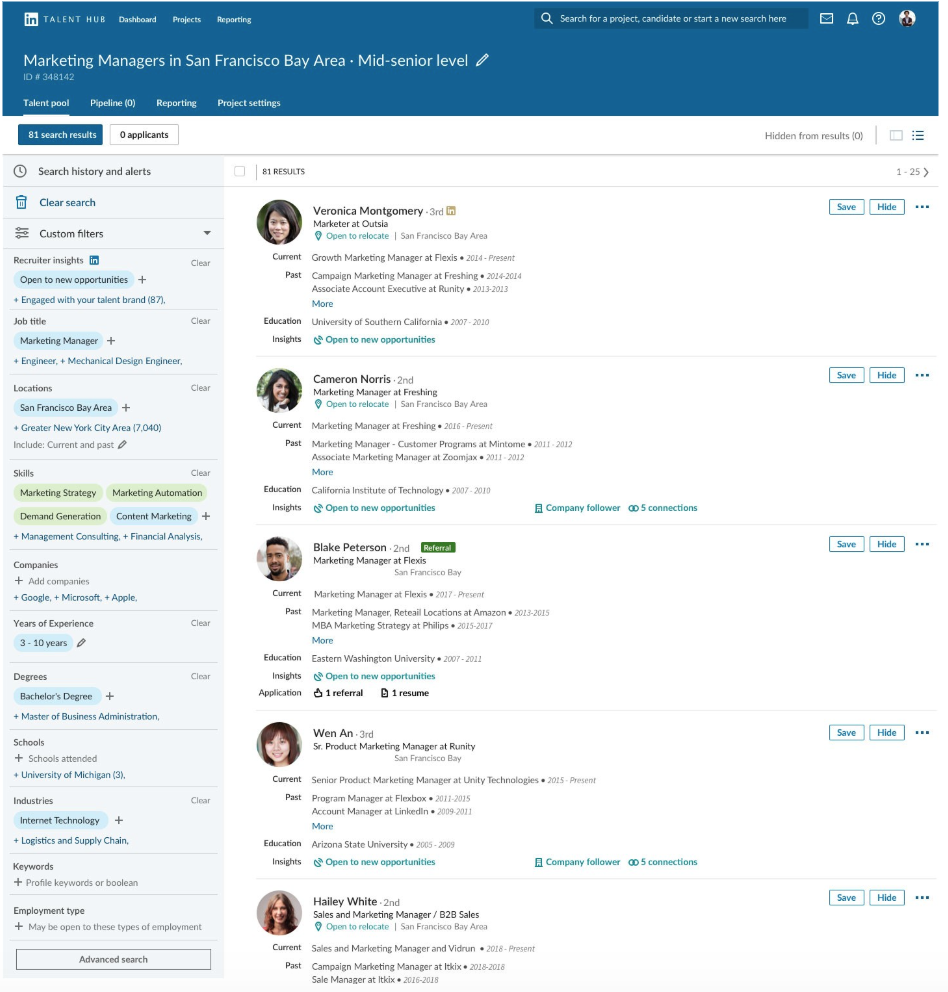
LinkedIn Recruiter remains the benchmark for candidate sourcing thanks to the size of its professional network and AI-powered recommendations. For many teams, it's still the first place they search.
That said, recruiters regularly point to a few drawbacks. Outreach capabilities are fairly basic compared to dedicated sequencing tools, collaboration can become difficult with limited licenses, and ATS integrations aren't equally polished across every platform.
Verdict: Still the strongest standalone sourcing platform for general professional hiring, but rising costs have prompted many teams to evaluate alternatives before renewing.
LinkedIn Sales Navigator
Best for: Smaller teams looking for a lower-cost alternative to LinkedIn Recruiter.
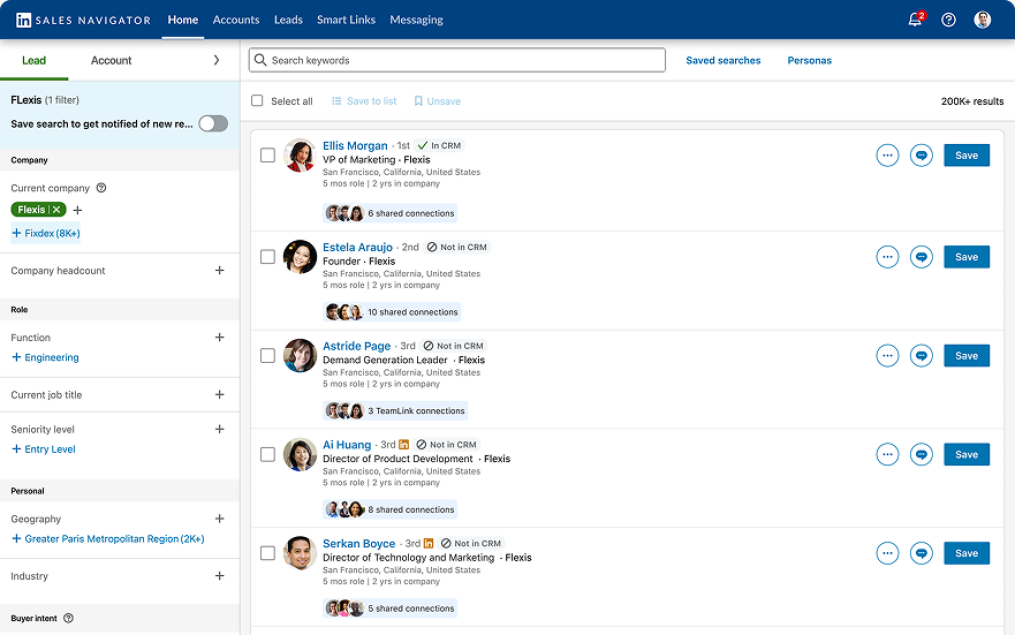
Some recruiters use Sales Navigator for sourcing because it offers similar search capabilities at a much lower price.
The trade-off is flexibility. Search limits, fewer recruiting-specific filters, and stricter usage policies make it less suitable for high-volume sourcing. Teams using it beyond its intended purpose also risk account restrictions.
Verdict: A useful workaround for occasional sourcing, but not a replacement for Recruiter at scale.
HireEZ
Best for: Teams sourcing beyond LinkedIn.
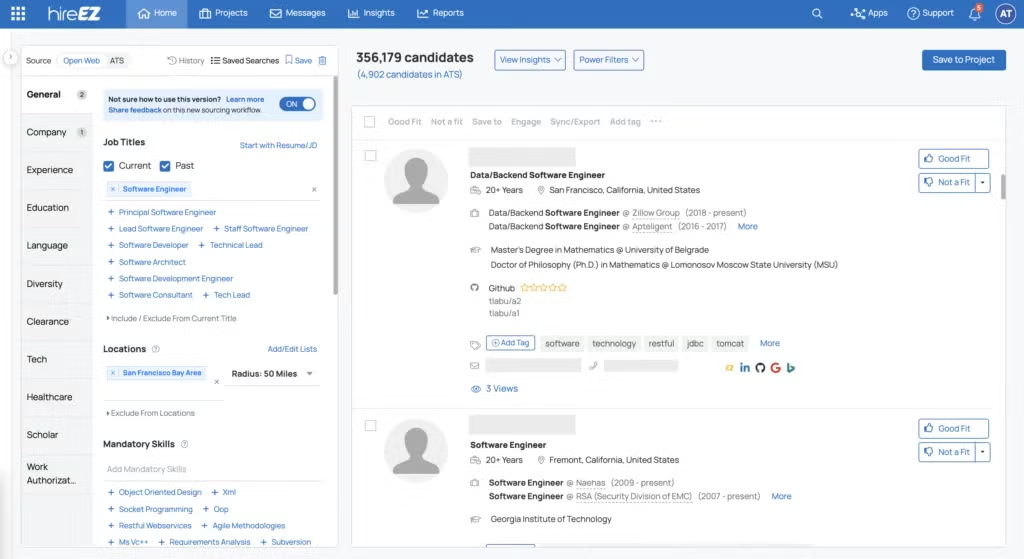
HireEZ combines candidates from multiple public sources and is particularly well regarded for contact enrichment. Many recruiters highlight its ability to surface verified email addresses and phone numbers that aren't easily available elsewhere. AI-powered sourcing recommendations are another strength.
The main consideration is pricing. Contact credits can become expensive for teams sourcing at high volume.
Verdict: A strong option if your hiring strategy extends beyond LinkedIn and accurate contact data is a priority.
Sourcing CRMs
Gem
Best for: Mid-market and enterprise recruiting teams running outbound recruiting alongside an existing ATS.
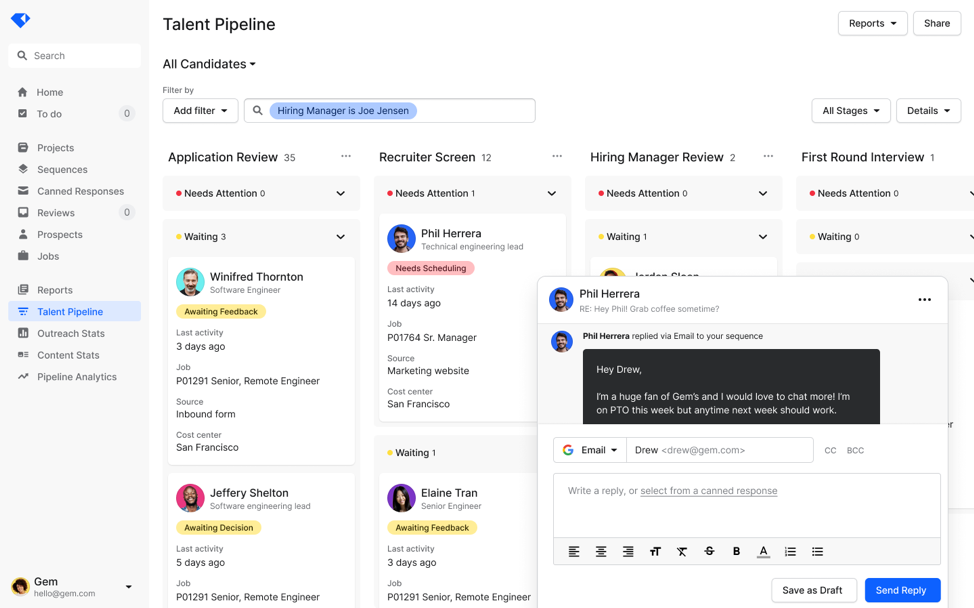
Gem is one of the most established sourcing CRMs on the market. Recruiters consistently praise its reporting, Chrome extension, and outbound sequencing capabilities, particularly Send-On-Behalf-Of (SOBO) workflows.
On the other hand, some reviewers mention a learning curve, interface friction, and occasional synchronization issues with certain ATS platforms.
Verdict: A solid choice for teams that already have an ATS and want to strengthen sourcing and outbound recruiting without replacing their existing system.
AI-native sourcing platforms
Neuroscale AI
Best for: Recruiters who want AI-powered search instead of traditional Boolean sourcing.
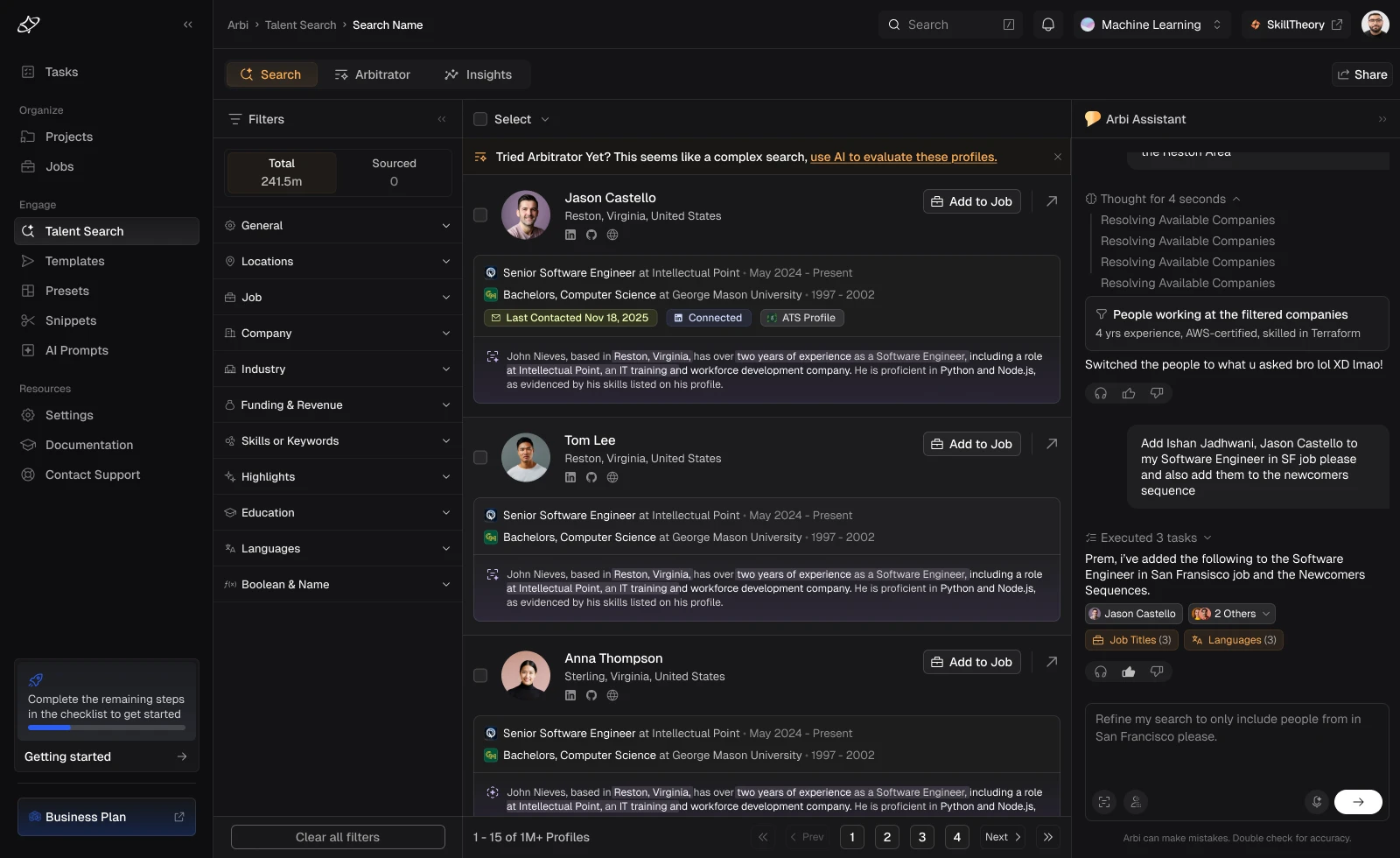
Neuroscale has shifted from being a sourcing search tool to a broader sourcing and outreach platform with natural language search at its core. Instead of writing complex Boolean strings, recruiters can search using plain English prompts.
The product is evolving quickly, but it's also relatively new compared to more established sourcing platforms.
Verdict: Worth exploring if AI-powered sourcing is a priority, especially for teams comfortable adopting newer products.
Laidback.so
Best for: Sourcing for technical recruiting.
Rather than relying primarily on LinkedIn profiles, Laidback.so pulls signals from GitHub activity, research publications, projects, and other technical sources.
That makes it particularly interesting for engineering hiring, although there's currently less independent evidence of its performance outside technical recruiting.
Verdict: A promising option for engineering teams, but more specialized than a general-purpose sourcing platform. This platform is also quite new so there are limited reviews available as of now.
SeekOut
Best for: Organizations hiring across specialized talent pools.
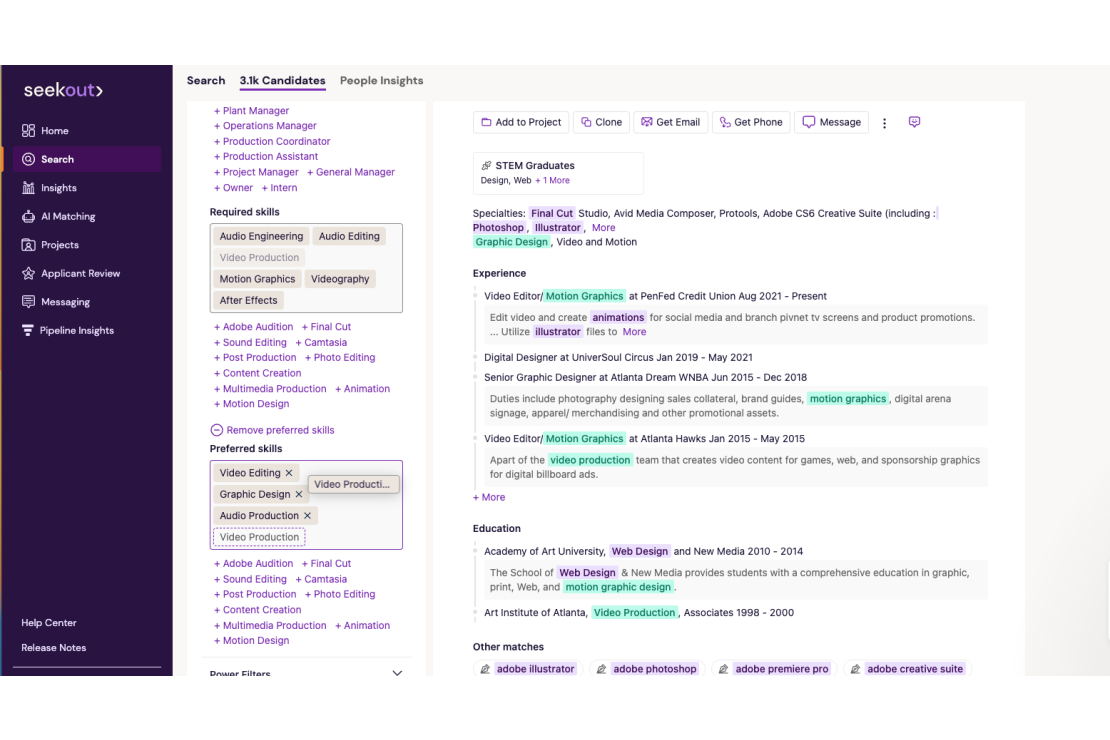
SeekOut combines a large candidate database with AI-assisted search and strong filtering capabilities. It's especially popular among enterprise recruiting teams and technical recruiters.
User feedback is generally positive, though experiences vary depending on hiring volume and use case.
Verdict: Worth evaluating alongside HireEZ if you're comparing enterprise sourcing platforms.
Kula
Best for: Recruiting teams looking to consolidate their sourcing stack.
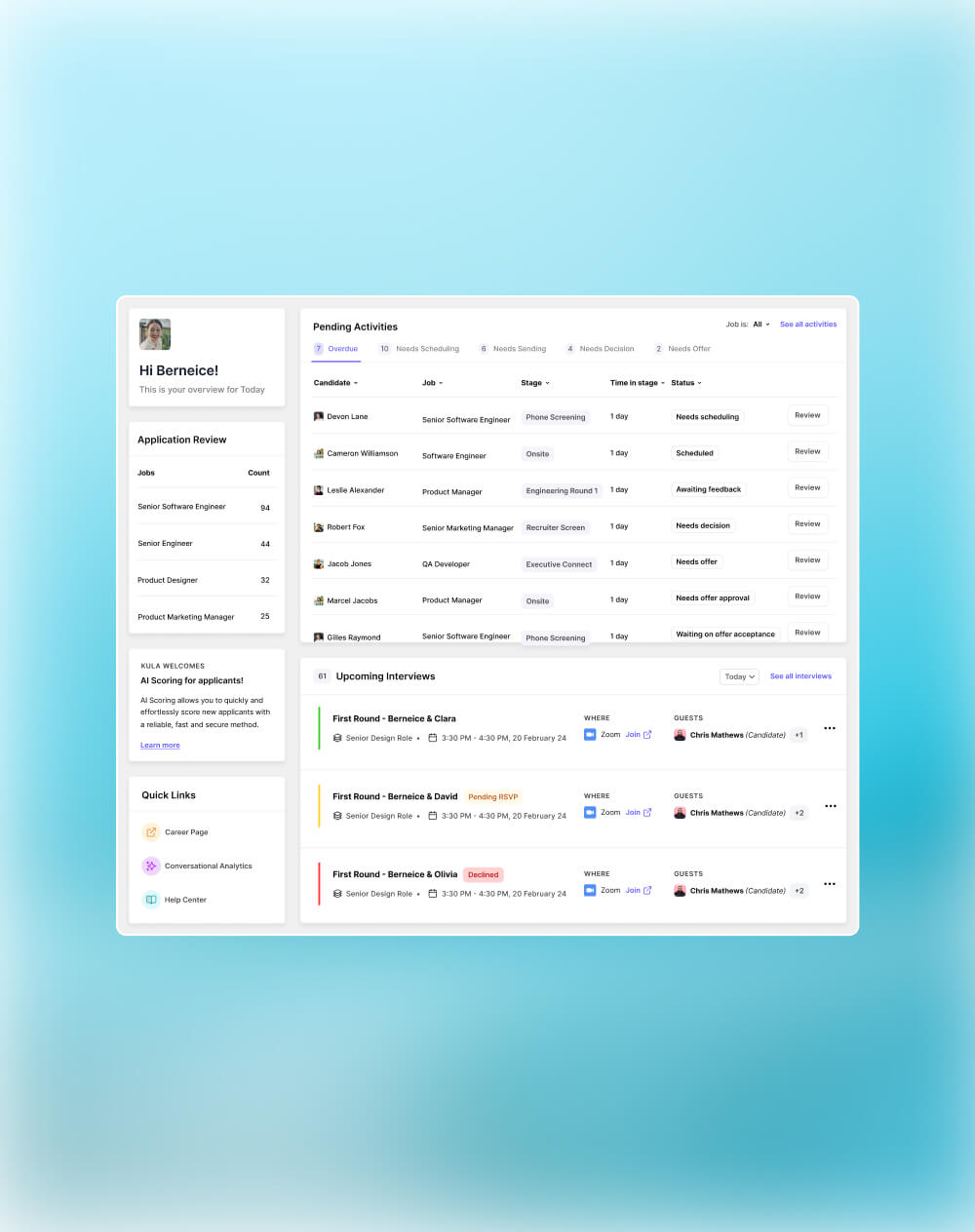
Unlike traditional sourcing tools, Kula combines sourcing, sequencing, CRM functionality, and an ATS in one platform. Recruiters can capture candidates from LinkedIn and GitHub using a Chrome extension, run outreach campaigns—including native SOBO—and rediscover candidates already sitting in their ATS without switching between multiple tools.
The trade-off is that Kula is designed as an all-in-one recruiting platform rather than a standalone sourcing tool.
Verdict: A strong fit for teams looking to replace multiple recruiting tools with one system. If you're only looking for a standalone sourcing database, a dedicated point solution may be a better fit.
Before you start sourcing: Are you searching your own database first?
Many recruiting teams start every new candidate search in LinkedIn Recruiter. The better starting point is often your own ATS.
In 2024, 44% of hires came from candidates who already existed in a company's ATS or CRM. That's not surprising when you consider the numbers.
The average corporate job attracts around 250 applicants, yet only a small percentage ever make it to the interview stage. The rest don't necessarily lack the right skills—they may have applied at the wrong time, for a different role, or simply lost out to a stronger candidate.
Those candidates are one of your most valuable sourcing channels.
Unlike cold prospects, they've already shown interest in your company, are familiar with your brand, and cost nothing to acquire the first time around.
Research also suggests that talent rediscovery can be up to four times faster than sourcing from scratch, with rediscovered candidates converting to hires three times faster than cold-sourced prospects.
The key is having the right search capabilities.
Instead of searching by old job titles or keywords, modern sourcing platforms let recruiters rediscover candidates using skills, experience, interview feedback, and AI-powered semantic search. That makes it much easier to identify someone who wasn't the right fit a year ago but could be an excellent fit today.
One thing to keep in mind: rediscovery should always follow fair and consistent hiring practices. Filters should be based on objective qualifications and role requirements, not protected characteristics or discriminatory criteria.
Building those guardrails into your sourcing workflow helps keep rediscovery both effective and compliant.
Today, platforms like Ashby, Gem, and AI-native recruiting systems like Kula support talent rediscovery in different ways, while many legacy ATSs still treat past applicants as archived records rather than an active talent pool.
I think this section will work best if it's highly scannable. Rather than long paragraphs under each question, keep the answers practical and concise.
The three questions that decide your sourcing stack
No sourcing tool is the right fit for every recruiting team. Before comparing features or pricing, answer these three questions:
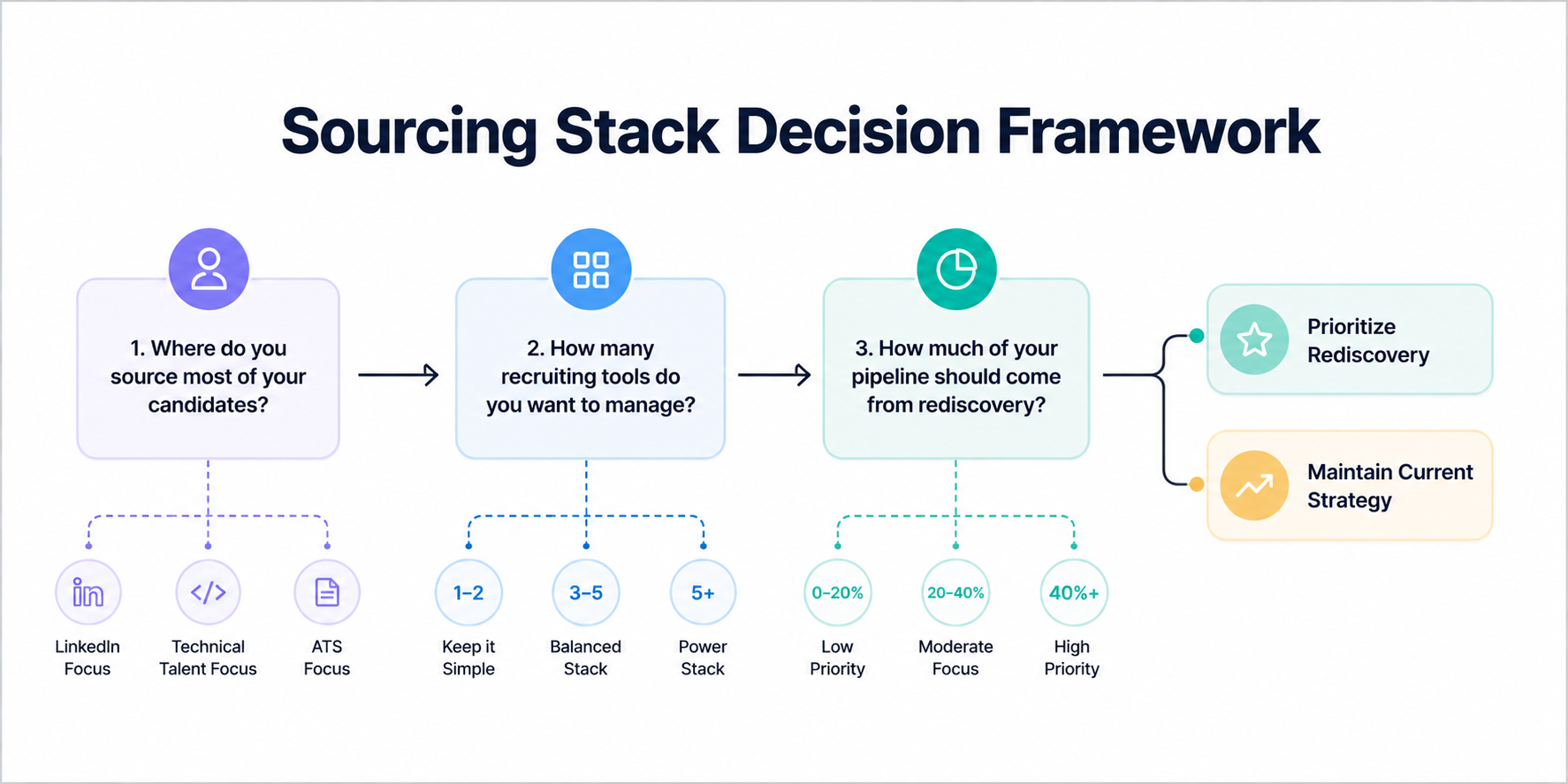
1. Where do you source most of your candidates?
Your answer narrows the shortlist quickly.
- Mostly LinkedIn? LinkedIn Recruiter paired with a sourcing CRM like Gem is still a solid combination.
- Mostly technical talent? Platforms like Laidback.so or tools that let you source directly from GitHub are better suited to engineering hiring.
- Mostly from your own ATS? Prioritize platforms with strong candidate rediscovery capabilities over larger external databases.
2. How many recruiting tools do you want to manage?
There's no right answer—only trade-offs.
If you're happy running an ATS alongside separate sourcing, sequencing, and CRM tools, best-of-breed platforms like HireEZ and Gem can work well.
If you're trying to reduce context switching and simplify workflows, AI-native recruiting platforms that combine sourcing, outreach, and applicant tracking like Kula are worth considering.
3. How much of your pipeline should come from rediscovery?
If the answer is "we rarely revisit previous applicants," you've probably found your biggest opportunity.
Modern sourcing isn't just about finding new candidates. It's about making better use of the candidates you've already invested time and money attracting. Make rediscovery a key part of your evaluation criteria, not an afterthought.
Once you've answered these questions, choosing the right sourcing tool becomes much simpler. It stops being about who has the biggest database and starts becoming about which workflow best fits the way your team hires.
Every recruiting team sources differently, so there's no single "best" tool. The right choice is the one that fits your workflow today, and where you want it to be a year from now.
If simplifying your recruiting stack is one of those goals, book a demo with Kula and see how it fits into your hiring workflow.

The most valuable sourcing tools do more than search candidate databases. Look for features like AI-powered search, candidate rediscovery, automated outreach sequences, ATS integrations, Chrome extensions, contact enrichment, and reporting. If you're trying to simplify your recruiting stack, consider whether the platform also includes CRM and applicant tracking capabilities.
A sourcing tool helps recruiters find new candidates across databases and public sources. A recruiting CRM helps nurture those candidates through automated outreach, follow-ups, and relationship management. Many modern recruiting platforms now combine both capabilities to reduce context switching.
Candidate rediscovery is the process of re-engaging qualified candidates already stored in your ATS or recruiting CRM instead of starting every search from scratch. Previous applicants have already shown interest in your company, making them faster and often less expensive to hire than cold prospects. Modern recruiting teams increasingly treat their ATS as an active talent pool rather than an archive.
There isn't a single best candidate sourcing tool for every recruiting team. LinkedIn Recruiter remains the default for general professional hiring, while platforms like HireEZ and SeekOut expand sourcing beyond LinkedIn. If your goal is to reduce tool sprawl, AI-native platforms like Kula combine sourcing, outreach, and applicant tracking in one system. The right choice depends on where you source candidates, whether you rely on talent rediscovery, and how many recruiting tools you want to manage.
For many recruiting teams, yes. LinkedIn Recruiter still offers one of the largest professional talent databases and strong AI-powered candidate recommendations. That said, rising subscription costs and limited built-in outreach capabilities have led many organizations to evaluate alternatives or pair LinkedIn Recruiter with sourcing CRMs and sequencing tools.