

Manual candidate screening has become increasingly difficult to sustain.
Recruiters now review 250+ applications per role, while AI-generated resumes have collapsed the reliability of keyword filtering.
The category of AI screening software has emerged to address this problem, with meaningful outcomes documented at named companies.
This article covers what actually works in 2026, which vendors ship meaningful capability, where the failures happen, and how to choose between them.
The goal is not to argue that AI screening is worth adopting. That case is settled. The goal is to help buyers pick the right tool for their specific situation.
What "candidate screening software" actually covers (five distinct categories)
Category 1: AI resume parsing and matching
Automated resume parsing extracts skills, experience, and education and then scores candidates against job descriptions using semantic matching rather than keyword filtering. It is best fit for high-volume application reviews where the primary need is reducing screening time.
Category 2: AI conversational chatbot screening
Live conversational AI engages candidates through chat, SMS, or WhatsApp, often as first-touch. It can ask predefined or adaptive screening questions, assess candidates against role requirements, collect key information, and flag qualified applicants for the next stage.
It is best fit for high-volume hiring where 24/7 availability matters (retail, hospitality, entry-level roles).
Category 3: Async video interview screening
In this category, candidates record video responses to pre-set questions, and AI evaluates the responses using natural language processing. It is best for structured screening where visual and communication signals matter.
Category 4: Assessment-based screening
Assessment-based screening uses skills tests, cognitive assessments, and personality profiling to evaluate candidates and produce quantitative candidate scores. It is best fit for skills-first hiring where the resume is not the signal.
Category 5: Native ATS AI screening
Screening capabilities are built directly into the ATS, so teams do not need a standalone screening tool. Platforms such as Kula, Ashby, Gem, and iSmartRecruit offer native AI screening. This approach is best suited for teams already using a modern ATS or looking to consolidate their hiring stack.
The strategic question to ask:
Do you want a standalone screening tool that integrates with your ATS, or do you want screening capabilities inside your ATS?
The answer depends on your ATS.
Teams on Greenhouse or Lever typically add standalone tools because native screening is weak.
Teams on Kula, Ashby, or Gem typically use native screening because the capabilities are competitive with standalone tools.
The measurable outcomes: Real numbers from named companies
1. Cathay Pacific (Async video screening outcomes)
Cathay Pacific, one of the World’s Best Airlines, decided to switch to async video interviews after receiving over 300 applications per week. Those who passed the async video interview were selected for the final-round assessment.
These changes have resulted in a 30% increase in interview attendance and a 90% reduction in time-to-hire.
2. Plum (Native ATS AI screening outcomes)
Plum, a modern health benefits platform, was screening 200–500 applications manually. This screening cost them 2–3 hours per 100 resumes.
With Kula’s AI-native ATS, they implemented AI application Scoring to filter candidates based on custom criteria and used Kula’s AI Notetaker to reduce the number of debriefs. This resulted in faster hiring, with Plum completing 10 Hires in 30 Days.
3. RemotelyHR
RemotelyHR, a California-based outsourcing firm, achieved 66% faster time-to-hire with Kula’s AI Scoring.
As Lina Baron, Recruiter and HR Assistant at RemotelyHR, puts it:
“We’re hiring faster, sending better candidates to clients, and saving hours every week. Kula’s made that possible.”
Being an outsourcing firm, the team was spending hours screening 100+ applicants, many of whom were low-match applicants.
Kula’s AI Scoring automatically filtered out poor-quality candidates, which helped them instantly focus on top candidates.
The honest failures and controversies around AI screening
1. The Amazon bias story
Amazon discontinued its AI recruiting tool because the algorithm favored male candidates. It learned from historical hiring data that male applicants used words like "executed" and "captured" more often, and treated these as positive signals. This is the foundational failure mode of AI screening.
2. The McDonald's Paradox Olivia data breach
McDonald's used Paradox AI's chatbot "Olivia" for candidate screening. In 2025, security researchers documented a data breach exposing applicants' personal information, including full names, resume details, and contact information, with credentials as weak as the password '123456'.
3. The HireVue facial analysis reversal
HireVue faced significant public backlash in 2019-2020 over facial analysis features. The company officially stopped using facial analysis in 2020 after multiple scientific criticisms and public advocacy.
4. The trust gap
55% of recruiters in the 2025 State of Recruiting Survey say AI-generated results are not accurate enough. 34% are concerned about algorithmic bias. 22% cite candidate privacy issues. 18% report they are "not prepared at all" to use AI tools. These concerns show that many recruiters still don’t fully trust or feel ready to use AI in hiring.
5. The rise of candidate-side AI
As screening tools have advanced, candidate-side AI has advanced too. An influx of fake profiles, AI-generated resumes, and live AI assistance during interviews has occurred. This creates a defensive verification cycle that damages candidate experience and adds process overhead.
To sum it up:
Candidate screening software has real value and real risks. Vendor bias audits, PII removal, explainable scoring, and human oversight are not optional. They are the baseline for responsible deployment. Any vendor unable to demonstrate these should be filtered out of your evaluation.
11 best AI screening software worth evaluating in 2026
Native ATS Platforms
1. Kula
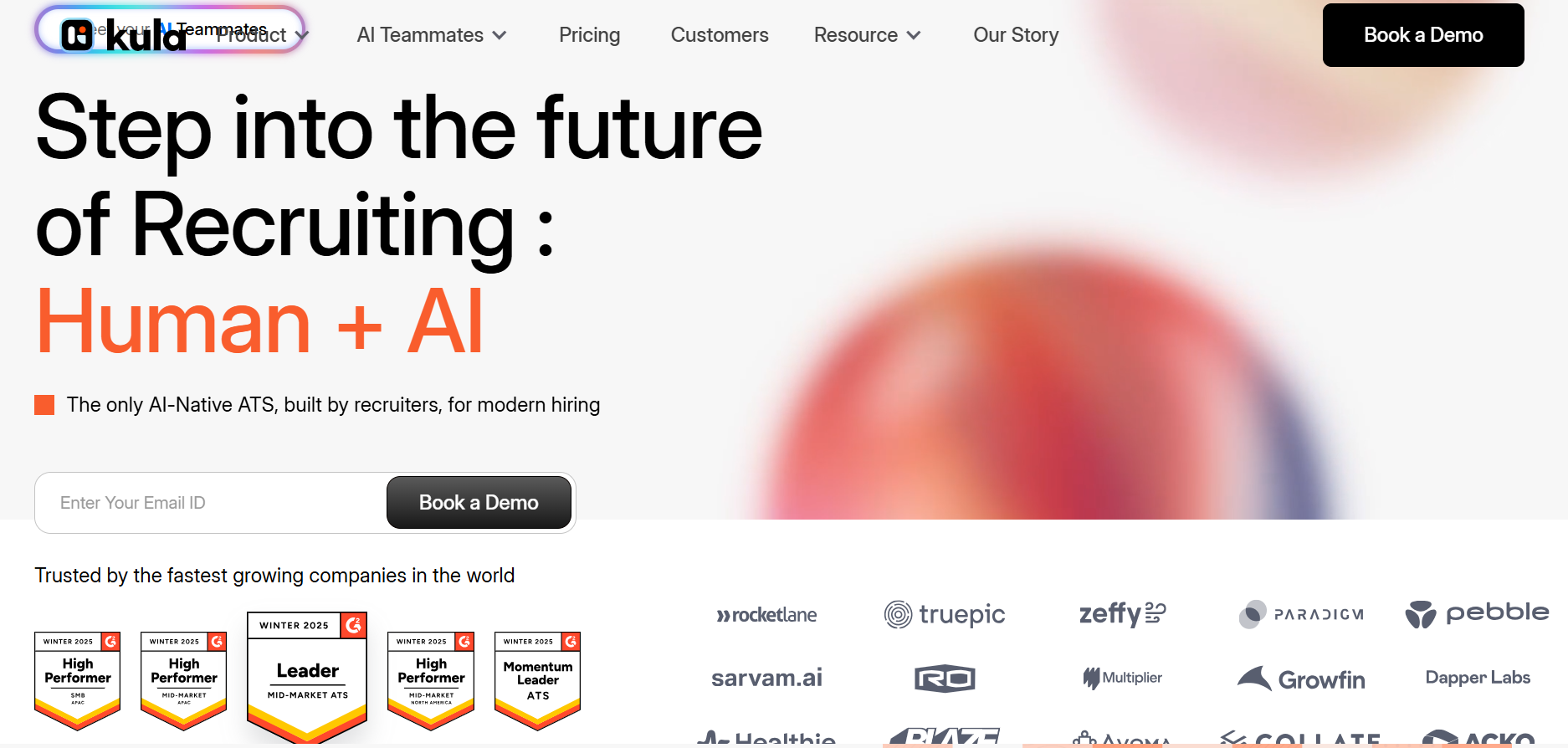
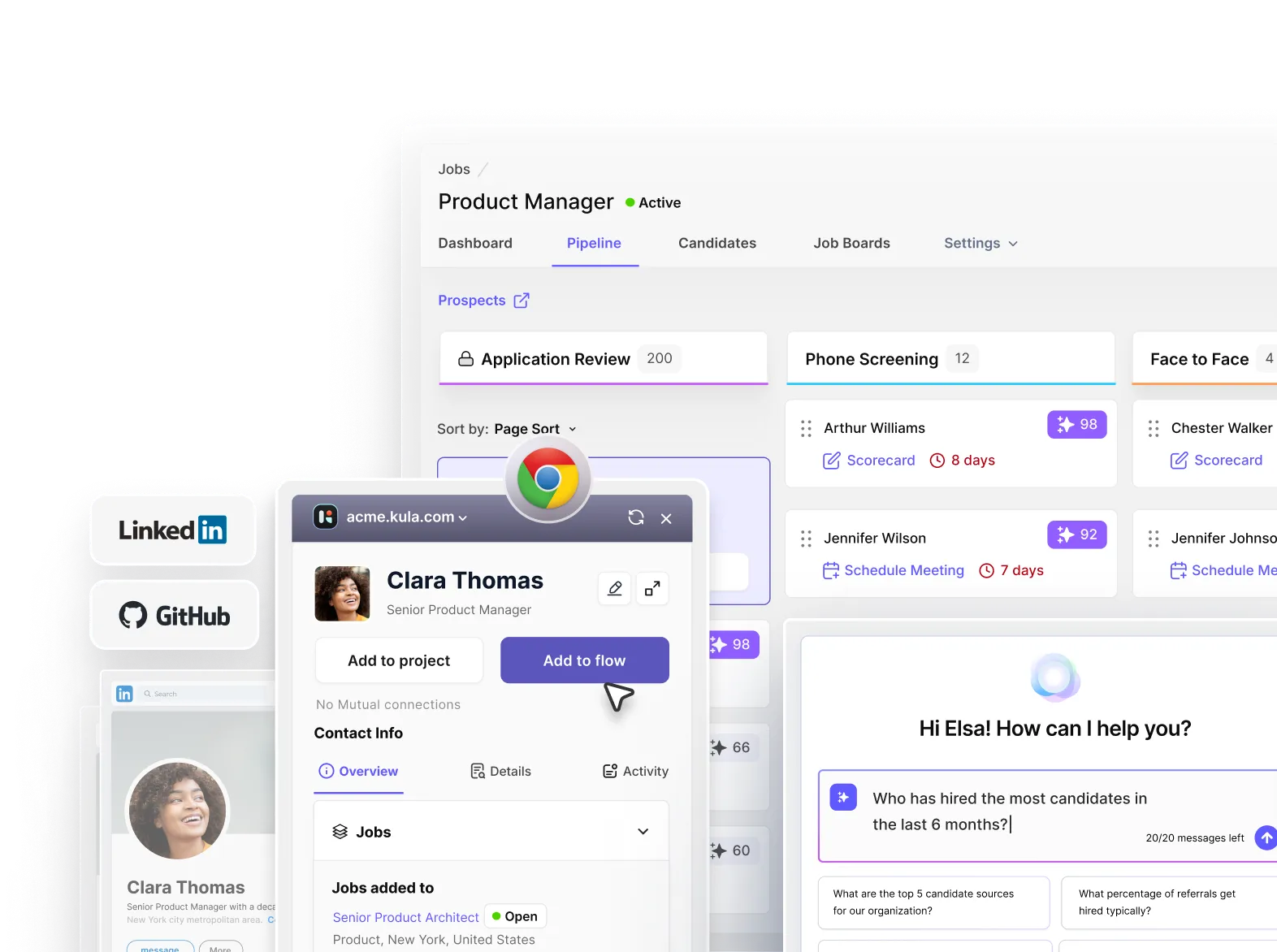
Kula is an AI-native ATS with screening built directly into the platform. Its AI Scoring helps recruiters evaluate and rank candidates based on customized criteria. Its Kula Everywhere Chrome extension lets them capture candidates directly from platforms such as LinkedIn and GitHub.
Real customer outcomes: Plum shifted from 2-3 hours to minutes on 100 applications, 10 hires in 30 days, and RemotelyHR experienced a 50% reduction in time-to-hire.
Best fit for: Mid-market teams consolidating stacks and prioritizing AI-native architecture.
2. Ashby
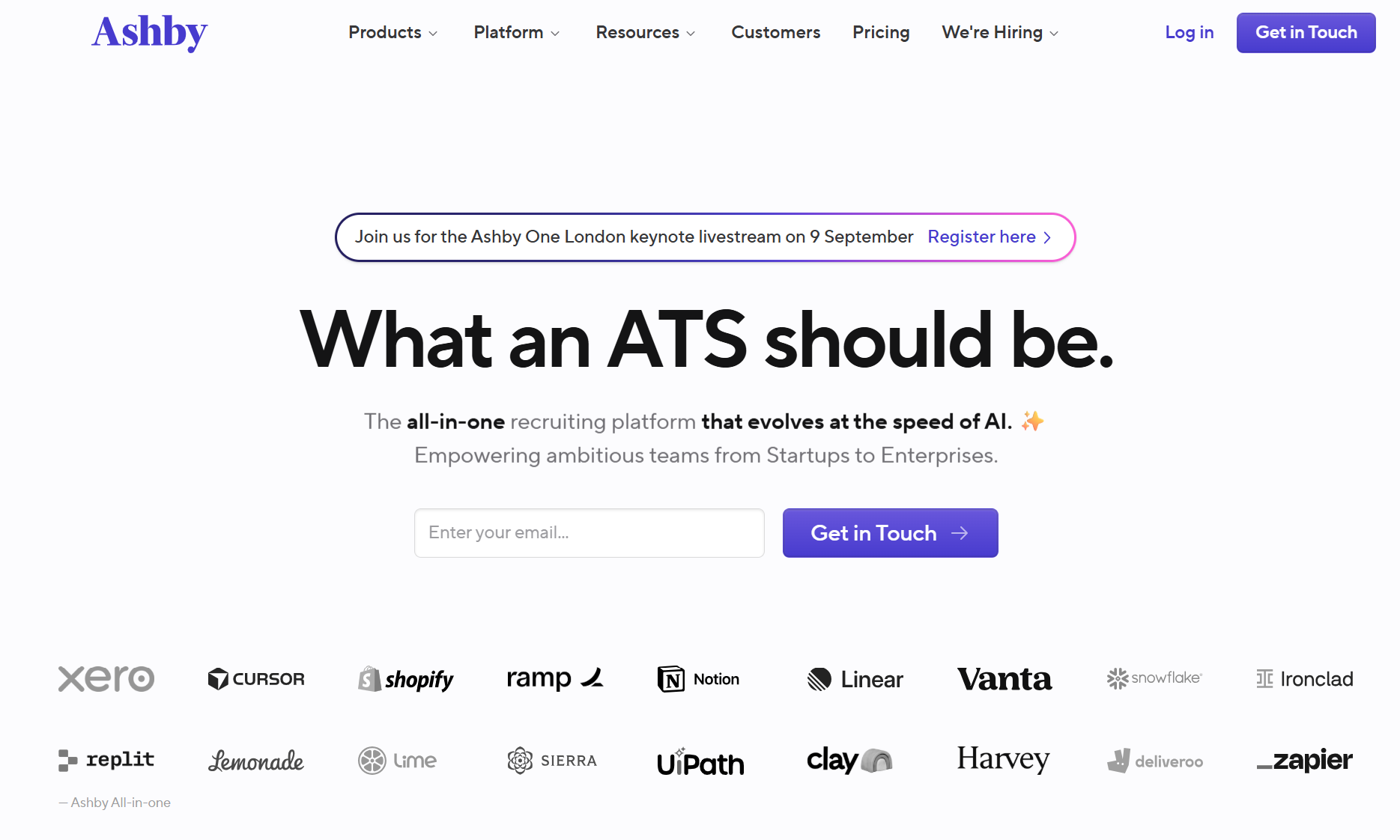
Ashby offers deep AI-assisted application reviews within its ATS, using job-specific criteria to surface best-fit candidates and filter out no-fit applicants.
It also includes AI Talent Rediscovery for matching existing candidates to new roles, AI personalization tokens for sourcing outreach, and native feedback and scorecard analytics to help teams evaluate candidates consistently and make faster hiring decisions.
Real customer outcomes: January screened 500+ applications down to 15 matches and closed four roles in 30 days, while FullStory saved 20+ recruiter hours each week.
Best fit for: Analytically sophisticated teams with dedicated TA ops capacity.
3. Gem
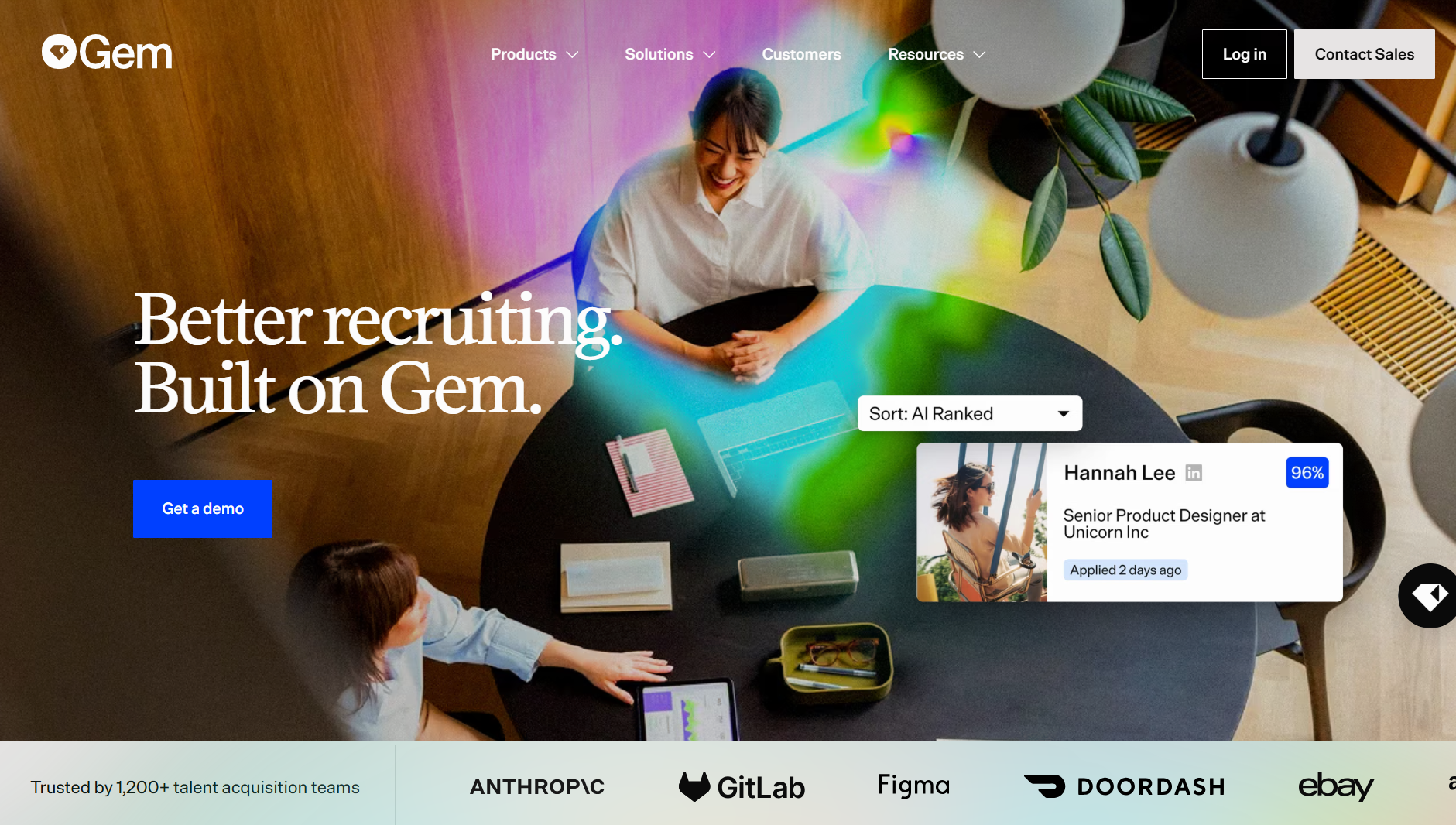
Gem is an AI-native ATS with screening built directly into the platform. Its AI Application Review Agent ranks and scores applicants against hiring criteria, while the AI Sourcing Agent searches past candidates and external profiles.
Real customer outcomes: Tropic reduced screening time by 90%, while Workiva saved 10 hours per recruiter each week and Mission Cloud increased recruiter capacity by 3x.
Best fit for: Outbound-heavy motions or teams migrating gradually from legacy platforms.
Standalone Resume Screening and AI Matching
4. Manatal
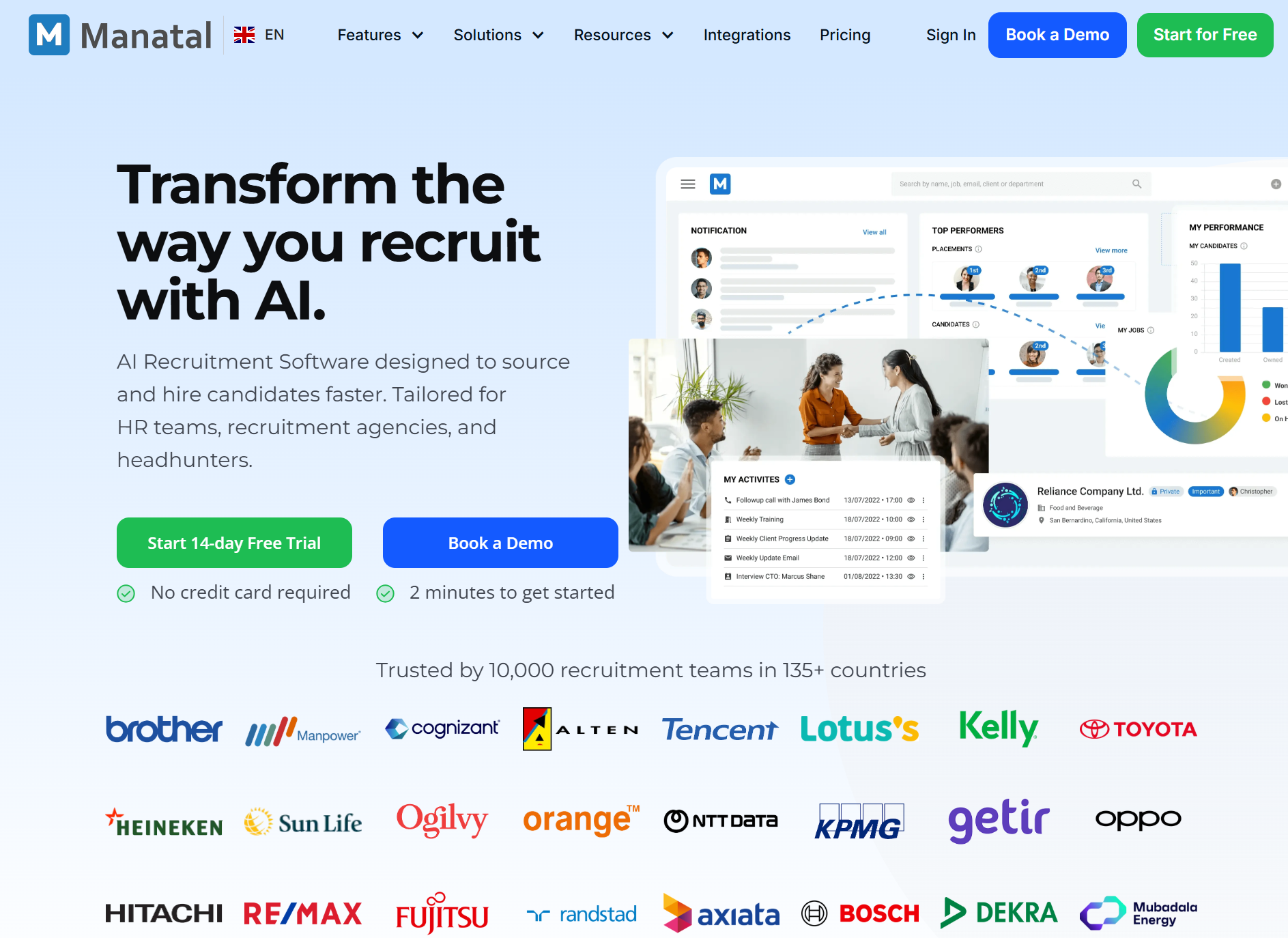
Manatal combines AI-powered candidate scoring and matching with semantic search to automatically rank best-fit candidates against job requirements.
Real outcomes: JB Hired cut recruiters’ time by 50%, while True Coffee reduced time-to-hire by 30% and cost-per-hire by 20%.
Best fit for: Small to mid-sized recruiting teams and staffing agencies.
5. Ceipal
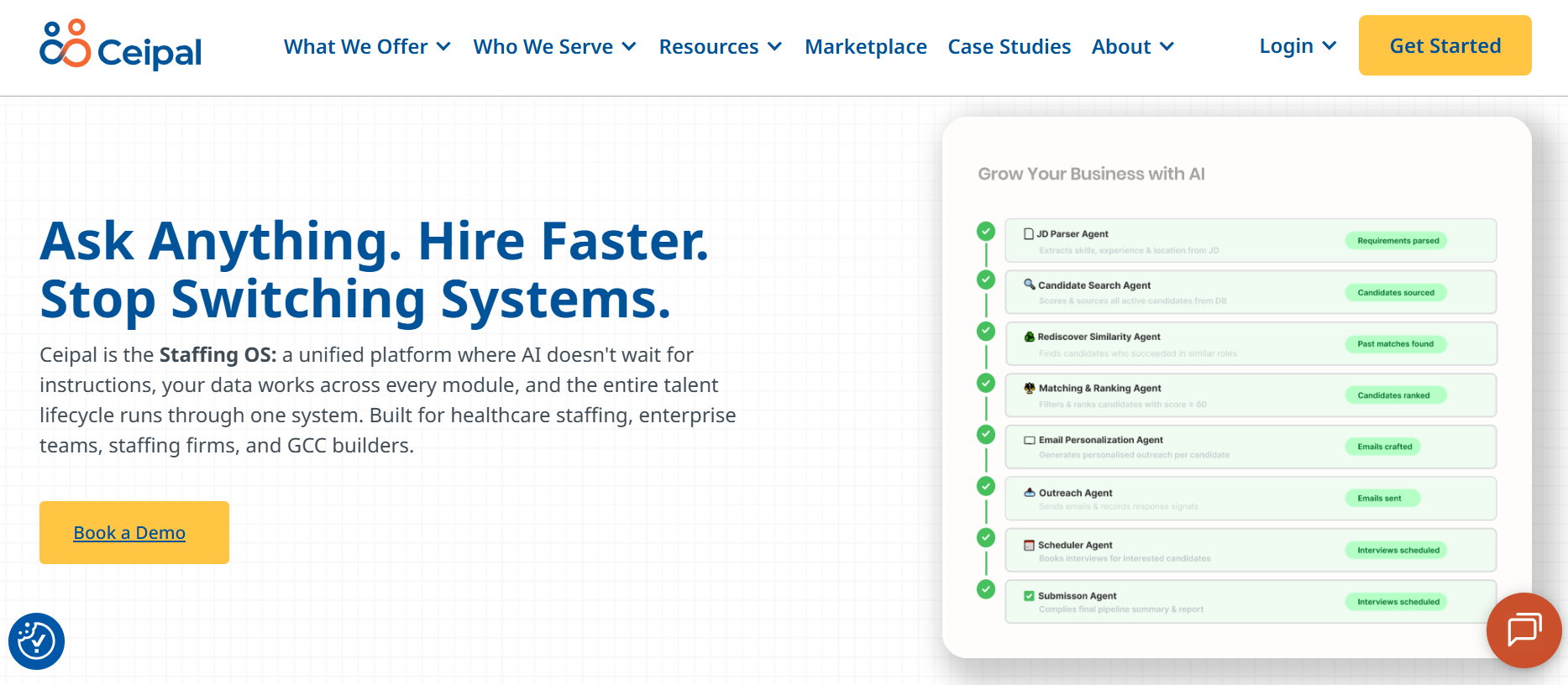
CEIPAL combines AI-powered candidate matching, ranking, and screening with its Candidate Relevancy and Search and Tag Agents, which analyze profiles, rank candidates by AI match scores, and trigger screening workflows.
Real outcomes: The Icon Group saved 70% of recruiters’ time, while BTG increased placements by 30% with CEIPAL’s AI-powered recruiting tools.
Best fit for: Teams that want screening plus CRM in one platform. Strong for staffing agencies.
6. iSmartRecruit
iSmartRecruit combines AI-powered candidate matching with resume parsing, semantic search, and automated screening to evaluate candidates against job requirements and rank the strongest fits.
Its AI capabilities also include AI matching, conversational/voice screening, and AI agents that automate candidate screening and other repetitive recruiting tasks.
Real outcomes: CA Mining achieved a 49% increase in quality-of-hire, while Upman Placements improved screening efficiency by 41%.
Best fit for: Mid-market teams looking for an affordable AI-first ATS.
7. HireBee
HireBee combines automated candidate screening with AI-powered matching, evaluating applicants against job requirements to identify the strongest fits.
It also offers AI candidate evaluation for assessment-based screening, plus conversational AI and asynchronous video interviews to evaluate candidates at scale.
Real outcomes: Unity Bank reduced time-to-hire by 50%, while Verde Logistics cut time-to-hire from 34 days to 11 days.
Best fit for: Small and mid-sized companies that want an all-in-one recruiting platform for basic hiring needs.
8. CVViZ
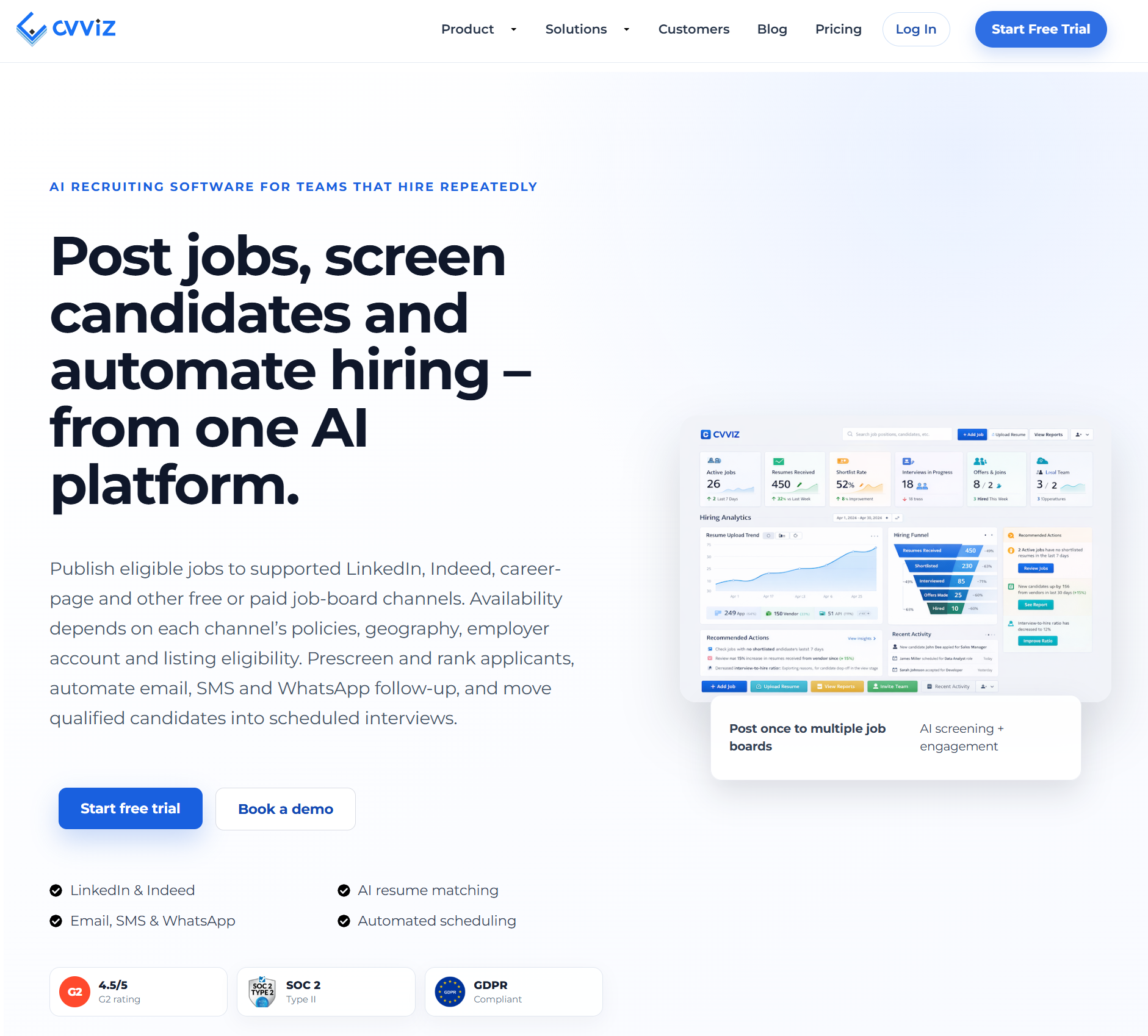
CVViZ combines contextual AI resume screening with prescreening questions, knockout criteria, and evidence-based candidate ranking to prioritize applicants based on role-relevant skills and experience rather than keywords alone.
Real outcomes: Mainstage HUB reduced its average hiring time by 40%, while Linq Consulting Solutions closed 24 of 25 positions.
Best fit for: SMBs and mid-market companies with recurring or higher-volume hiring needs.
Skills Assessment Platforms
9. Vervoe
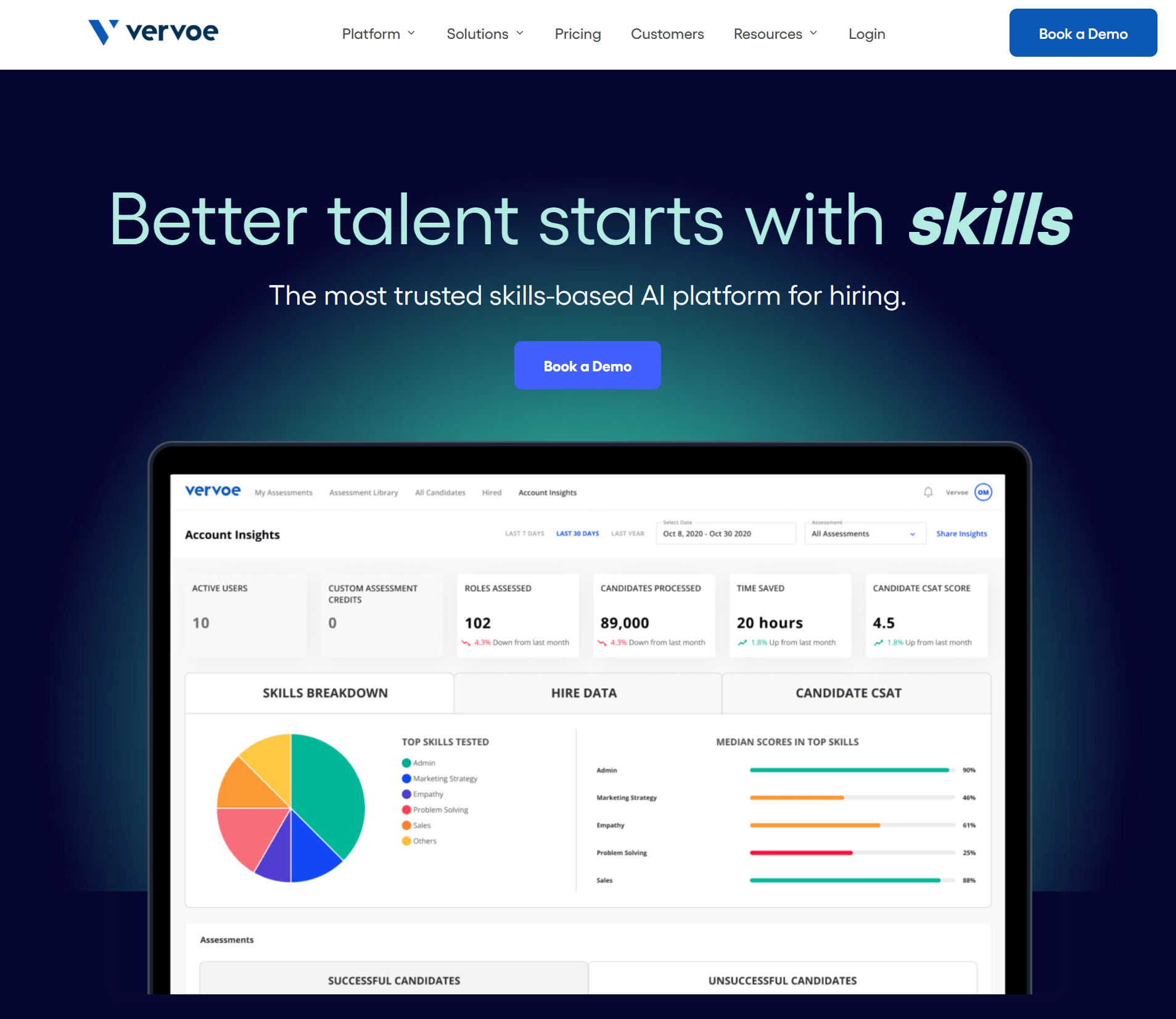
Vervoe combines AI-powered screening with skills-based assessments, using its AI Screening Agent to conversationally screen every application, score candidate fit, and capture initial skill signals before candidates move to role-relevant assessments.
Real outcomes: Team Global Express reduced time-to-hire from 63 to 30 days, while 1-800 Contacts cut time-to-hire by 62.5%.
Best fit for: Teams doing skills-first hiring at scale. Pricing accessible.
10. Willo
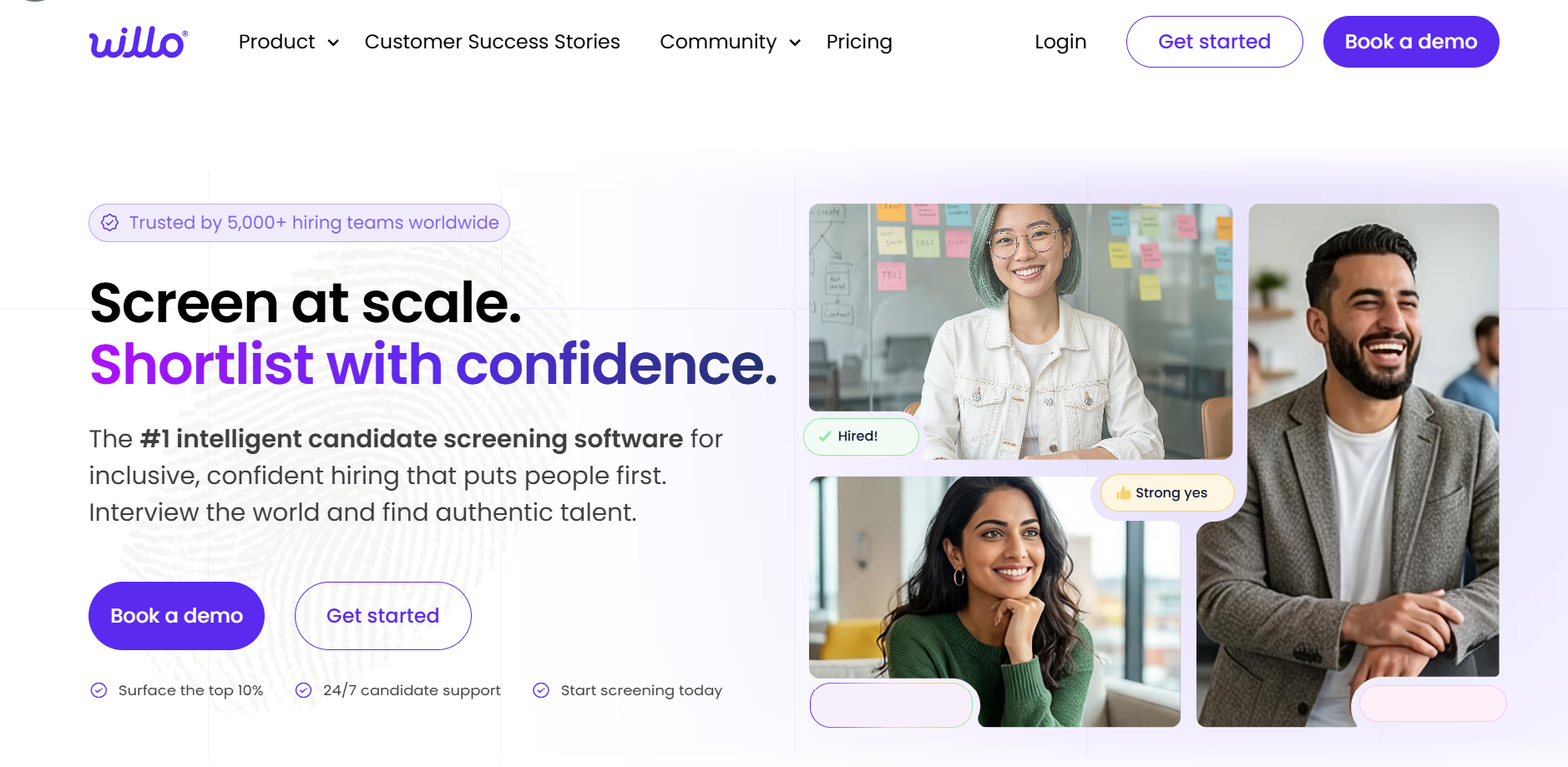
Willo combines automated candidate screening with AI-powered interview intelligence, allowing recruiters to invite candidates at scale for video, audio, or text responses.
Its Intelligence AI transcribes and summarizes interviews, surfaces skills, and identifies gaps to speed up candidate evaluation.
Real outcomes: Travelxp reduced candidate screening time by 66%, while LaunchCode increased the number of qualified candidates screened by 54%.
Best fit for: For lower-volume async video screening needs.
Async Video and AI Interview Screening
11. HireVue
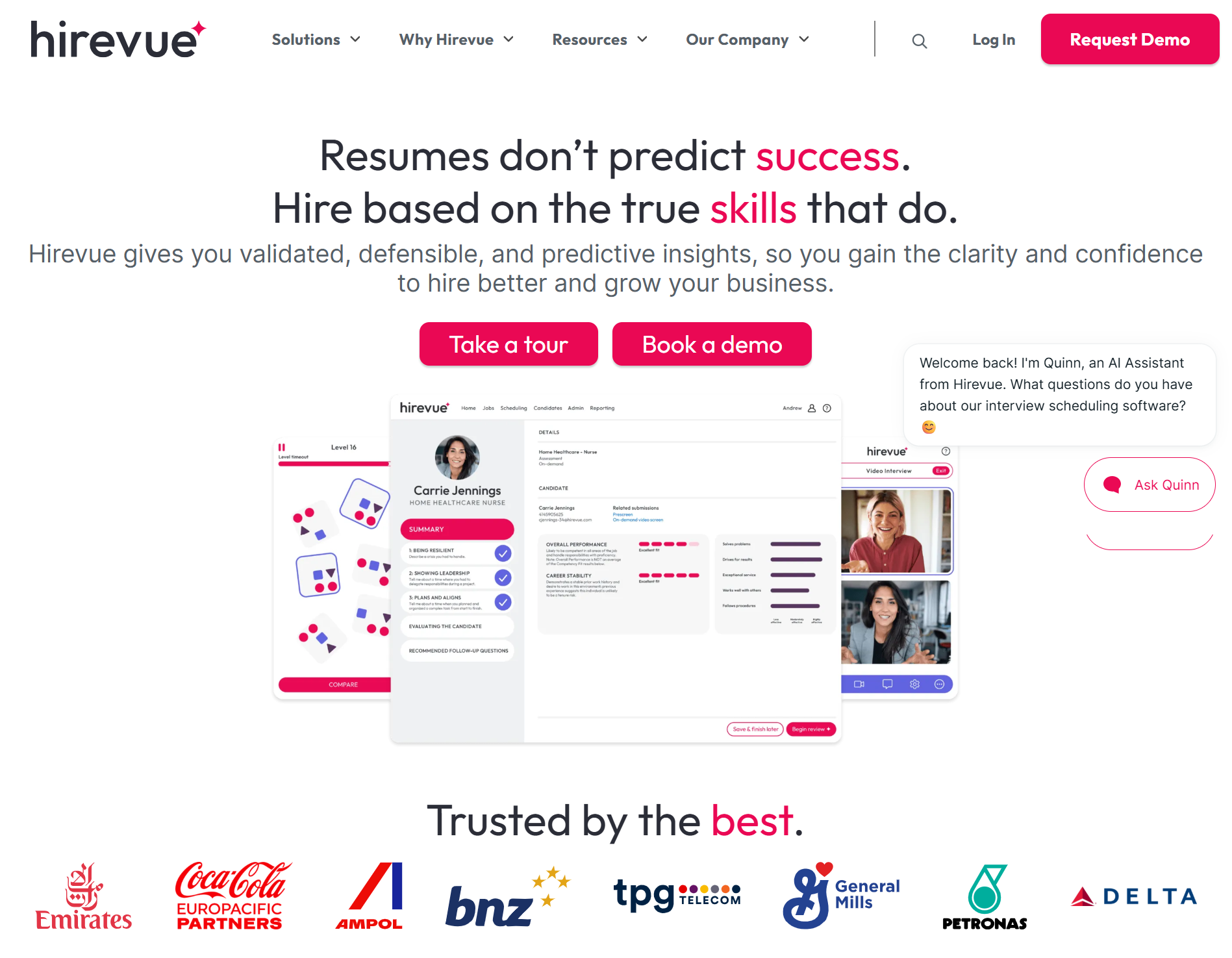
HireVue combines AI-powered candidate screening with assessments, automated video interviews, and conversational AI to help recruiters evaluate skills and fit at scale while using data-driven insights.
Real customer outcomes: Enboarder 90% reduction, McDonald's 60% ROI.
Best fit for: Enterprise and high-volume mid-market. Caveat: still carries legacy reputation from facial analysis era.
How to choose:
- For teams already on a modern ATS: Use native screening before adding standalone tools.
- For high-volume async video: HireVue for enterprise, and Willo for simplicity.
- For skills-first assessment: Vervoe and Willo are best options.
- For teams on legacy ATSs: Standalone tools like Manatal, Ceipal, or iSmartRecruit are the right answer.
How to evaluate an AI screening tool without getting misled
1. Ask for a live demo: Ask for a live demo on real candidate profiles from your team's actual pipeline. Watch what the tool does. If the vendor cannot or will not do this, that is a signal.
2. Demand explainable scoring: Every recommendation should come with reasoning you can inspect. Which skills matched, which are transferable, and where are the gaps. Black-box scoring is a compliance liability and a trust killer.
3. Verify third-party bias audits: Every serious vendor should have completed a third-party bias audit. For example, Kula partners with Warden AI, and Gem with BABL. Vendors without audit documentation are signaling something important.
4. Confirm PII removal from AI scoring: Names, addresses, graduation dates, and demographic proxies should be stripped before the AI model processes candidate data. This is a baseline for fair scoring.
5. Test the escalation logic: When the AI is uncertain, what happens? A good tool flags for human review. A bad tool guesses. The escalation path reveals overall quality.
6. Ask about candidate notification: Some jurisdictions require notifying candidates when AI is used in evaluation, including Illinois AI Video Interview Act and NYC Local Law 144. Confirm your vendor supports this workflow.
7. Check the ATS integration depth: Data must flow bi-directionally between the screening tool and the ATS. One-way sync creates fragmentation. Also, integration failures create the Franken-stack problems that consolidation is meant to solve.
8. Test the candidate experience: Actually apply as a candidate through the vendor's tool. If the experience feels dehumanizing or opaque, your candidates will feel the same way.
9. Ask for reference customers at your scale: Not enterprise references if you are mid-market. Not startup references if you are enterprise. Talk to teams at your stage running similar workflows.
The three questions that decide which category is right for your team
Question 1: What is your primary bottleneck?
- If your bottleneck is resume review at high volume, resume parsing and matching tools are the right category.
- If your bottleneck is first-touch responsiveness, chatbot screening is right.
- If your bottleneck is initial candidate assessment, async video or skills tests are right.
- If you have multiple bottlenecks, look at native ATS AI screening in a consolidated platform.
Question 2: What is your candidate experience threshold?
- If your candidates are senior, technical, or high-market-value, dehumanizing screening tools damage employer brand. Prioritize tools that maintain human touchpoints.
- If your candidates are high-volume entry-level, efficiency at scale may outweigh candidate experience nuance.
Question 3: Are you consolidating or optimizing?
- If you are trying to reduce tool count and simplify your stack, native ATS AI screening is the answer.
- If you are trying to optimize a specific workflow without touching the ATS, standalone tools are the right answer.
The wrong choice is picking a category based on marketing rather than your actual bottleneck.
Diagnose the constraint first, then pick the tool.
And, if you’re looking for native AI screening without adding another tool to your stack, Kula brings application scoring, candidate ranking, sourcing, and screening into one AI-native ATS.
Ready to see how AI screening can fit into your hiring workflow? Book a demo with Kula and see it in action.